
Guide
Internationalgrowth guide
Practical notes on sites and booking flows for overseas guests.
Clear Communication for Early Check-In in English: Availability, Fees, and Request Deadlines
A practical guide for ryokan operators on how to communicate early check-in in English without misunderstandings. This includes availability, fees, request deadlines, and fallback options for guests.
Read more →
Clear Guidance on Early Check-In in English: Availability, Fees, and Request Deadlines
A practical guide for ryokan operators on how to communicate early check-in in English without misunderstandings. This includes details on availability, fees, request deadlines, cleaning after previous guests, dinner timings, and luggage storage options.
Read more →
Clear Communication for Late Checkouts in English: Availability, Fees, and Request Deadlines
A practical guide for ryokan operators on how to communicate late checkout policies to international guests without misunderstandings. This includes details on availability, fees, request deadlines, fallback options, and more.
Read more →
Providing English Receipts and Folios at Checkout: Avoiding Misunderstandings about Names, Taxes, and OTA Payments
A practical guide for ryokan operators on how to provide English receipts and folios at checkout without misunderstandings. This article covers name capture, consumption and bathing taxes, OTA prepayments, and the nuances of qualified invoices.
Read more →
Guiding Guests on Luggage Forwarding in English — No More Confusion to the Next Hotel or Airport
A practical guide for ryokan operators on how to communicate luggage forwarding and TA-Q-BIN services in English. This includes essential details like deadlines, destination requirements, payment options, and airport routes, all in one concise format.
Read more →
Reducing Complaints with English House Rules: Communicating Quiet Hours, No Smoking, Shoes Off, and Guest Limits Before Booking
A practical guide for ryokan operators on how to reduce complaints by clearly communicating English house rules regarding quiet hours, smoking, shoes, and guest limits before booking.
Read more →
Guidance for Night Arrivals, Key Boxes, and Smart Locks in English — Ensuring No Confusion When the Front Desk is Closed
A practical guide for ryokan and onsen operators on how to provide English instructions for night arrivals, key boxes, and smart locks. This includes fixed entry modes, screenshot-friendly procedures, fallback options for failures, and OTA synchronization.
Read more →
Essential English Phrases for Front Desk Staff — Top 10 Sentences
A guide for ryokan front desk staff featuring essential English phrases for check-in, luggage, meals, baths, and billing, along with tips for written confirmations.
Read more →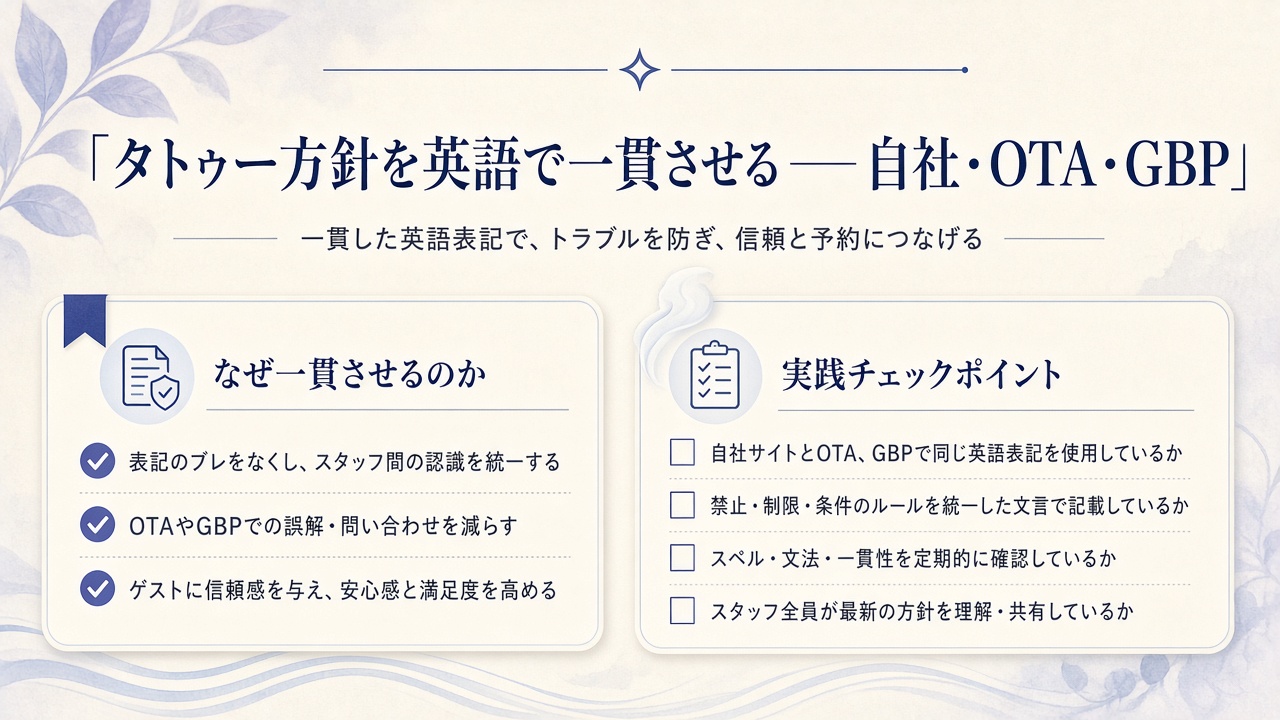
Consistent Tattoo Policy in English for Your Website, OTA, and GBP
How to ensure your ryokan's tattoo policy is consistent across your website, OTAs, and Google Business Profile. This guide covers one-sentence policies, alternatives, front desk phrases, and review prevention strategies.
Read more →
How to Write About Luggage Storage and Late Arrivals Before Check-In
Learn how to effectively communicate luggage storage and late arrival policies in English for international guests at your ryokan. This guide covers reception hours, handling valuables, communication methods, and waiting arrangements for early arrivals.
Read more →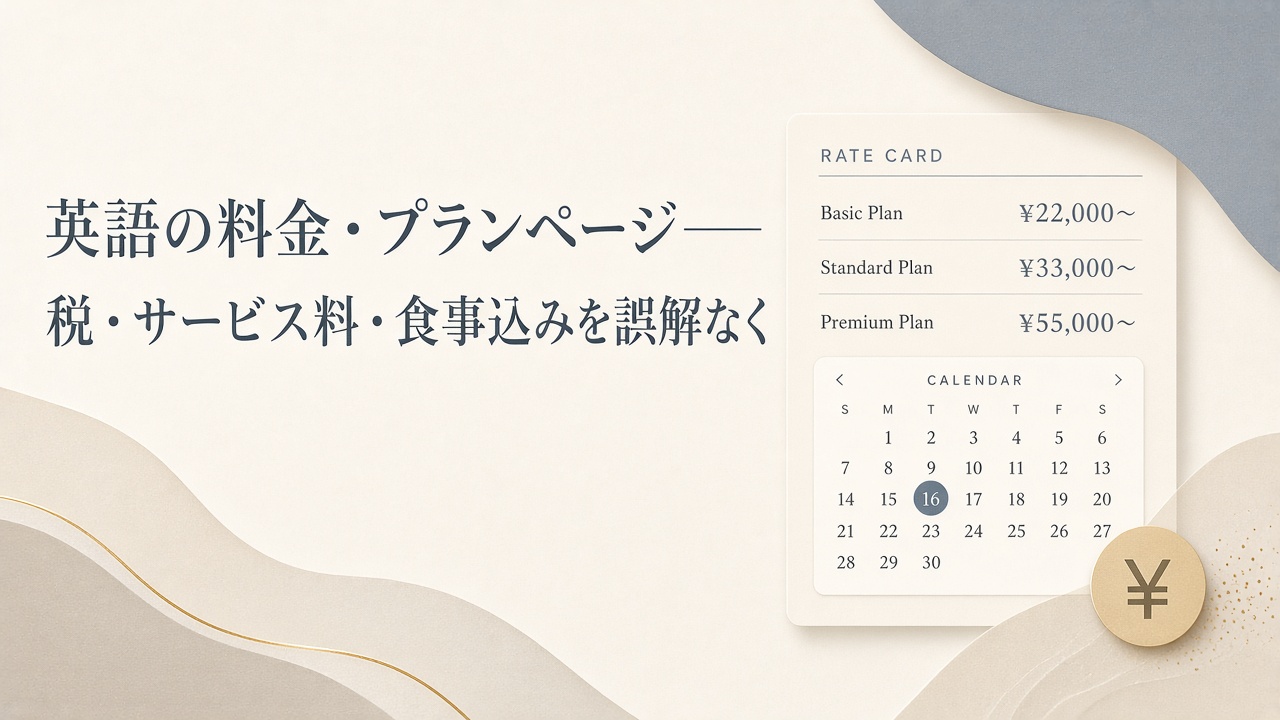
Creating an English Rates and Plans Page: Clear Communication of Taxes, Service Charges, and Meals
How to clearly communicate taxes, service charges, and meals on your ryokan's English rates and plans page. This guide organizes operational specifications for individual and room rates, bathing taxes, children's pricing, and OTA synchronization.
Read more →
Don't Start Your Ryokan's English Website with Translation
Creating an English website for your ryokan shouldn't begin with translation. This article outlines a five-step process to develop English pages that lead to direct bookings from international guests.
Read more →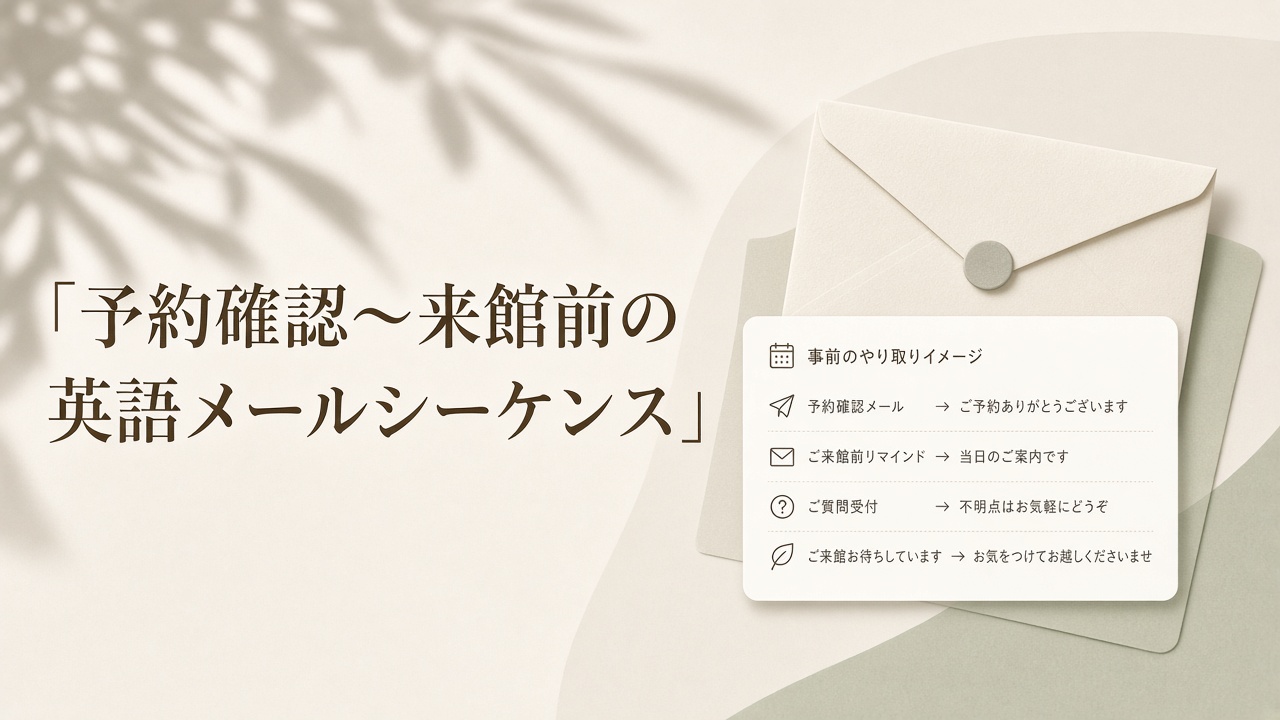
Reservation Confirmation: English Email Sequence Before Arrival
An English email sequence from reservation confirmation to arrival at a ryokan. Key points include confirmation, T-7, T-2, essential blocks for the day, and the limitations of OTA agency emails.
Read more →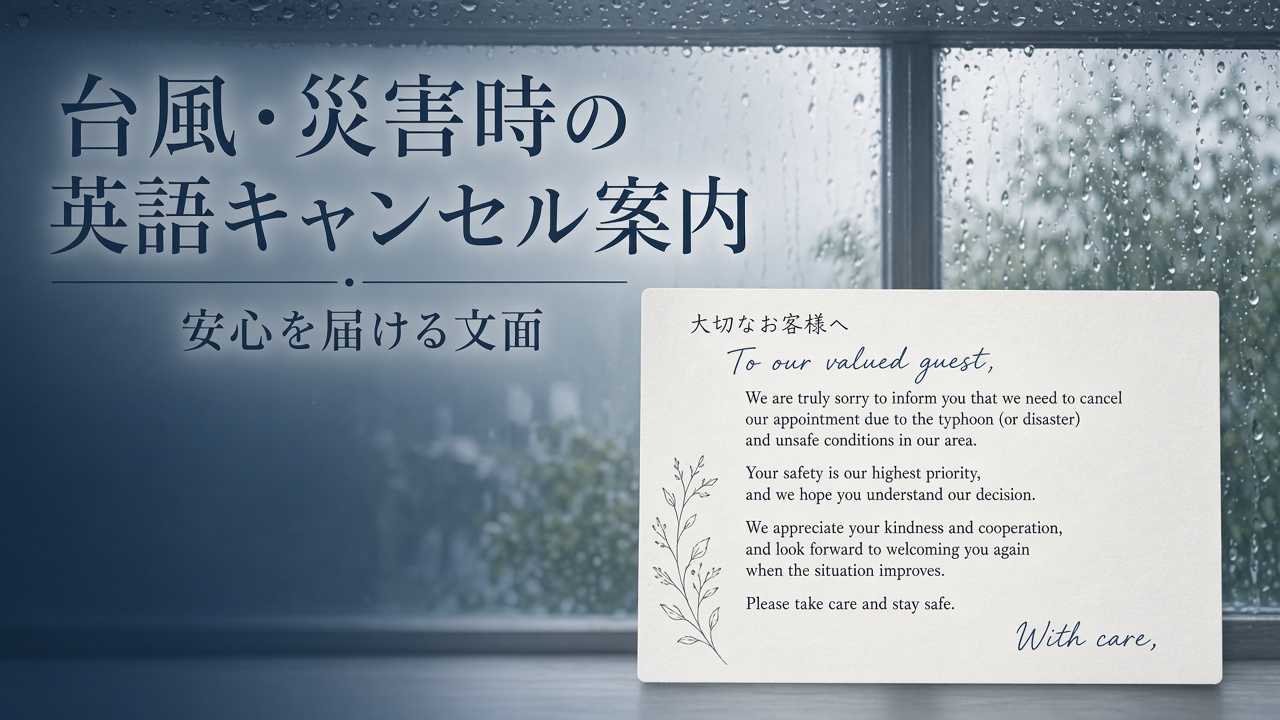
English Cancellation Notices for Typhoons and Disasters — Delivering Peace of Mind
English cancellation notices for overseas guests during typhoons and disasters. Includes preemptive policies, messages for open/closed/reopened status, handling of fees, and guidance to official safety information.
Read more →
How to Create an English Page for Families with Children
Learn how to create an English page tailored for families traveling with children, covering age ranges, free bedding options, children's meals, bath rules, and private bath reservations.
Read more →
How to Write Room Descriptions and Captions That Drive Reservations
Learn how to effectively use room photos and English descriptions to boost bookings. Understand the sequence international guests view, essential specifications, caption styles, and synchronization with OTAs.
Read more →
How to Handle Inquiries from International Guests: Phone, LINE, or Email?
When receiving inquiries from international guests, should you use phone, LINE, or email? Setting expectations for English support, SLAs, and designing effective communication channels.
Read more →
Guide to Private and Family Baths in English — Writing for Reservations
How to write about private and family baths as bookable products in English. Clearly outline fees, duration, reservation methods, and tattoo policies to convert concerns into direct bookings.
Read more →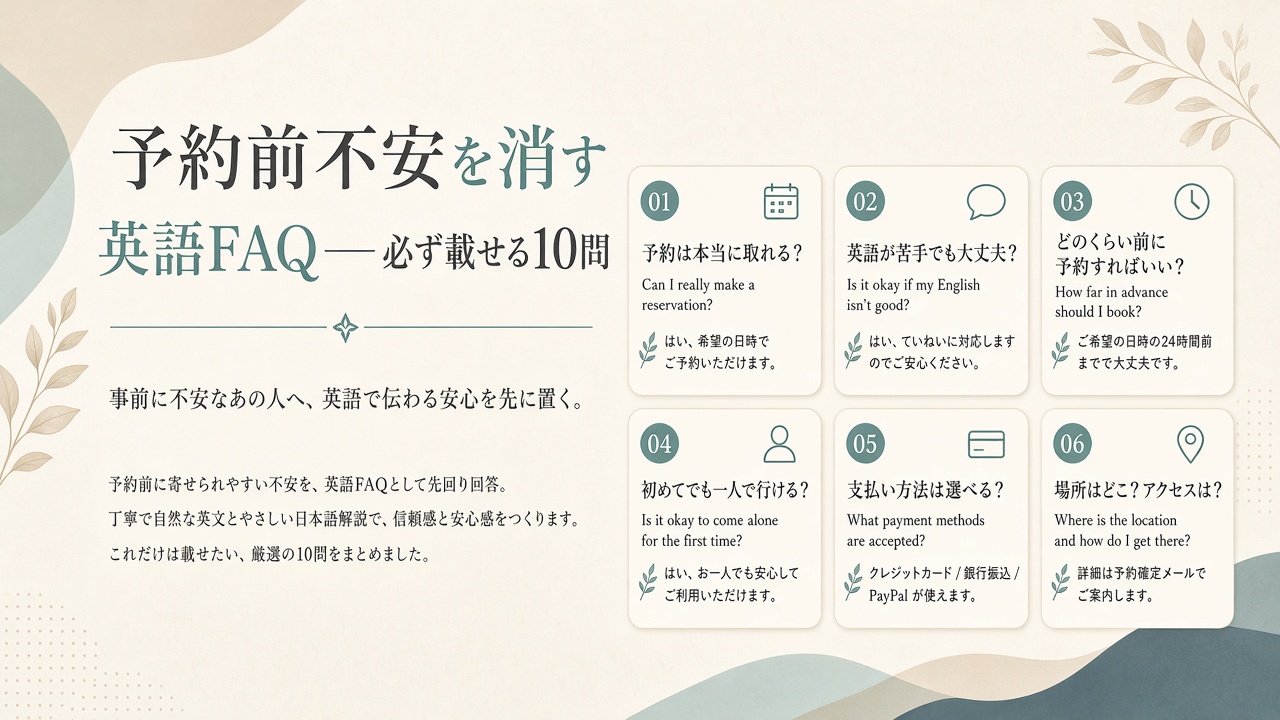
Essential English FAQs to Alleviate Pre-Reservation Anxiety: 10 Must-Have Questions
Addressing common concerns with essential FAQs for international travelers. Answers about check-in, meals, onsen rules, payment, cancellations, and more to facilitate reservations.
Read more →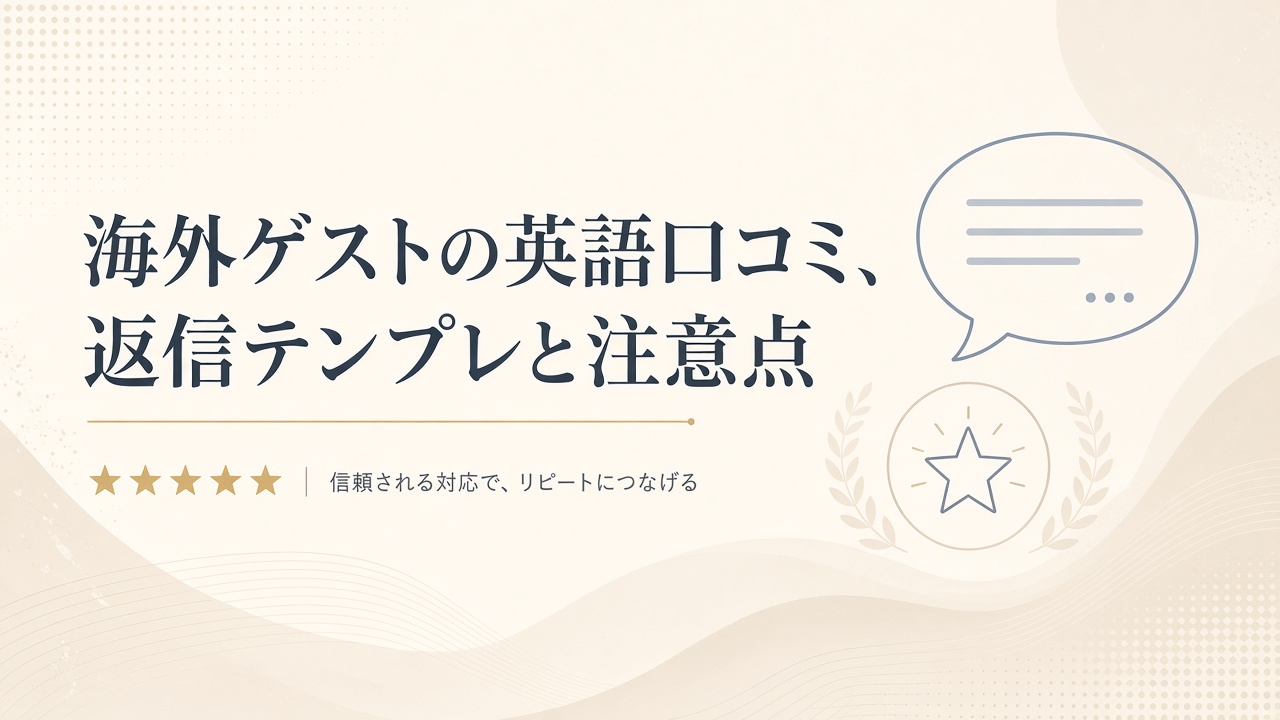
Responding to English Reviews from International Guests: Templates and Important Considerations
A guide for ryokan owners on how to respond to English reviews from international guests. Includes templates for positive, mixed, complaint, and policy misunderstanding responses, along with key points to avoid.
Read more →
How to Communicate Allergies and Dietary Restrictions for Kaiseki in English
A guide on how to convey allergies and dietary restrictions in English for kaiseki meals at ryokan. Distinguishing between medical allergies and preferences, declaration deadlines, and ready-to-use policies and form items.
Read more →
What to Include on Your English Experience and Tour Product Page
Essential elements to include on your English experience and tour product page. From duration and meeting points to languages, inclusions, cancellation policies, and booking CTAs, we explain how to create a page that drives direct bookings.
Read more →
Attracting Inbound Guests to Local Ryokan: How to Perfect Your Access English
When local ryokan target inbound travelers, clear access information in English is essential. This guide covers how to communicate details about trains, buses, taxis, and Google Maps pins without confusion, along with a checklist.
Read more →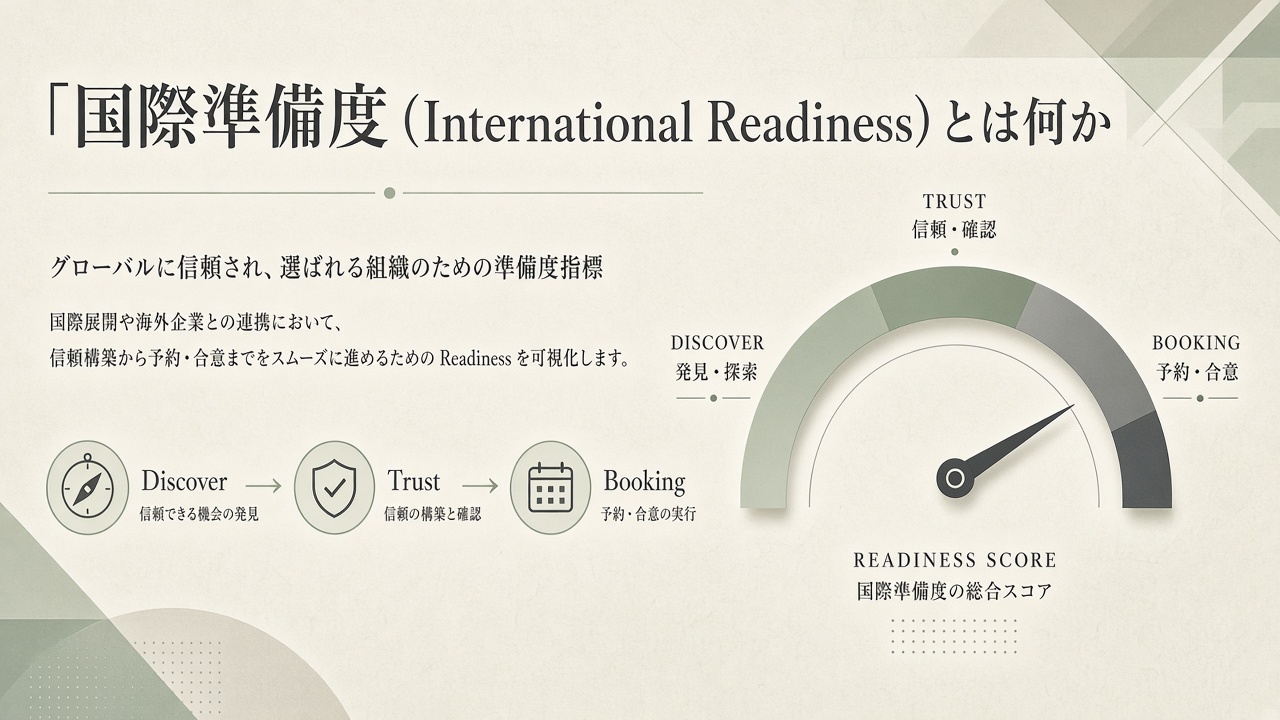
What is International Readiness?
International readiness measures whether a ryokan can be discovered, understood, and booked by overseas guests. This concept encompasses three areas: Discovery, Trust, and Booking, along with the use of HAKO Scan.
Read more →
What to Do When Your Ryokan Doesn't Show Up on ChatGPT
Discover the reasons why your ryokan may not be featured in AI searches and learn how to address information gaps from an AEO perspective with a checklist you can start today.
Read more →
English Representation of Credit Cards and Payments for International Guests
A template for clearly communicating credit card and payment options in English for international guests on ryokan websites. It covers accepted cards, charging timing, and how to convey local payment and deposits.
Read more →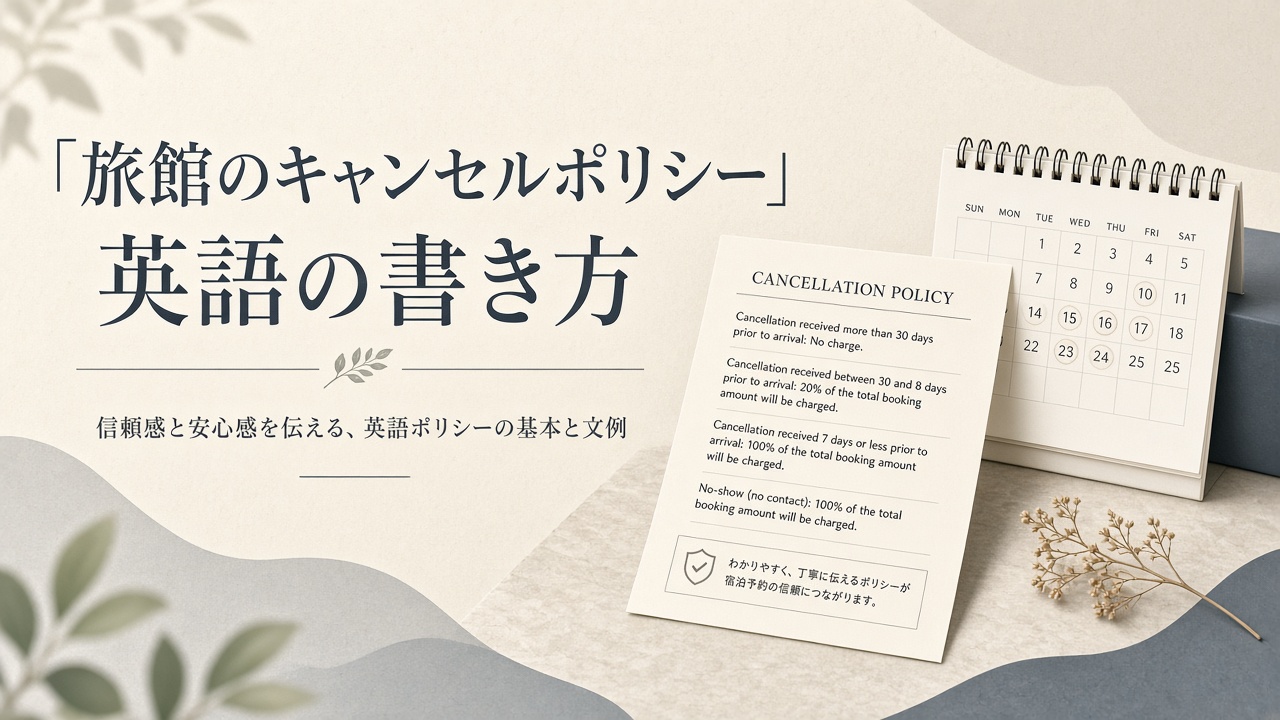
How to Write a Ryokan Cancellation Policy in English
When writing a ryokan's cancellation policy in English, it's essential to avoid direct translations. This article discusses localization examples for dates, rates, and exceptions, along with a checklist for placement.
Read more →
Examples of English Descriptions for Onsen Etiquette
A template of example sentences to convey onsen etiquette in English. From basics like washing areas, towels, and bathing to tattoo policies, FAQs, and how to include them in your GBP.
Read more →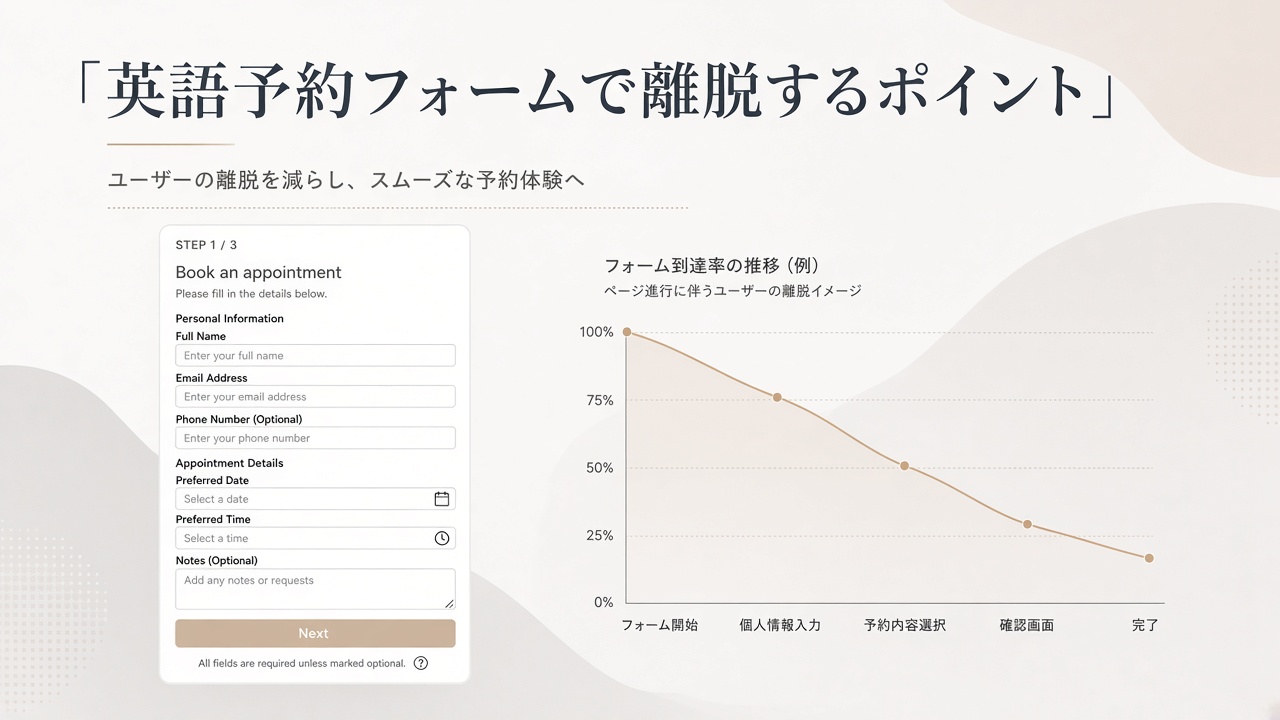
Key Points of Drop-off in English Reservation Forms
Common reasons for drop-off in ryokan English reservation forms. From mandatory phone numbers to date formats, mobile errors, and unclear payment and response timelines, we provide a comprehensive testing procedure.
Read more →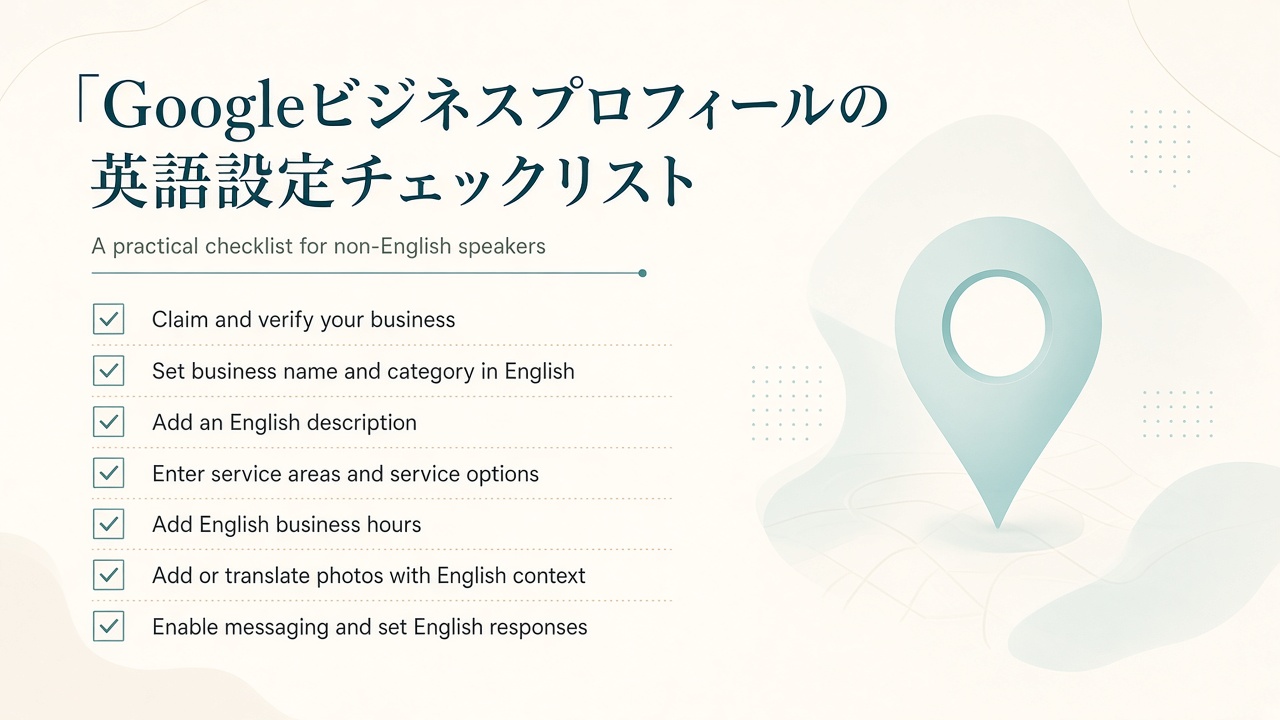
Checklist for Setting Up Your Google Business Profile in English
A checklist for ryokans to optimize their Google Business Profile in English. Learn how to enhance your visibility with effective business name, description, photos, Q&A, reservation URLs, and review responses.
Read more →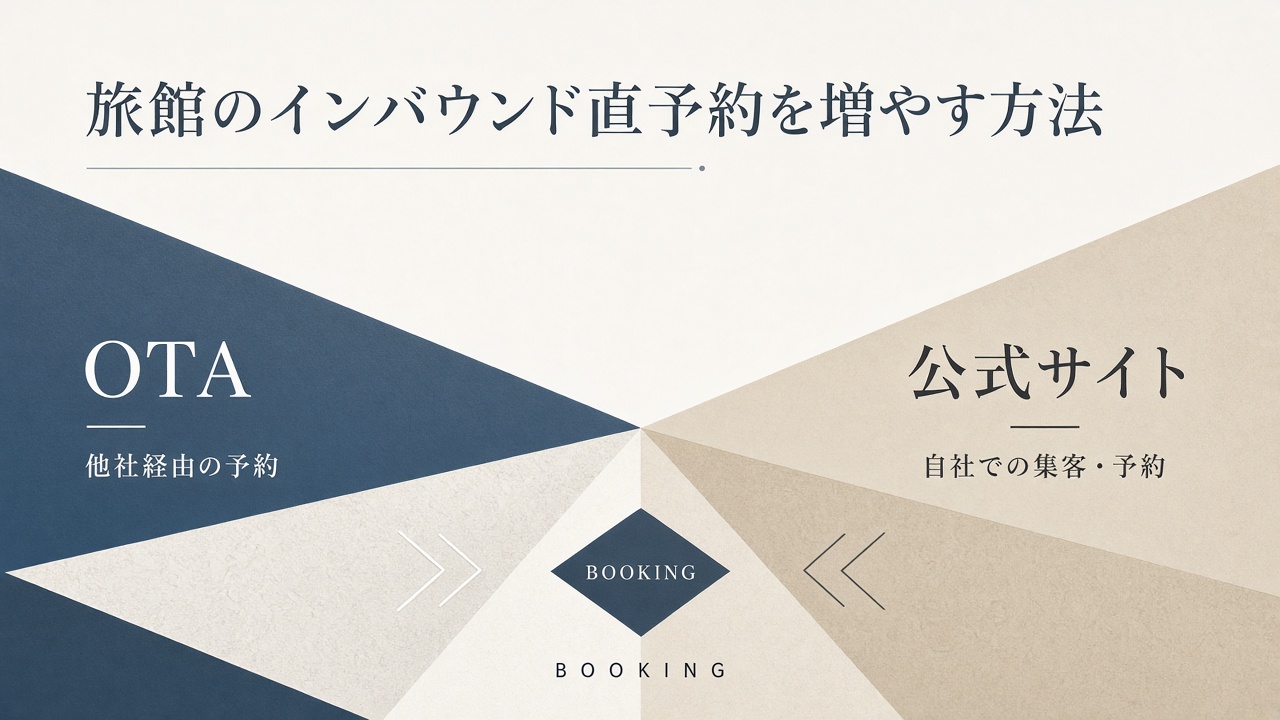
How to Increase Direct Inbound Reservations for Ryokan
Discover effective strategies to boost direct inbound reservations for ryokan. This article outlines three key initiatives to reduce OTA dependency costs and enhance the booking process on your own website.
Read more →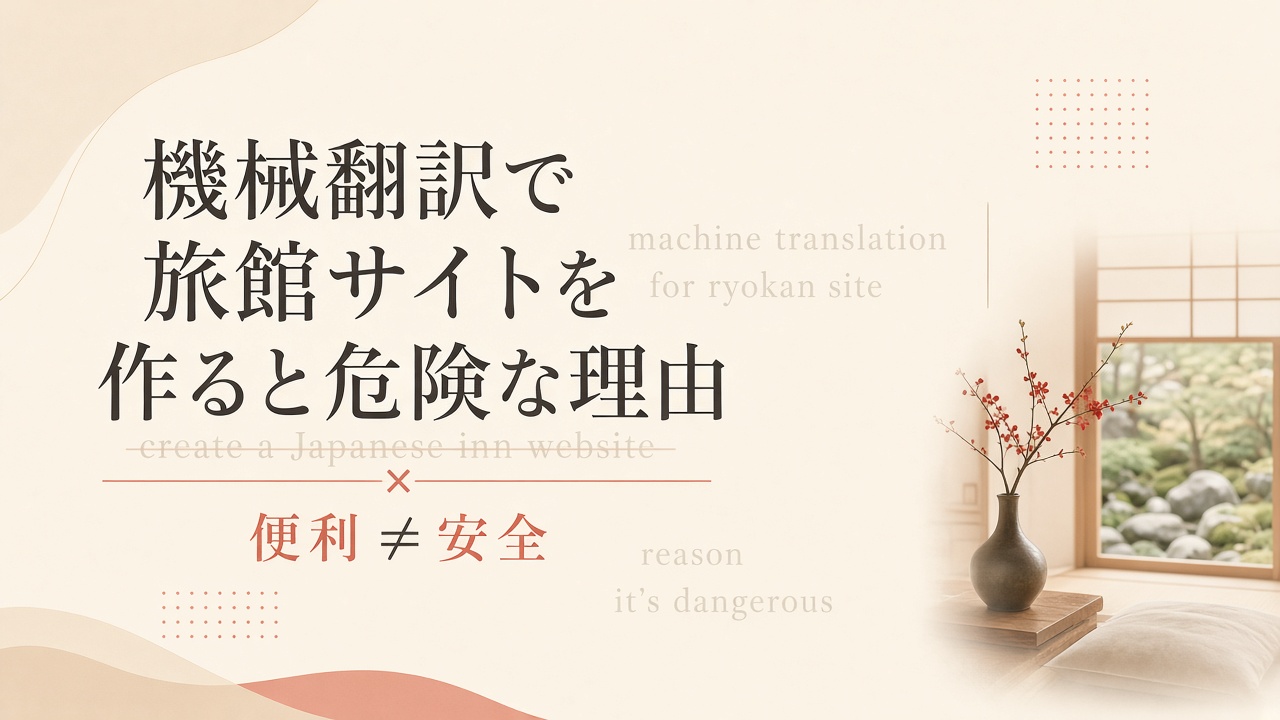
The Risks of Creating a Ryokan Website with Machine Translation
Using only machine translation for your ryokan's English website can lead to misunderstandings about cancellations, fees, and access, ultimately damaging trust and direct bookings. This article outlines common pitfalls and provides a localization priority list and minimum checklist.
Read more →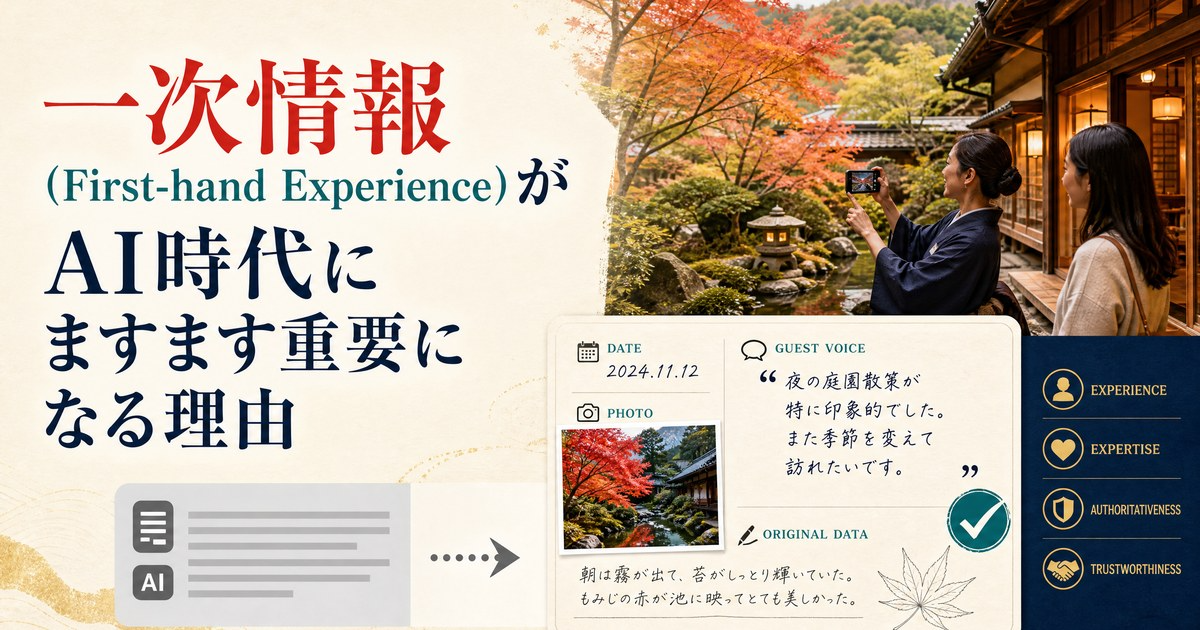
The Growing Importance of First-hand Experience in the Age of AI
As AI makes it easy for anyone to generate text, the value of first-hand information—only available from those who have truly experienced it—has become increasingly significant. This article explores how to leverage first-hand information on ryokan websites, with concrete examples.
Read more →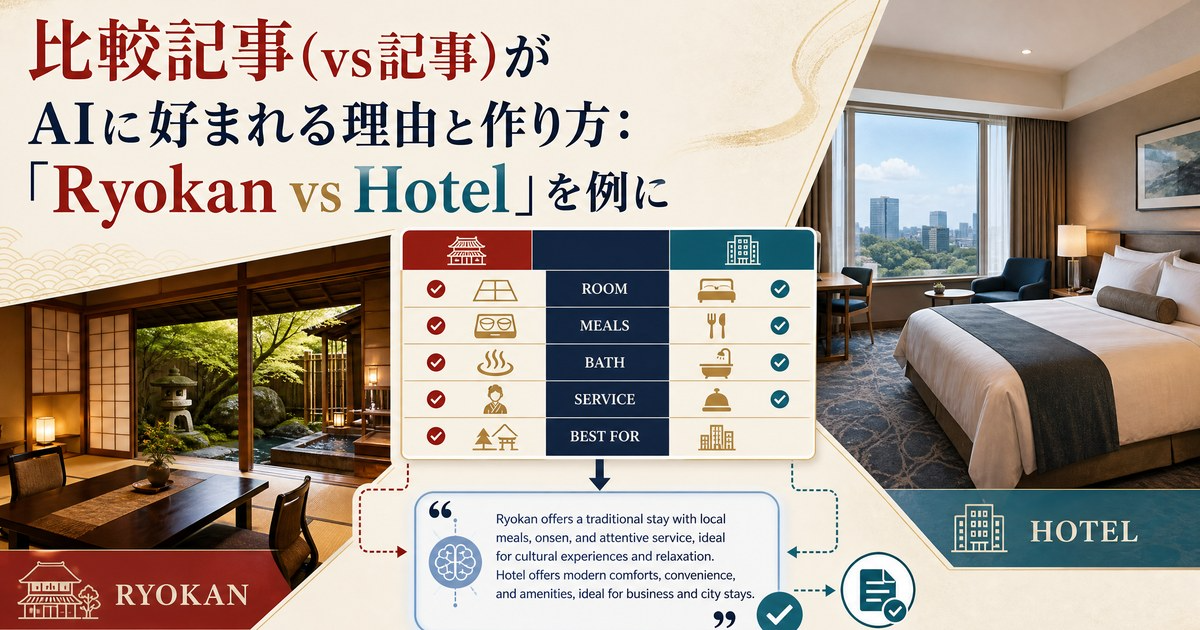
Why AI Prefers Comparison Articles and How to Create Them: A Case Study on 'Ryokan vs Hotel'
Comparison articles, such as 'Ryokan vs Hotel', are a favored content format for AI search engines. This article explains why comparison articles are often cited and provides tips on how to create them effectively.
Read more →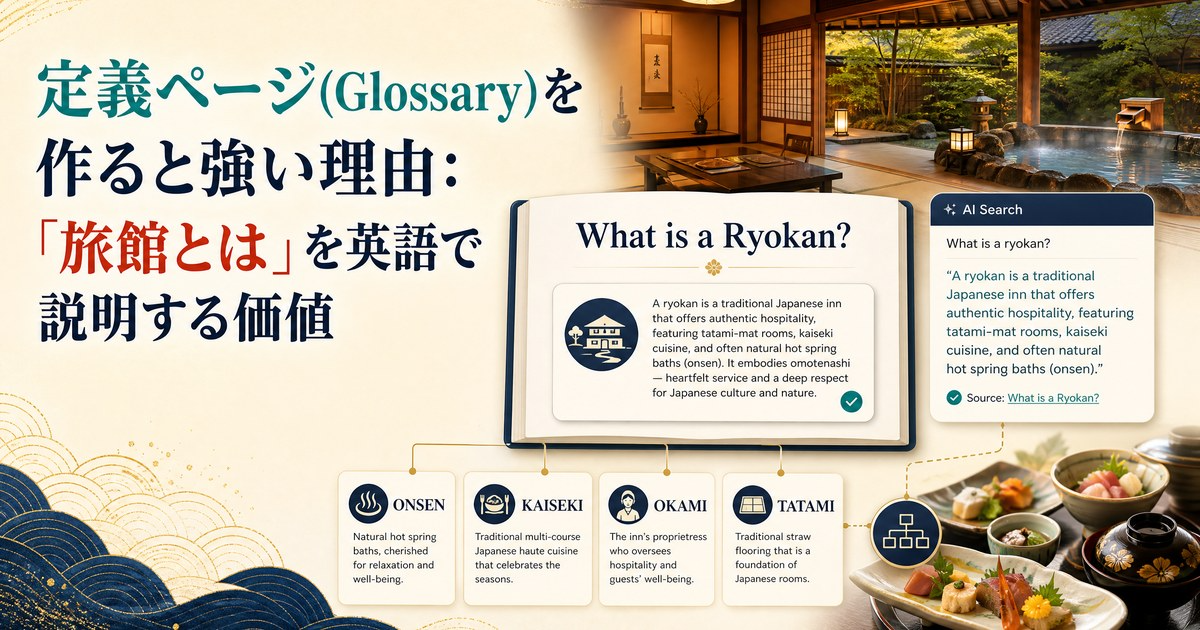
The Power of Creating a Definition Page: The Value of Explaining 'What is a Ryokan' in English
AI search engines tend to favor citing definition pages as sources for answers. This article discusses the value of creating a page that explains 'What is a ryokan' in English, introducing it as a new content strategy for the AI era.
Read more →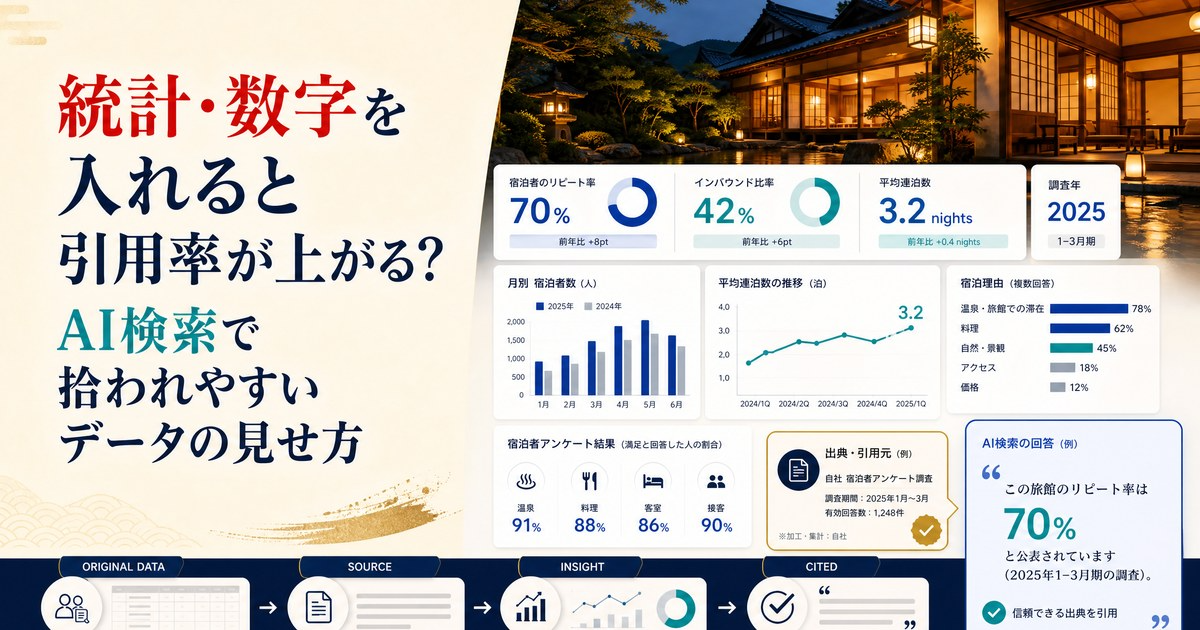
Does Including Statistics and Numbers Increase Citation Rates? How to Present Data That AI Searches Favor
Research indicates that content containing statistics and numbers is more likely to be cited by AI search engines. This article explains how ryokan websites can leverage this information effectively, supported by research findings.
Read more →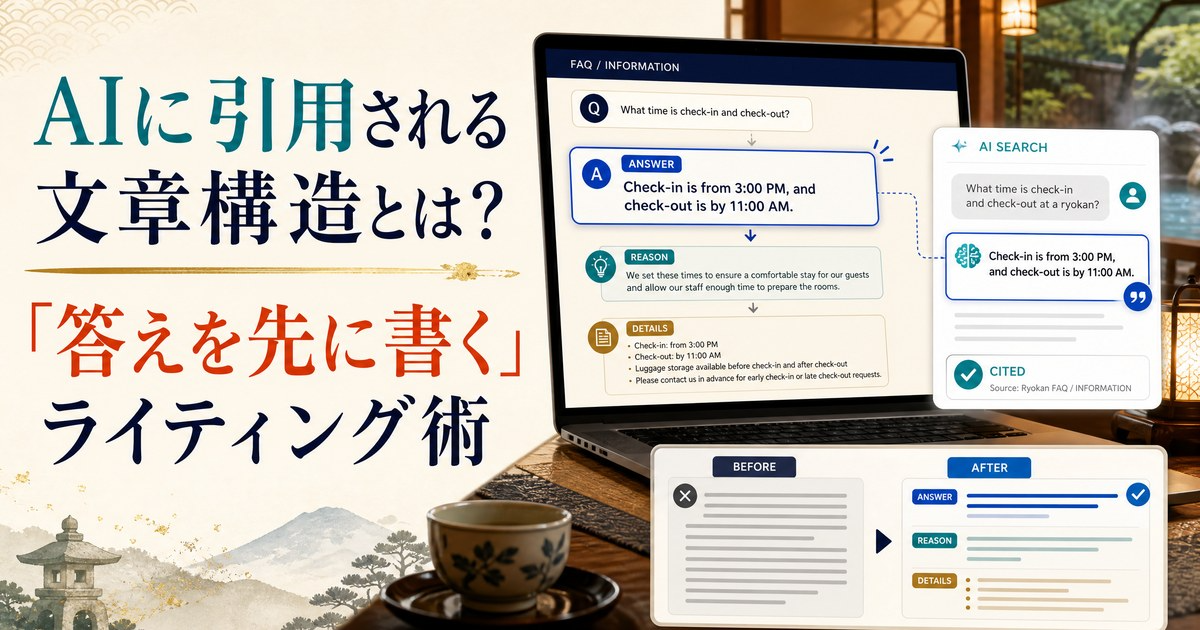
Understanding the Structure of Text Quoted by AI: The 'Answer First' Writing Technique
There is a common structure in texts that are easily quoted by AI search engines. This article explains how to apply the simple principle of 'writing the conclusion first' to the content of ryokan websites, along with practical writing tips.
Read more →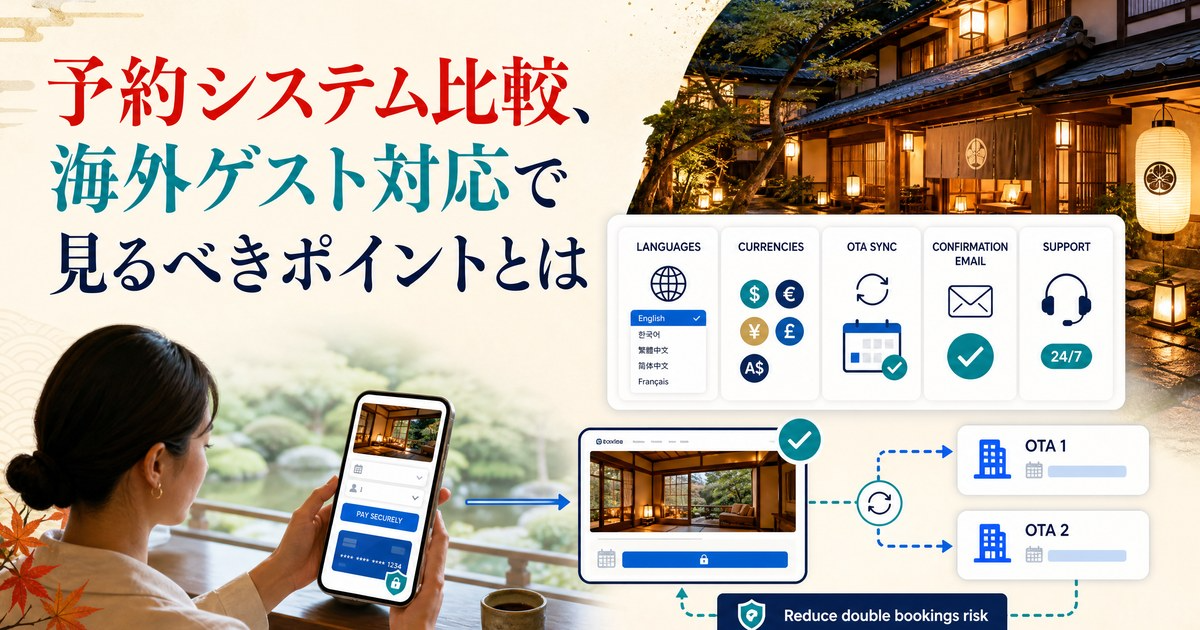
Comparing Reservation Systems: Key Points for Catering to International Guests
When selecting a reservation system, it’s crucial to consider not only domestic features but also aspects that cater to international guests. This article outlines important factors such as multilingual support and payment methods to help you in your comparison process before implementation.
Read more →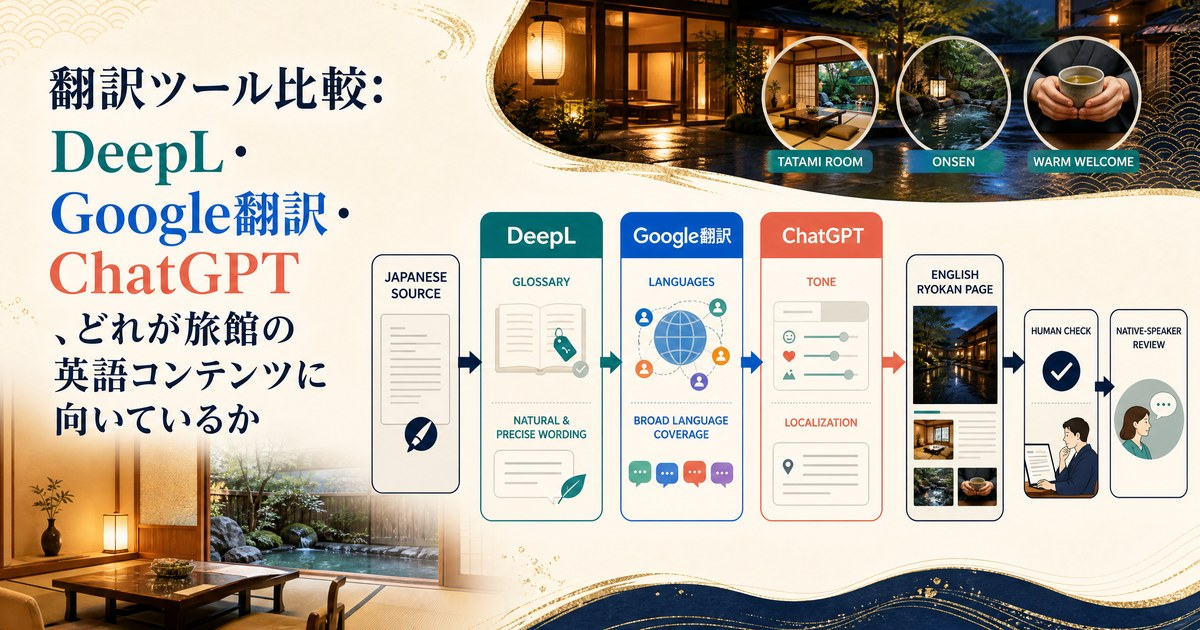
Comparing Translation Tools: Which is Best for Your Ryokan's English Content—DeepL, Google Translate, or ChatGPT?
DeepL, Google Translate, and ChatGPT each have their strengths. This article explores which tool is best suited for your ryokan's English content, highlighting their features and how to use them effectively.
Read more →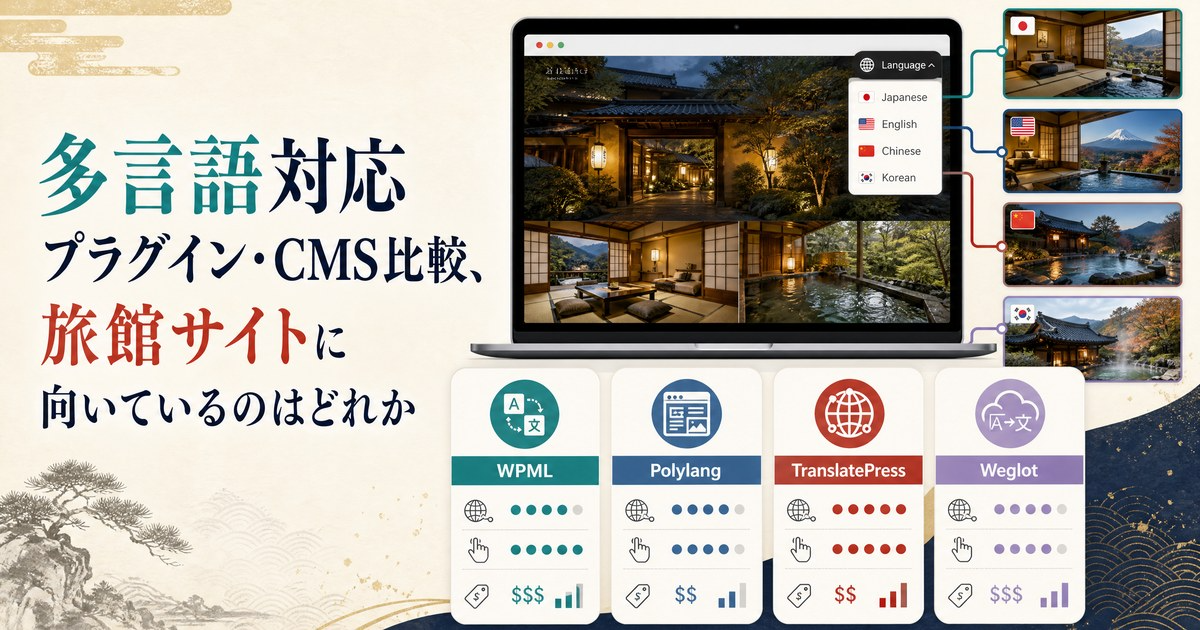
Comparing Multilingual Plugins and CMS: Which is Best for Ryokan Websites?
There are various options for multilingual plugins and CMS, but the best choice for ryokan websites depends on their scale and operational structure. This article compares the main options and provides tips on how to choose.
Read more →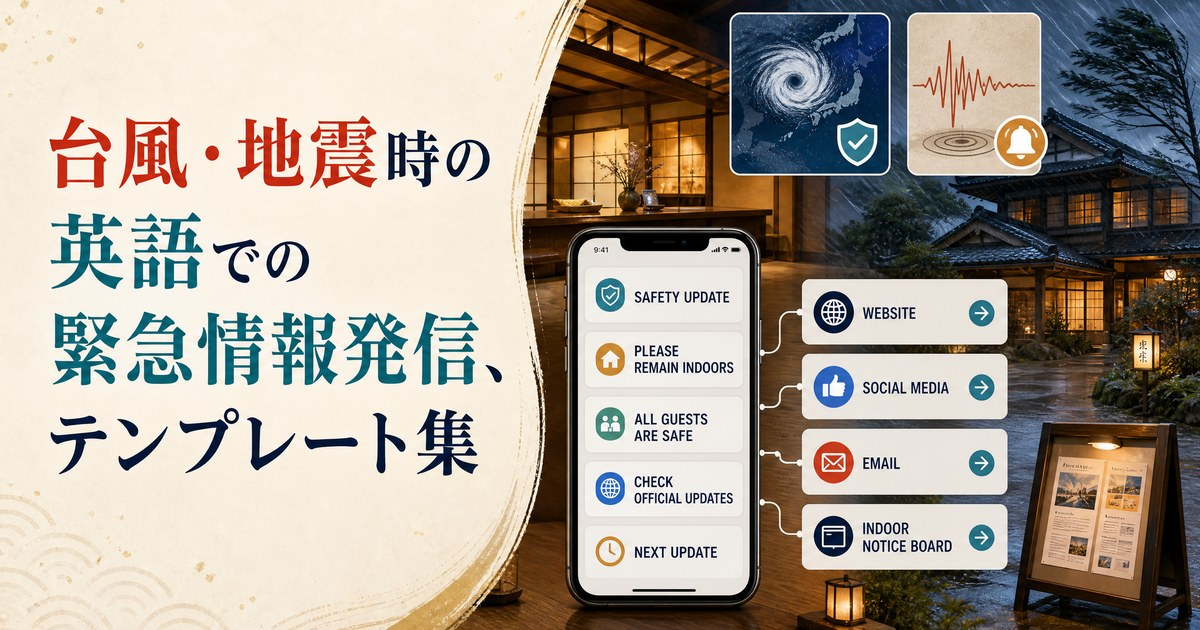
Emergency Communication Templates for Typhoons and Earthquakes
During emergencies like typhoons and earthquakes, delivering accurate and clear information in English to international guests significantly enhances their sense of security. Here, we present a collection of ready-to-use English templates to help you prepare for such situations.
Read more →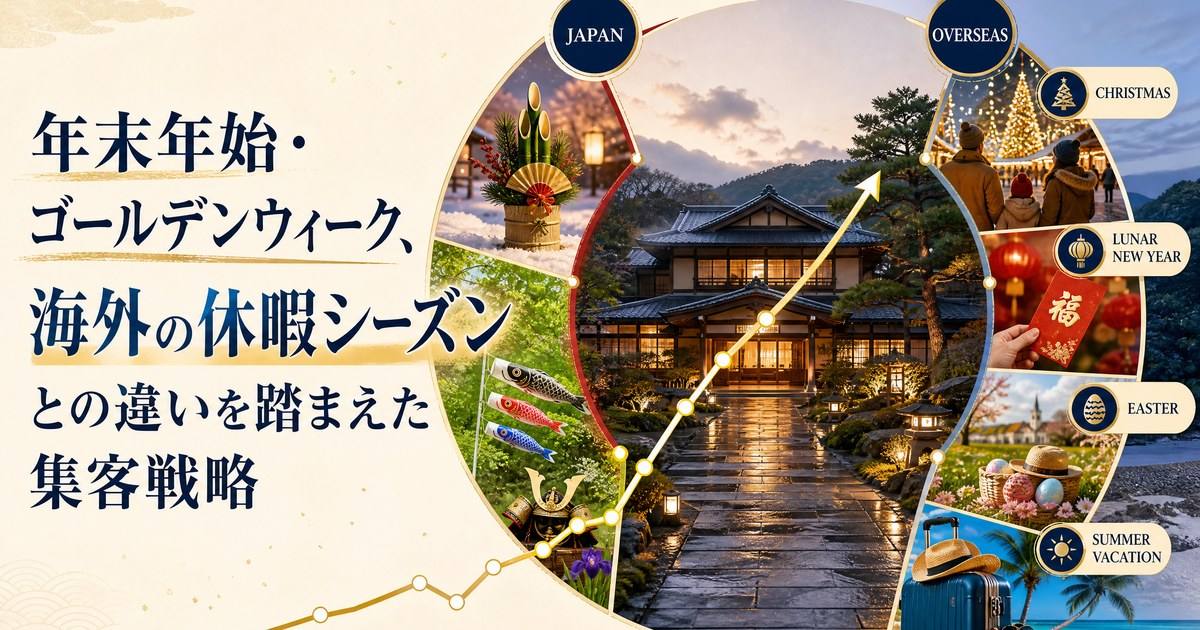
Attracting International Guests: Strategies Considering Japan's Holiday Seasons vs. Global Vacation Periods
While the New Year and Golden Week are major holidays for Japanese people, they do not align with vacation seasons in other countries. This article discusses international marketing strategies that take these differences into account, emphasizing the importance of not solely relying on Japan's holiday calendar.
Read more →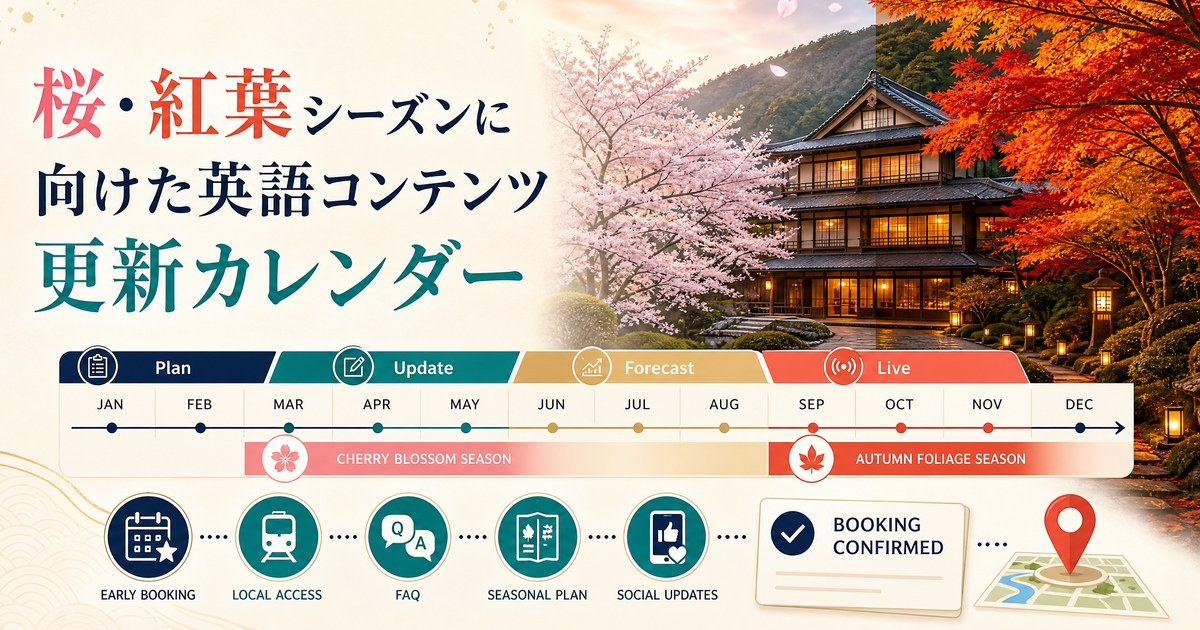
Updating English Content for Cherry Blossom and Autumn Leaf Seasons
The cherry blossom and autumn leaf seasons are critical times for international travelers searching for and booking trips to Japan. This article presents a seasonal update calendar for English content, helping you plan updates effectively to avoid missed opportunities.
Read more →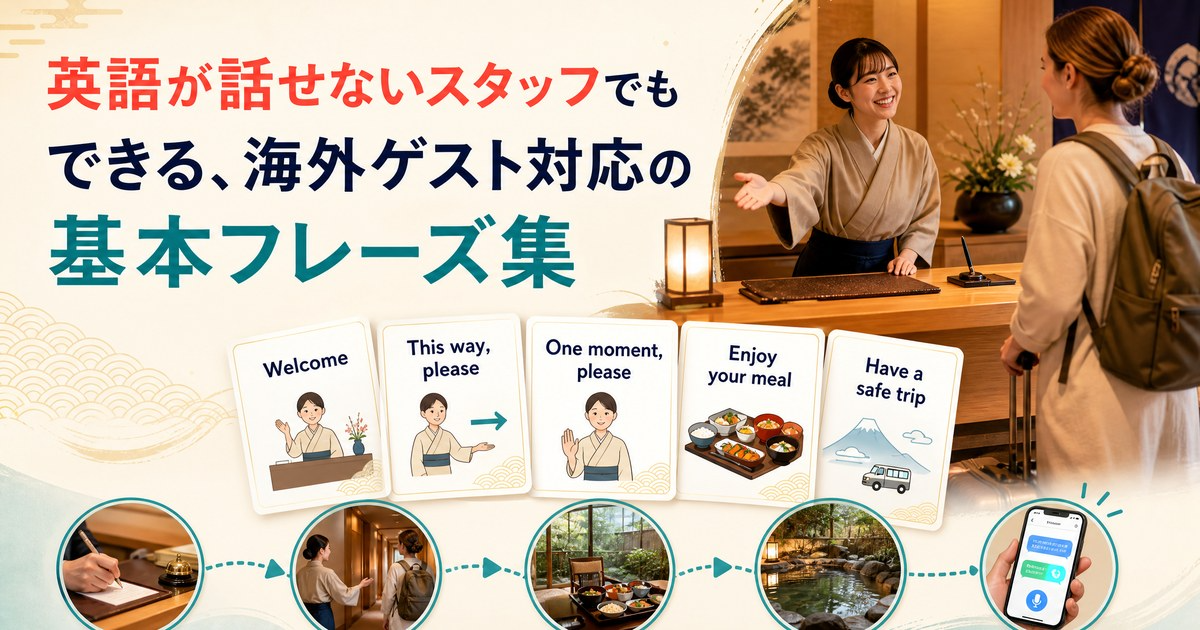
Essential Phrases for Assisting International Guests, Even if Your Staff Can't Speak English
Staff members who worry about not being able to communicate in English can significantly improve their interactions with international guests by simply memorizing a few basic phrases. Here’s a handy collection of phrases you can use right away.
Read more →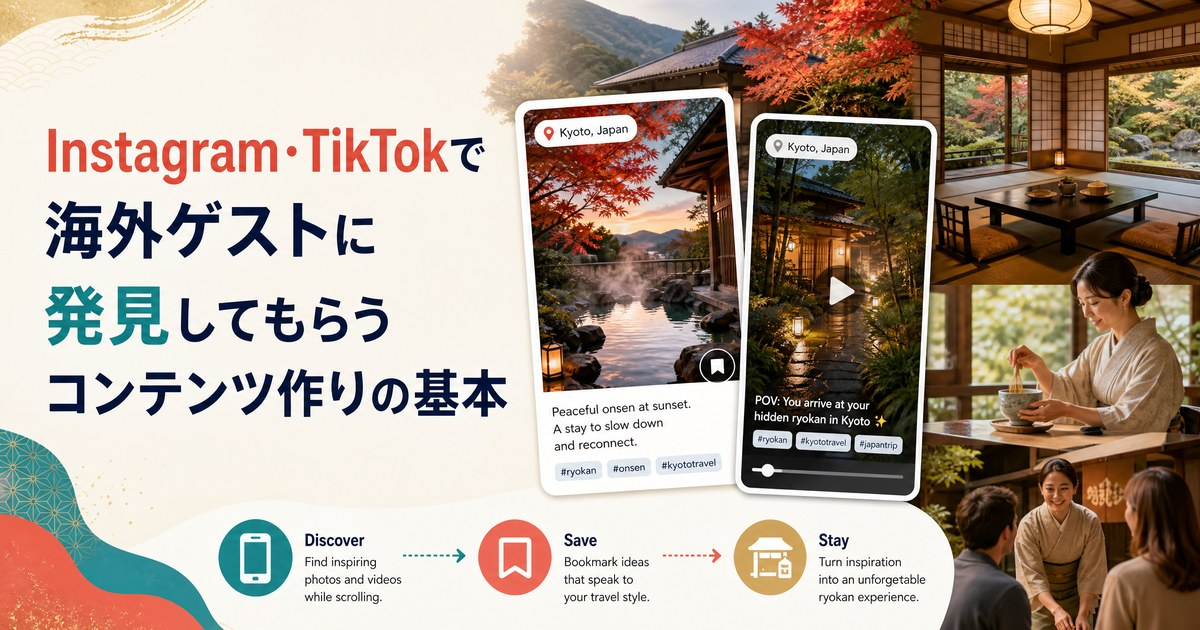
Creating Content to Be Discovered by International Guests on Instagram and TikTok
In addition to search engines, platforms like Instagram and TikTok have become crucial for international travelers to discover destinations. This article outlines the fundamentals of content creation for ryokans and accommodations to be found on social media.
Read more →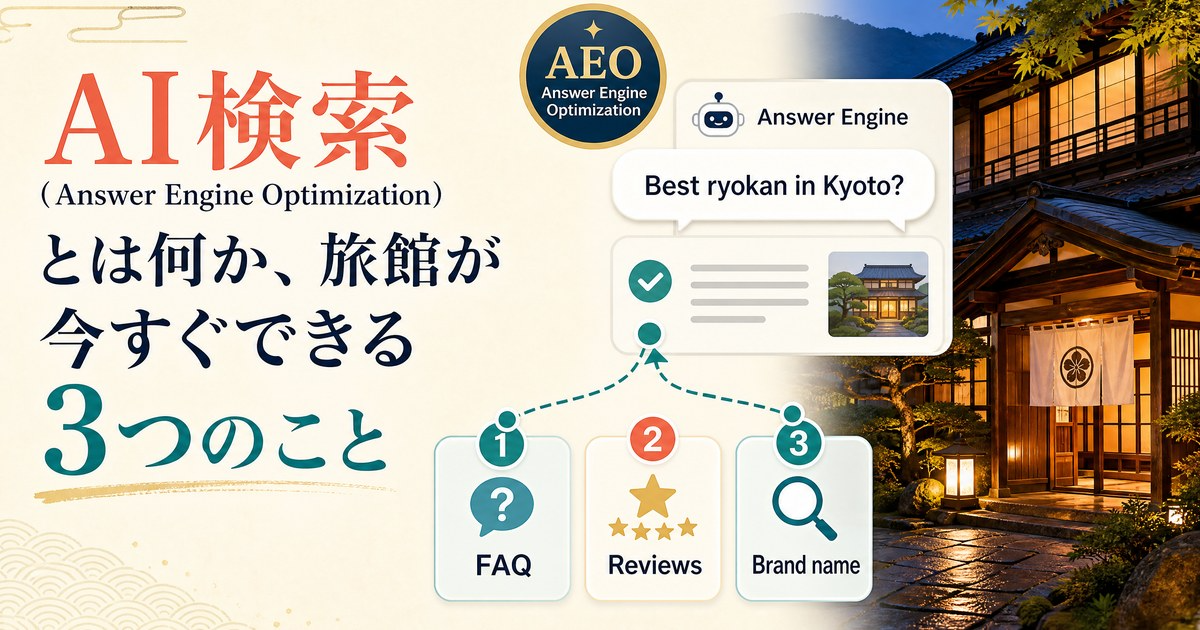
What is AI Search (Answer Engine Optimization) and 3 Things Ryokans Can Do Right Now
This article provides a clear explanation of Answer Engine Optimization (AEO) for those unfamiliar with the term, along with three specific actions that ryokan owners can start implementing today.
Read more →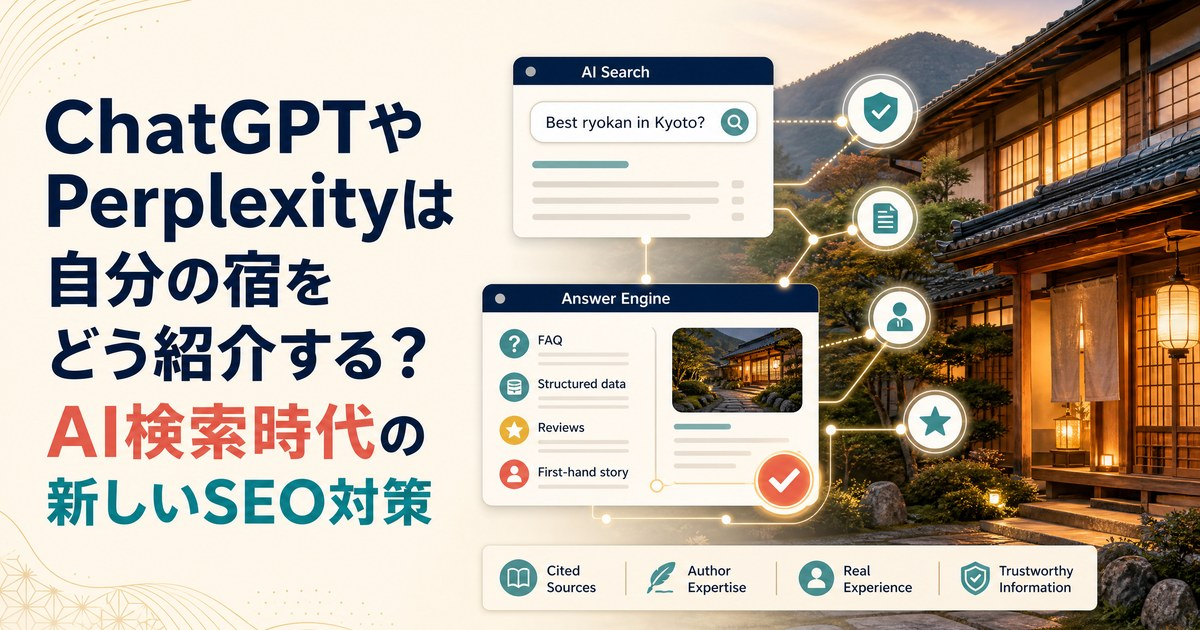
How Do ChatGPT and Perplexity Introduce Your Ryokan? New SEO Strategies for the AI Search Era
When asked about recommended ryokans by AI tools like ChatGPT or Perplexity, will your establishment be mentioned? This article explains new SEO strategies (AEO) to adapt to the AI search era.
Read more →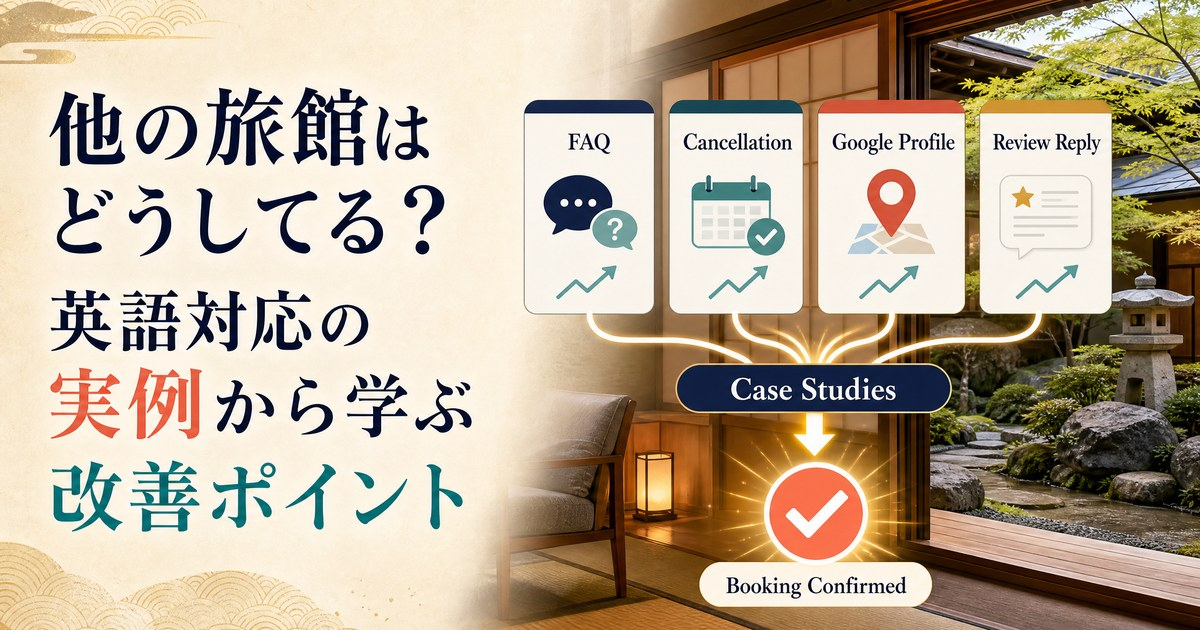
How Are Other Ryokans Improving Their English Support? Learning from Real Examples
Many are curious about how other ryokans enhance their English support. This article presents common improvement patterns through case studies, offering valuable insights for your own enhancements.
Read more →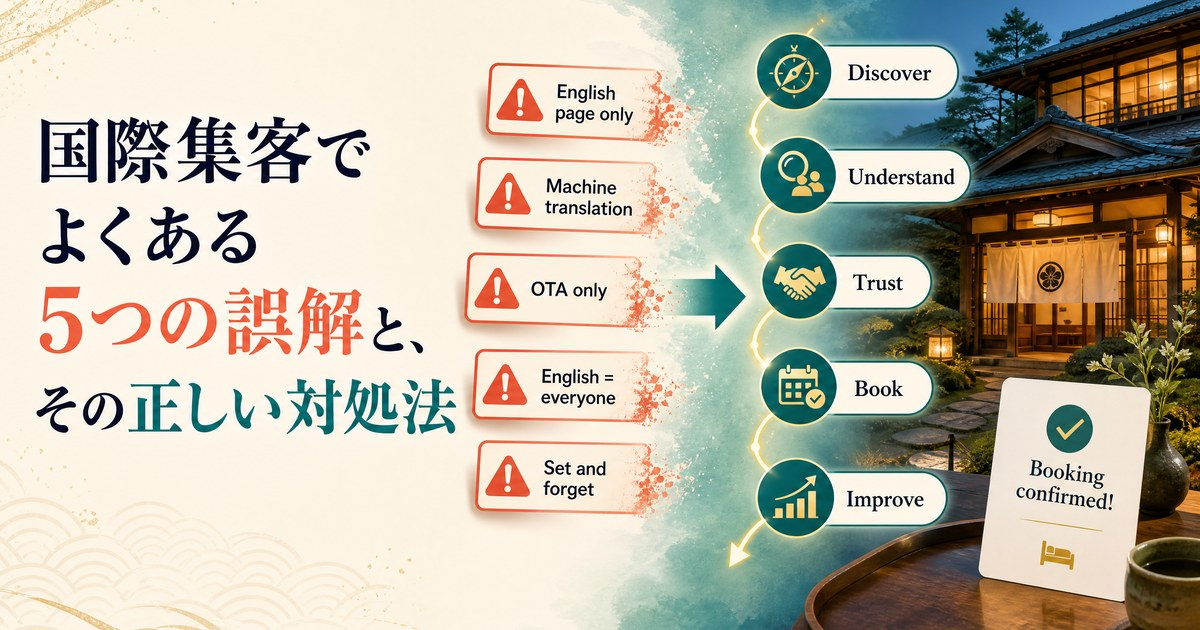
Five Common Misconceptions About International Customer Acquisition and How to Address Them Correctly
When engaging in international customer acquisition, it's not uncommon to respond based on misconceptions. This article outlines five common misunderstandings and the correct ways to address each, providing concrete examples to help you reassess your approach.
Read more →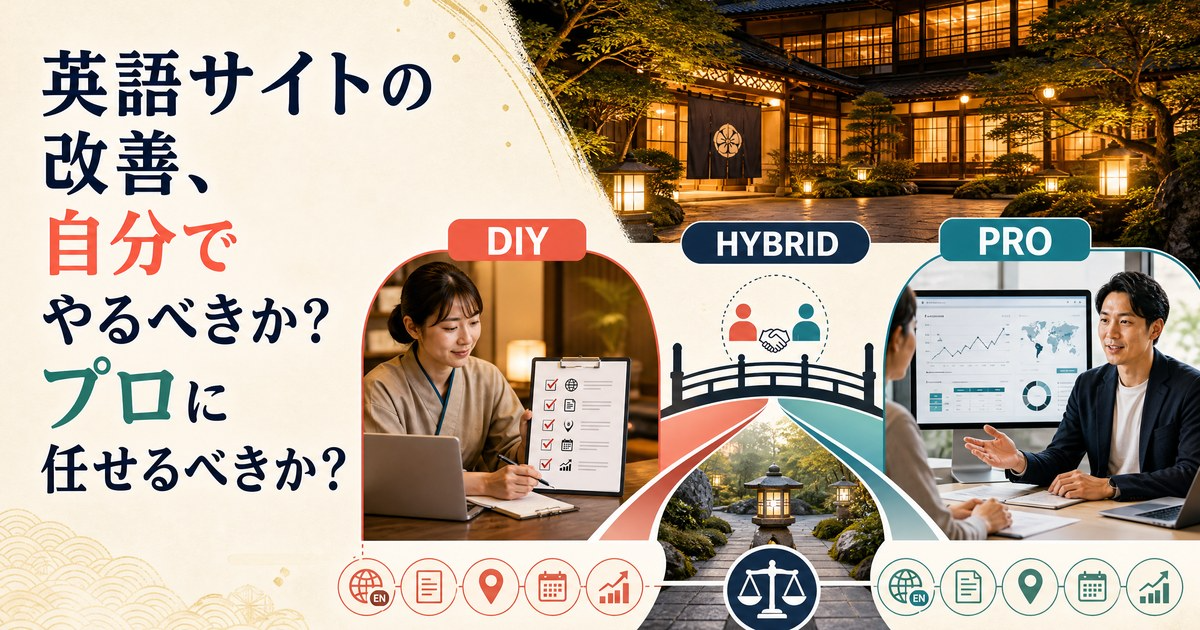
Should You Improve Your English Website Yourself or Hire a Professional?
Many ryokan managers find themselves uncertain about whether to enhance their English websites on their own or to hire experts. This article discusses the pros and cons of each approach and offers guidance on how to make the best decision for your business.
Read more →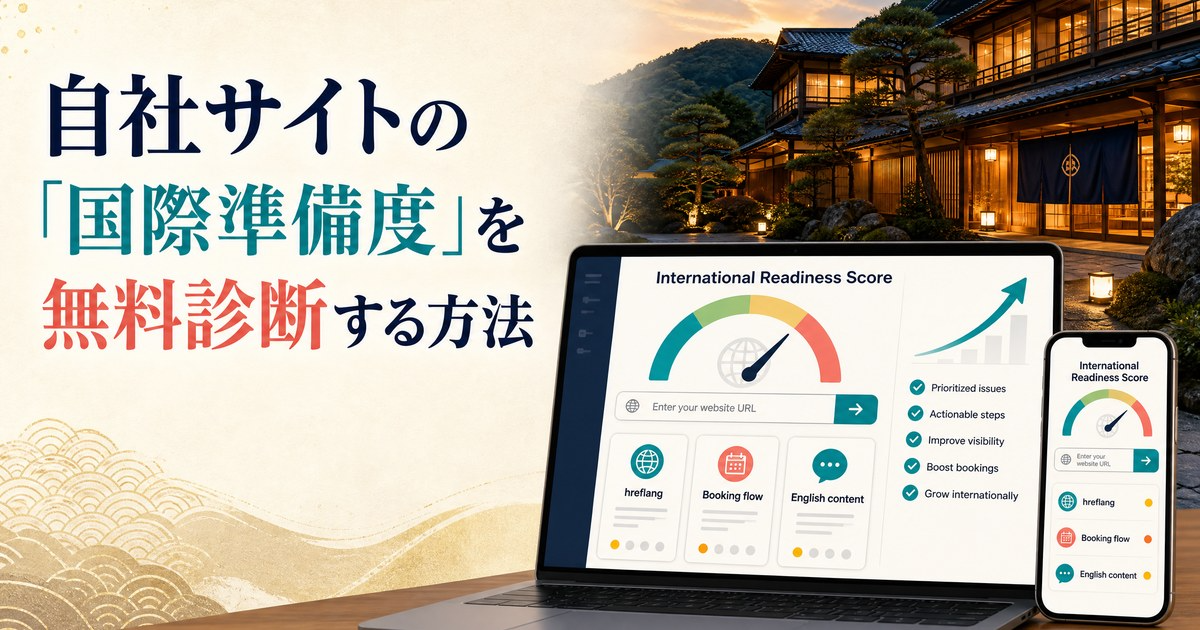
How to Conduct a Free Assessment of Your Website's International Readiness
Is your English website easily discoverable and appealing to international guests? There’s a way to objectively measure this, rather than relying on intuition. This article introduces a free diagnostic tool you can use.
Read more →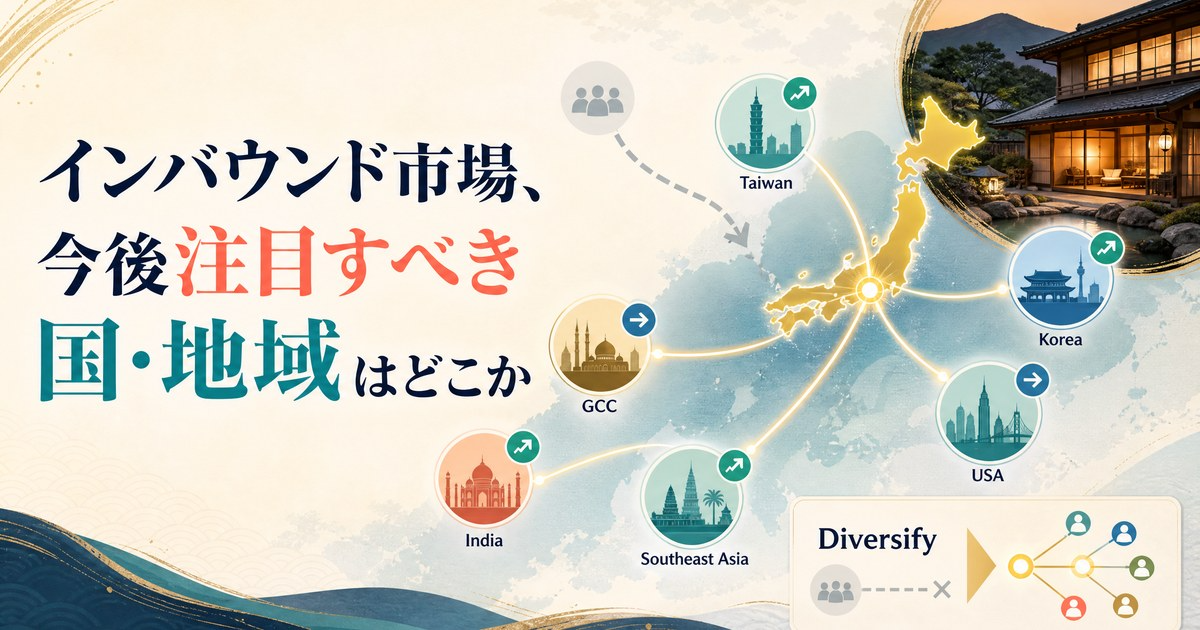
Which Countries and Regions to Watch in the Inbound Market
As Japan shifts away from reliance on China, we explore the countries and regions to watch in the inbound tourism market, including Taiwan, the Middle East, and India, along with insights for the accommodation industry.
Read more →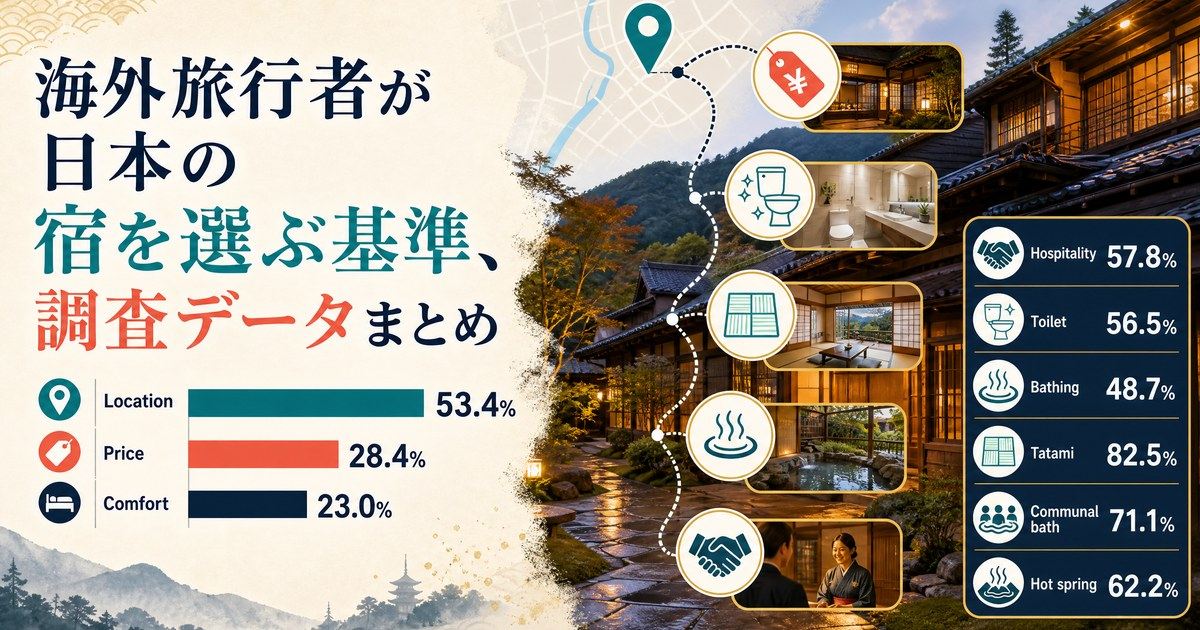
Criteria for International Travelers When Choosing Accommodations in Japan: A Summary of Survey Data
What do international travelers prioritize when selecting accommodations? Based on domestic and international survey data, we summarize key factors such as location, price, bathroom facilities, and cultural experiences that are actually valued.
Read more →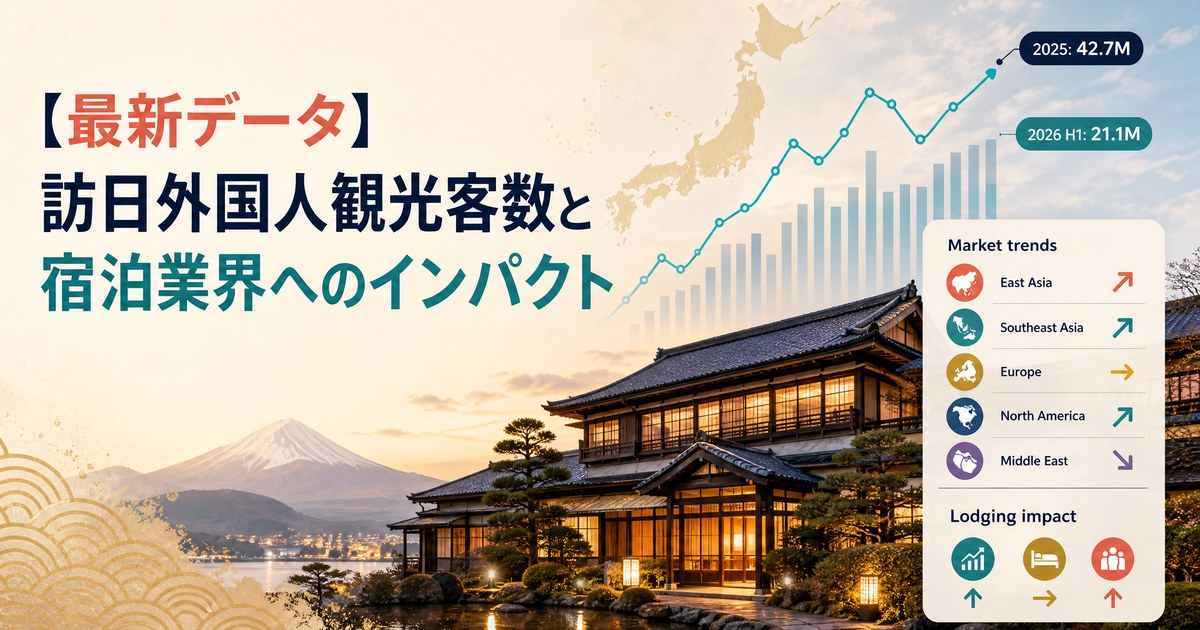
Latest Data: Impact of Foreign Tourist Numbers on the Accommodation Industry
The number of foreign tourists visiting Japan in 2026 shows significant variations by country and region. This article explains the implications for the accommodation industry based on the latest data, touching on changes in accommodation demand by region.
Read more →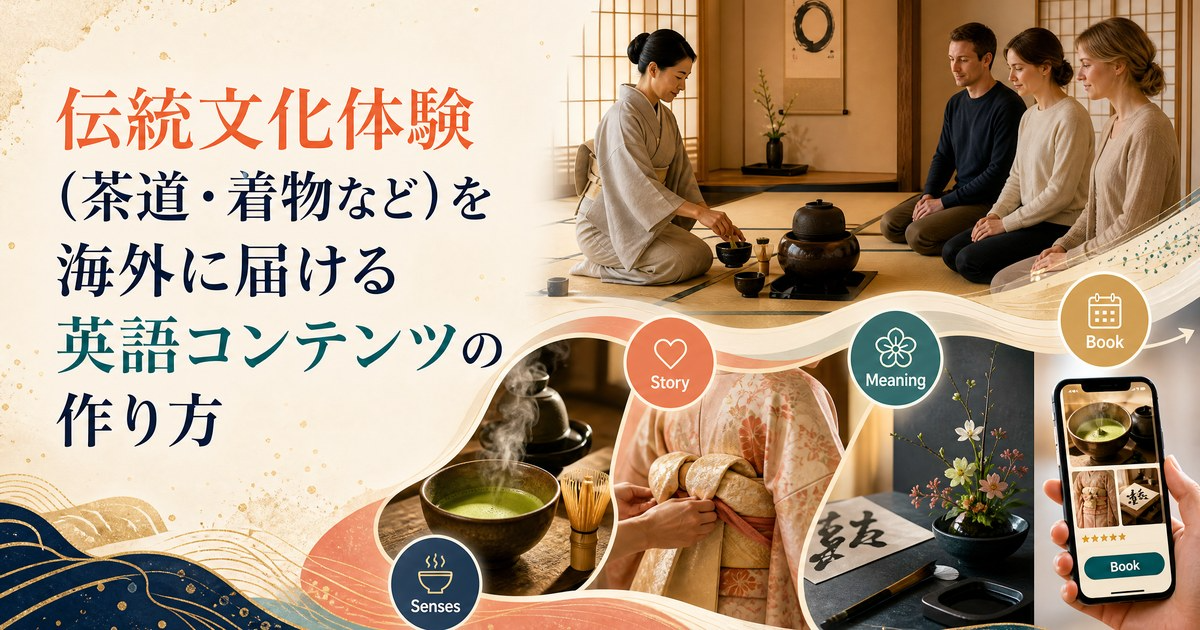
How to Create English Content Delivering Traditional Cultural Experiences (Tea Ceremony, Kimono, etc.) to Overseas Travelers
The depth of Japan's traditional culture, such as tea ceremonies and kimono experiences, cannot be fully captured in words. This article introduces how to create English content that accurately conveys this value to international travelers, with specific examples.
Read more →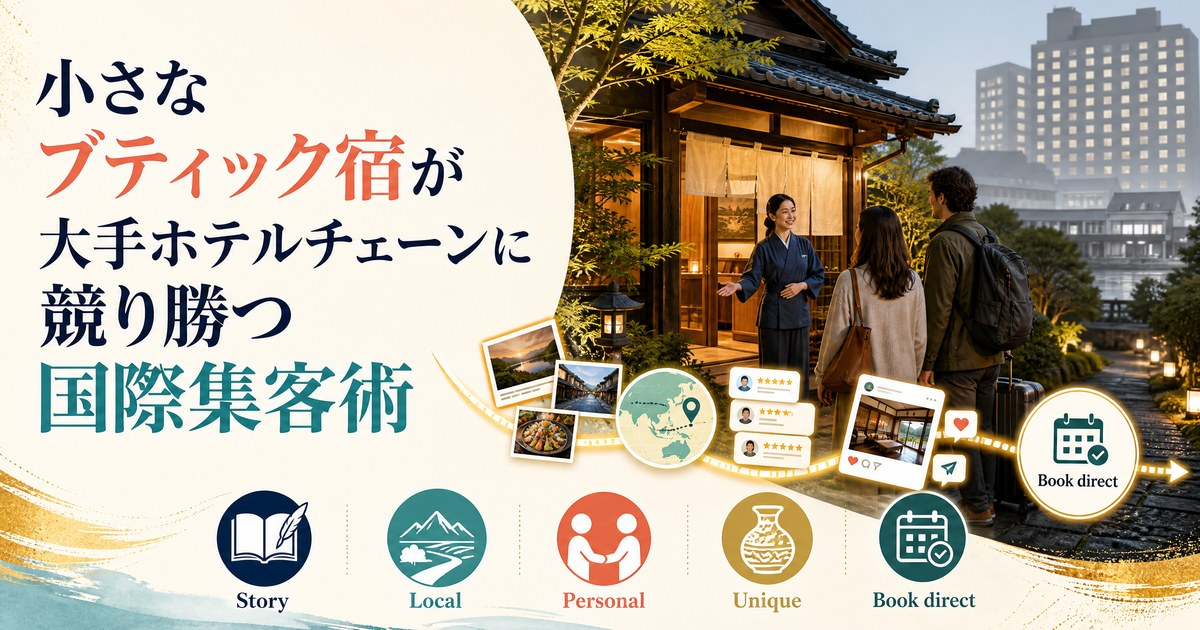
How Small Boutique Inns Can Compete with Major Hotel Chains in International Marketing
While small boutique inns may struggle against major hotel chains in budget and brand recognition, they possess unique advantages that can be leveraged for international marketing. This article explores effective strategies for attracting global guests.
Read more →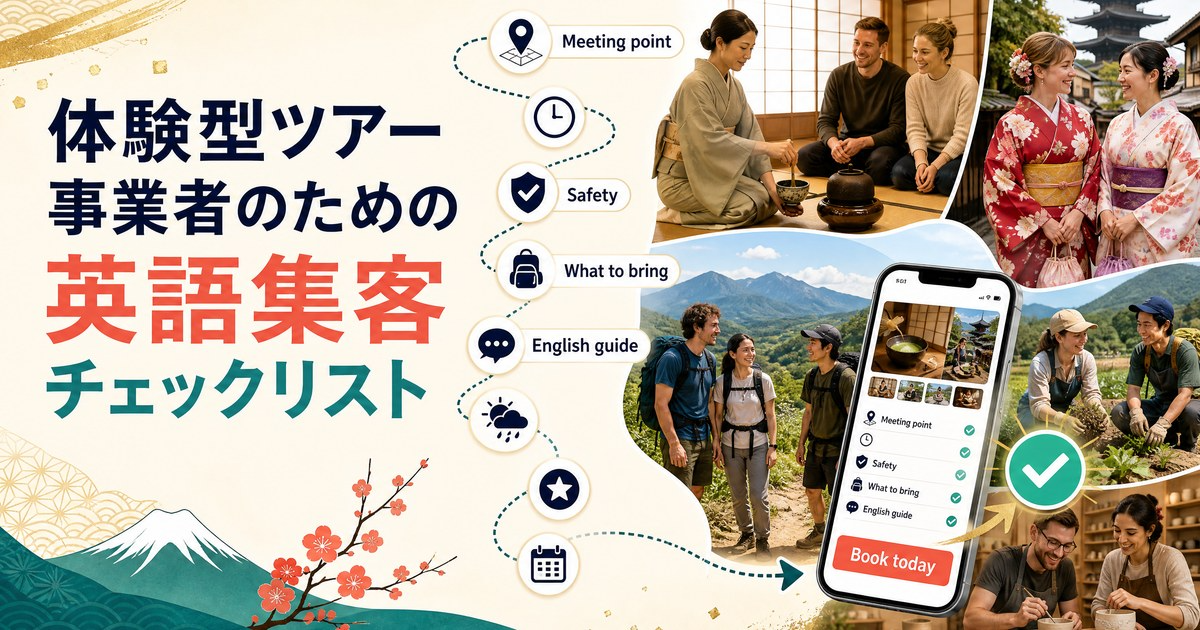
English Marketing Checklist for Experience-Based Tour Operators
Experience-based tours have different marketing points compared to ryokans. Here’s an essential English marketing checklist to help international travelers find and confidently book your tours.
Read more →
A Guide to Attracting International Guests to Your Ryokan or Hotel | How to Increase Bookings with International SEO
The reason why many high-quality accommodations struggle to attract international bookings is not due to their quality, but rather the design of the experience encompassing 'Discovery, Understanding, Trust, Booking, and Growth.' This article provides practical strategies for ryokans, hotels, and experience providers to reach and be chosen by international guests.
Read more →
Follow-Up Strategies to Convert International Guests into Repeat Visitors
Attracting new international guests is just as important as turning those who have already visited into repeat visitors. Here, we introduce effective follow-up strategies to maintain relationships with overseas guests.
Read more →
Adapting Website Management to Changes in Inbound Demand
Inbound demand is constantly fluctuating due to factors such as exchange rates, international situations, and seasonal trends. This article discusses how to manage your website flexibly in response to these changes, providing tips for creating a resilient operational framework.
Read more →
The Monthly Improvement Cycle for International Customer Acquisition: It's Not Just a One-Time Effort
Launching your English website is just the beginning. Regularly monitoring search rankings and drop-off points, and continuously improving your site, are essential for achieving results. This article explains how to implement a monthly improvement cycle for sustained international customer acquisition.
Read more →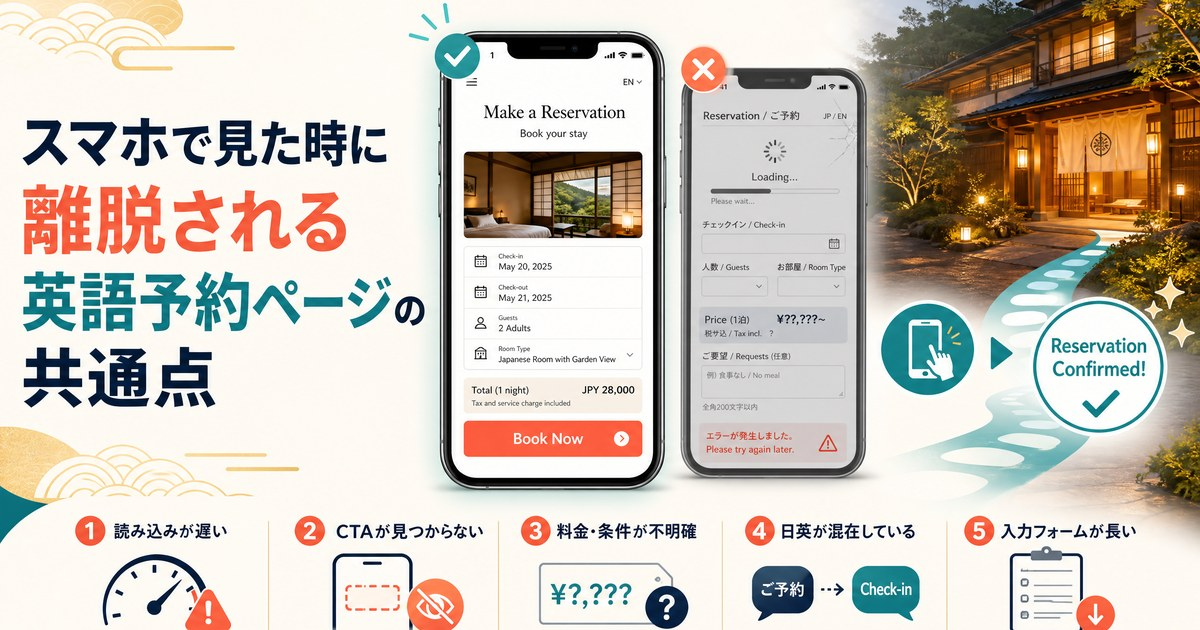
Common Issues Leading to Abandonment of English Reservation Pages on Mobile Devices: Key Improvements to Retain Foreign Travelers
Why do foreign travelers abandon English reservation pages without booking when viewing them on their smartphones? This article discusses common pitfalls that lower reservation rates and highlights points for improvement.
Read more →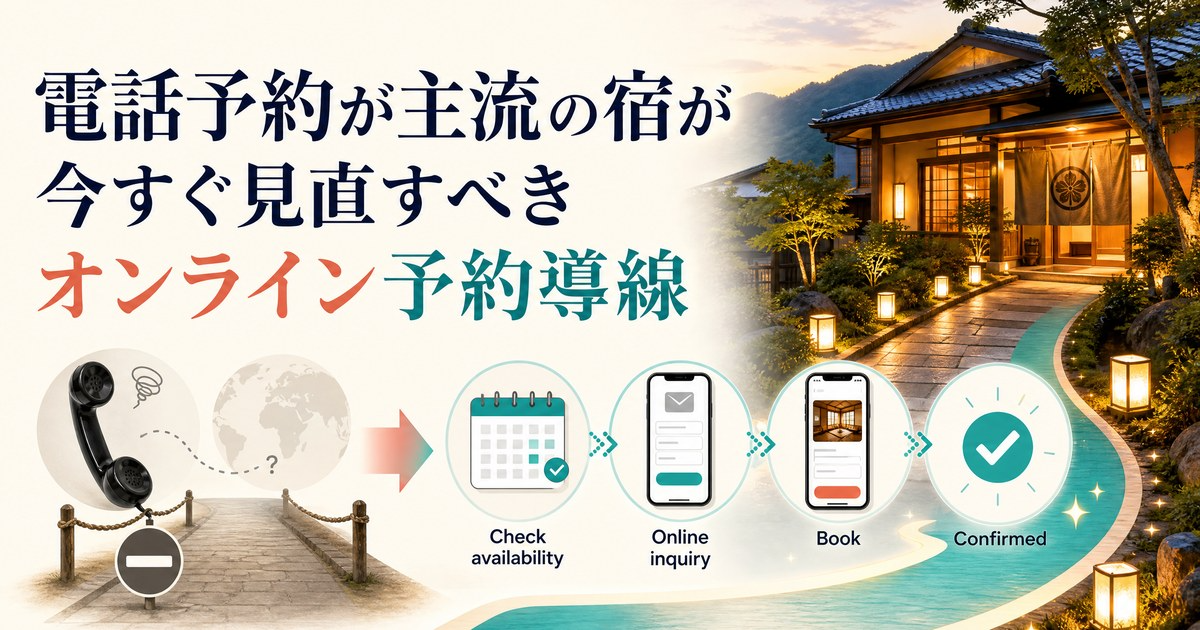
Reevaluating Online Booking for Ryokans Primarily Using Phone Reservations
For ryokans that primarily rely on phone reservations, enhancing online booking systems is often postponed. However, for international guests, phone reservations can be a significant barrier, leading to lost opportunities. Here are key points to consider for improvement.
Read more →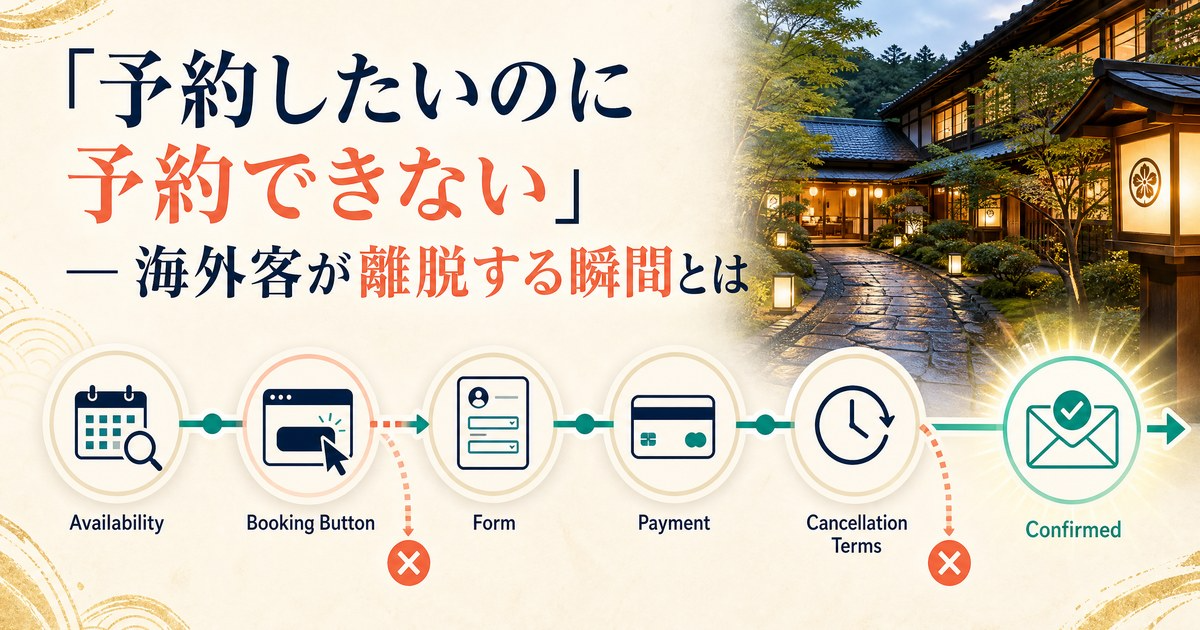
Why International Guests Abandon Reservations: Key Moments of Frustration
Even when guests want to make a reservation, there are critical moments when they abandon the process. This article explores typical patterns of why international guests give up and offers strategies to address these issues.
Read more →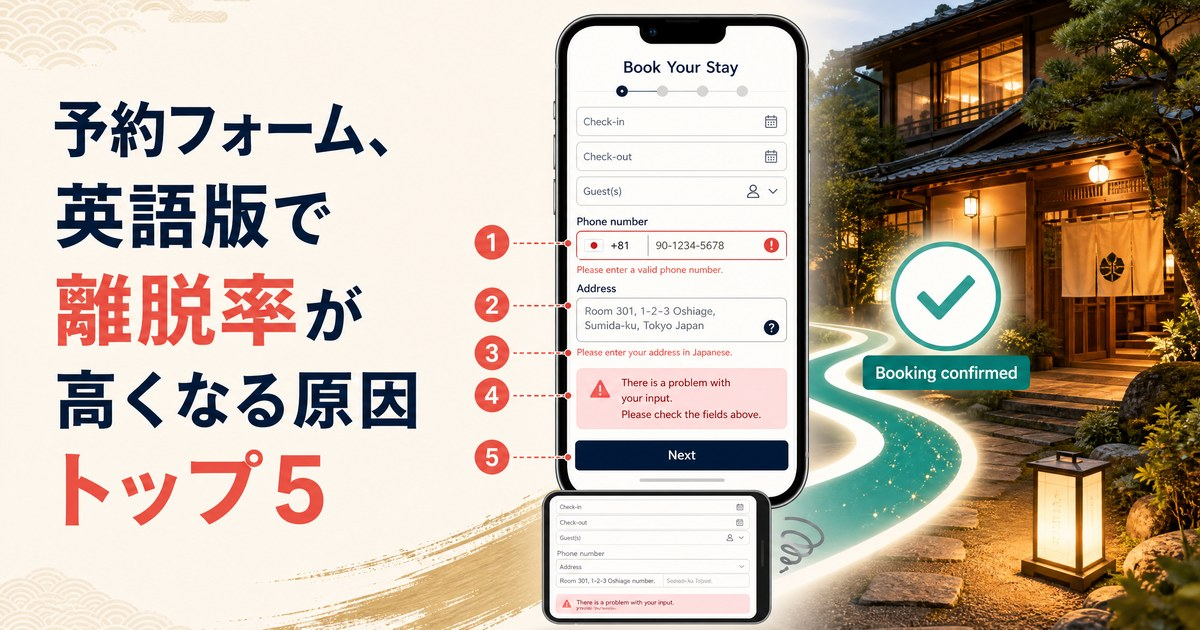
Top 5 Reasons for High Drop-off Rates on English Reservation Forms
Have you noticed a high drop-off rate on your English reservation form? There are common reasons behind this issue. Here, we explore five common causes for international guests abandoning the reservation process and how to improve it.
Read more →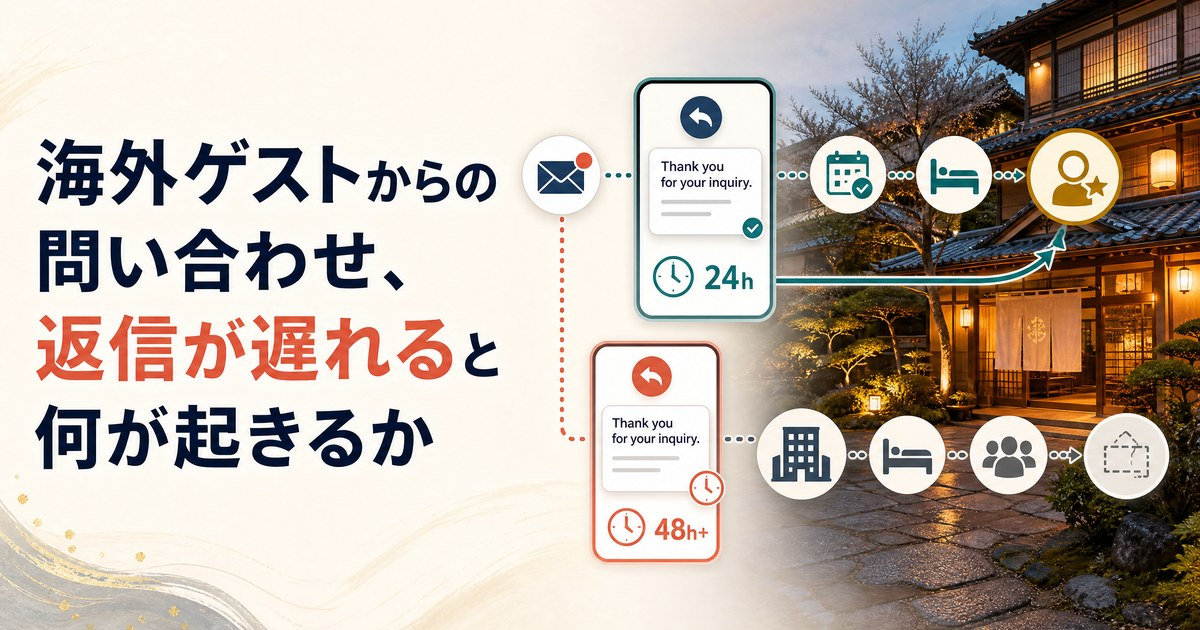
What Happens When You Delay Responses to Inquiries from International Guests
Delaying responses to inquiries from international guests can lead to more than just a negative impression; it can result in lost opportunities and low-rated reviews. This article explains the specific impacts of delayed responses and offers strategies to address them.
Read more →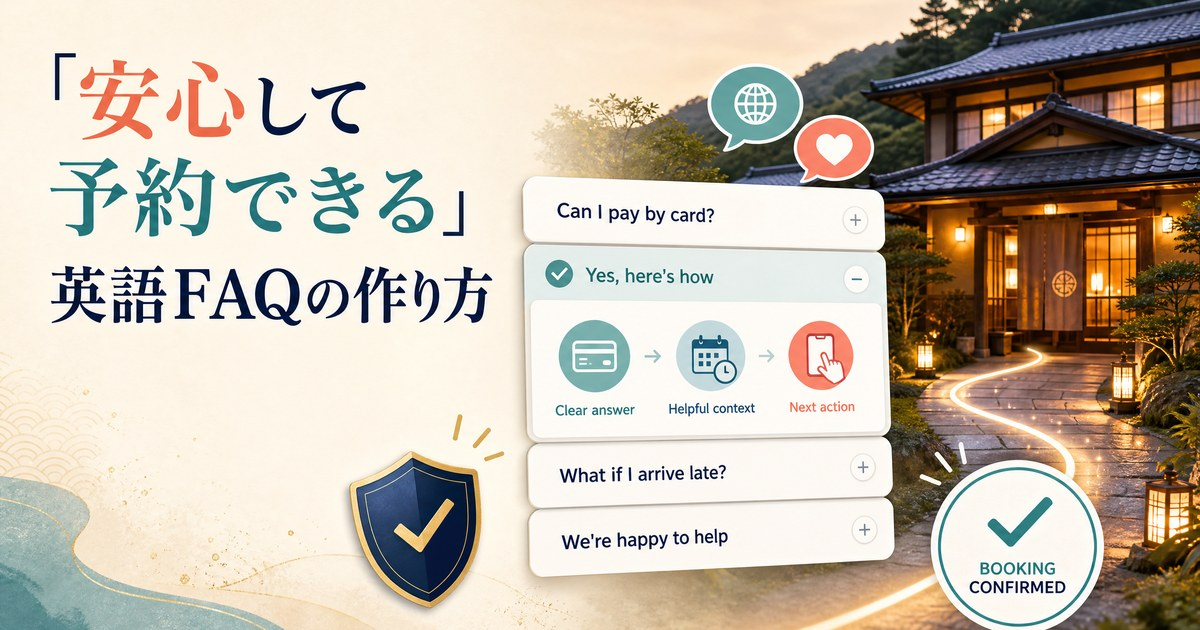
How to Create an English FAQ That Ensures Guests Can Book with Confidence
An FAQ page that merely lists questions and answers can be ineffective. This article explains how to proactively address the concerns of international guests, making them feel confident in their booking decisions.
Read more →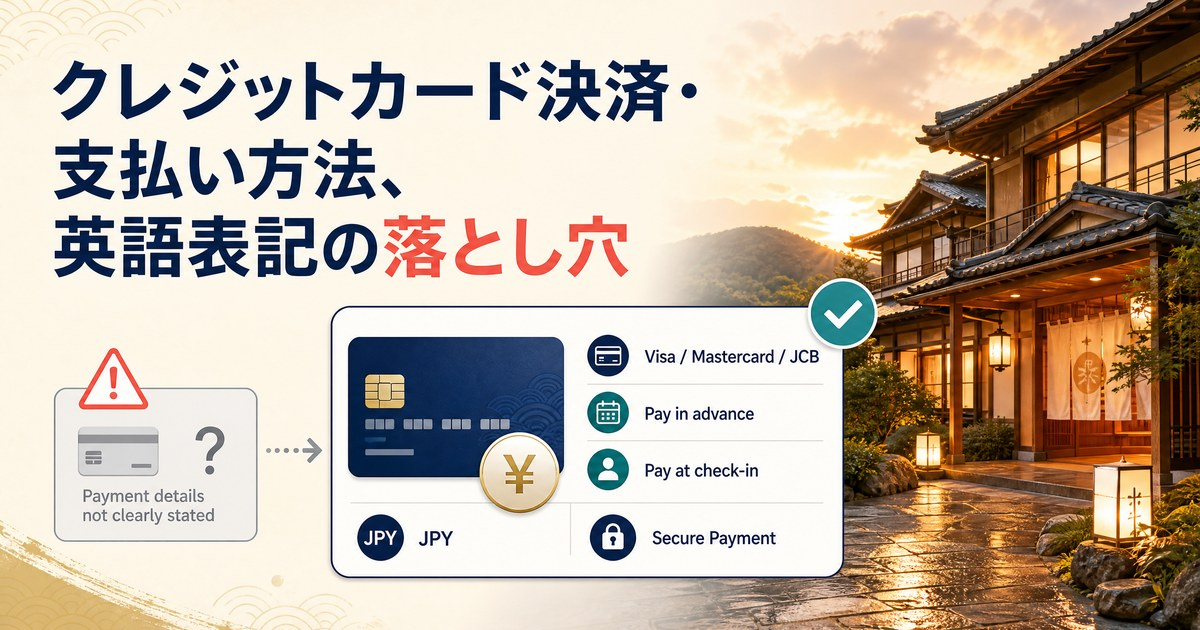
Common Pitfalls in English Payment Terms for Credit Card Transactions
Ambiguous English payment terms can create anxiety for international guests when booking. This article highlights common pitfalls and provides clear examples to avoid misunderstandings, which can significantly impact your booking rates.
Read more →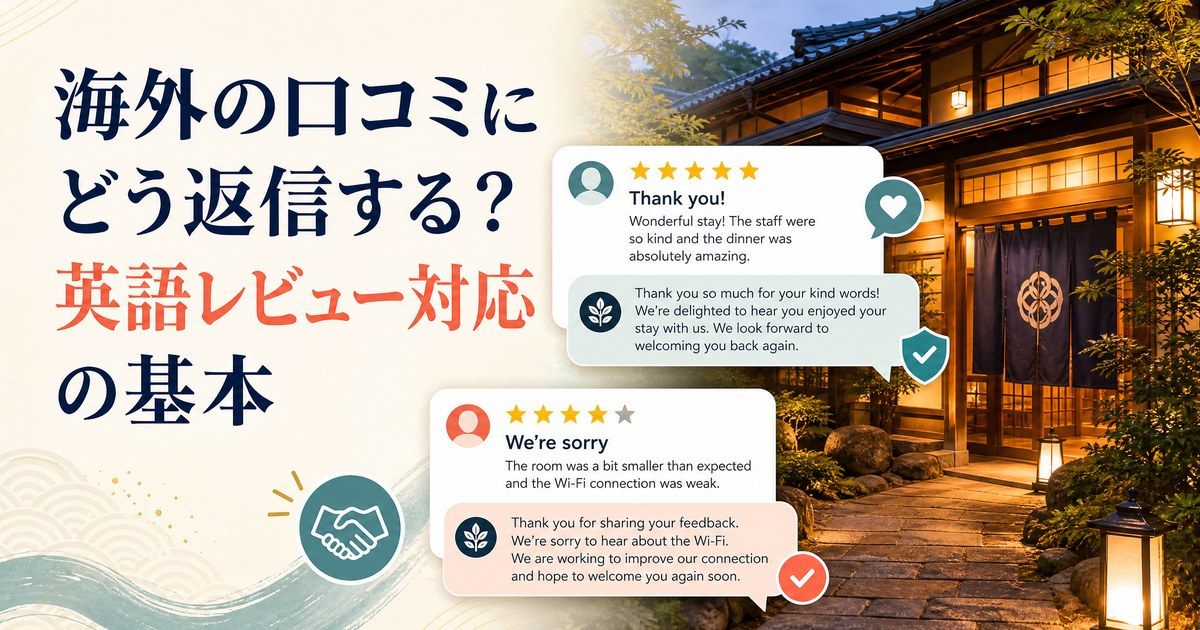
How to Respond to International Reviews: Basics of English Review Management
Many hospitality professionals struggle with how to respond to reviews from international guests. This article outlines the fundamentals of replying to both positive and negative reviews, provides ready-to-use example phrases, and highlights expressions to avoid.
Read more →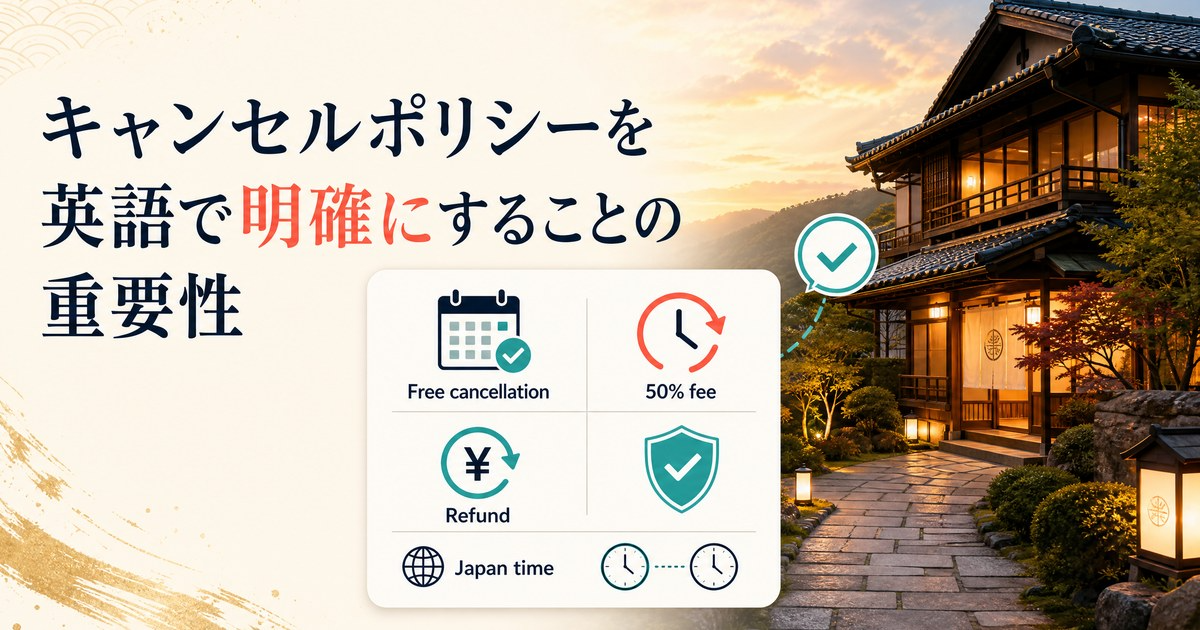
The Importance of Clearly Communicating Your Cancellation Policy in English
An unclear cancellation policy can lead to anxiety and misunderstandings for international guests, resulting in potential disputes and negative reviews. This article explains why clarity is essential and how to articulate your policy effectively in English.
Read more →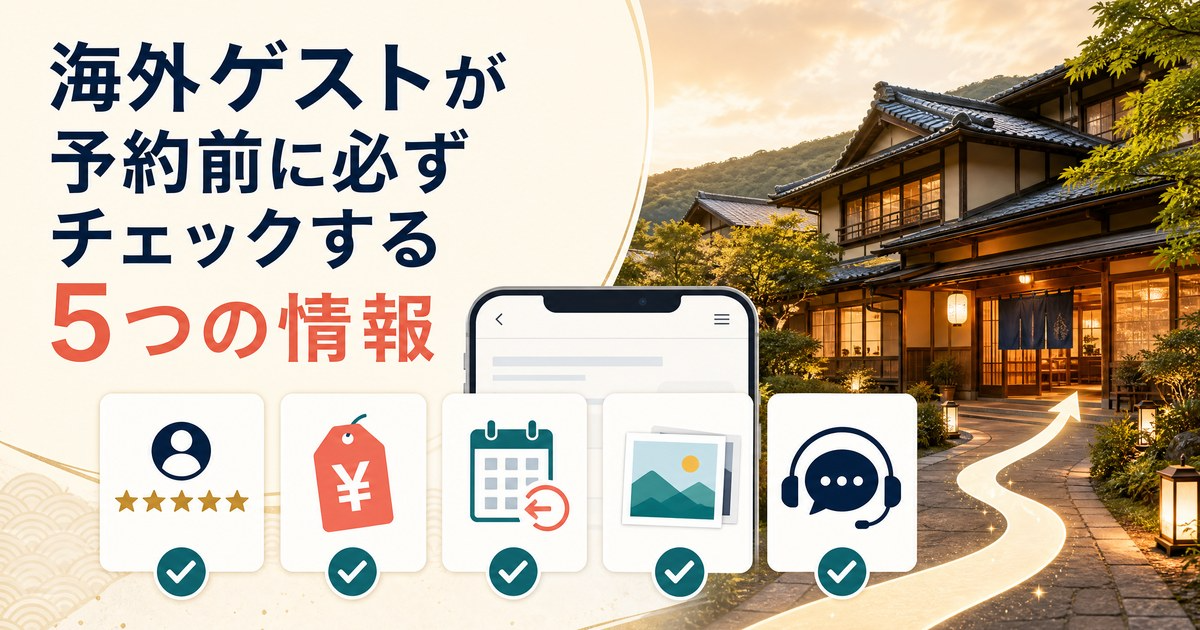
5 Essential Factors International Guests Check Before Booking
International guests always verify certain information before making a reservation. Overlooking these details can lead to a loss of trust and potential cancellations. This article outlines five key factors to check before booking, along with actionable strategies.
Read more →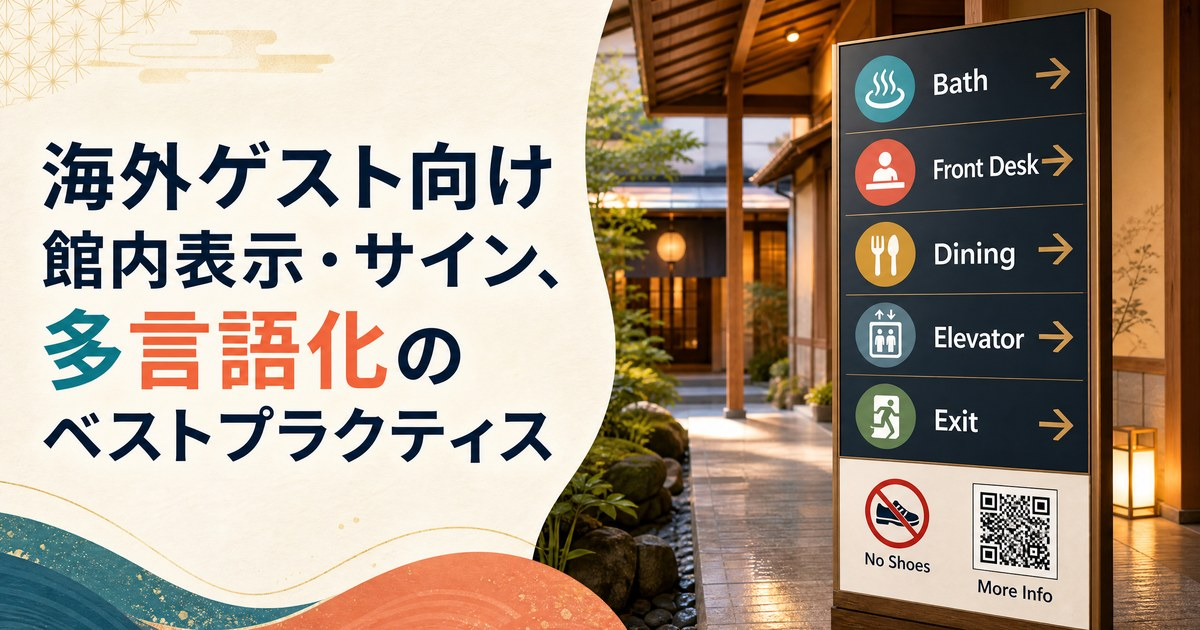
Best Practices for Multilingual Signage and Displays for International Guests
When signage and displays in a ryokan are only in Japanese, international guests may become confused or misunderstand the rules. This article outlines best practices for designing multilingual signs with concrete examples.
Read more →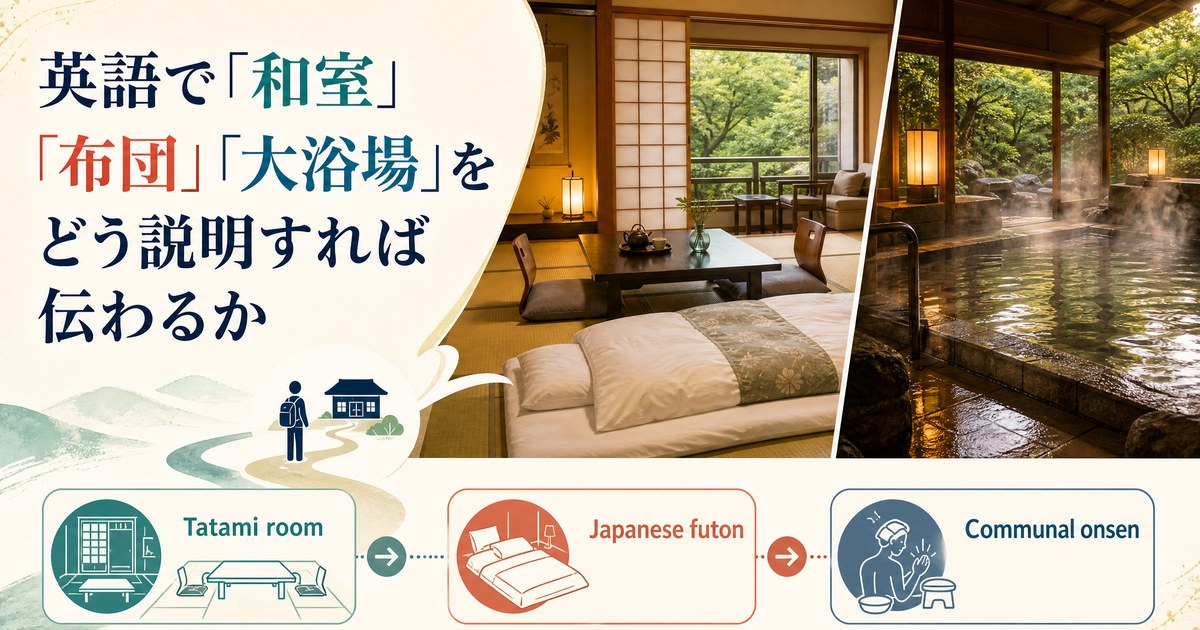
How to Explain 'Tatami Room', 'Futon', and 'Communal Bath' in English
Terms like 'tatami room', 'futon', and 'communal bath' can be challenging to convey to international guests. This article provides effective ways to explain these concepts in English, helping to alleviate concerns before booking.
Read more →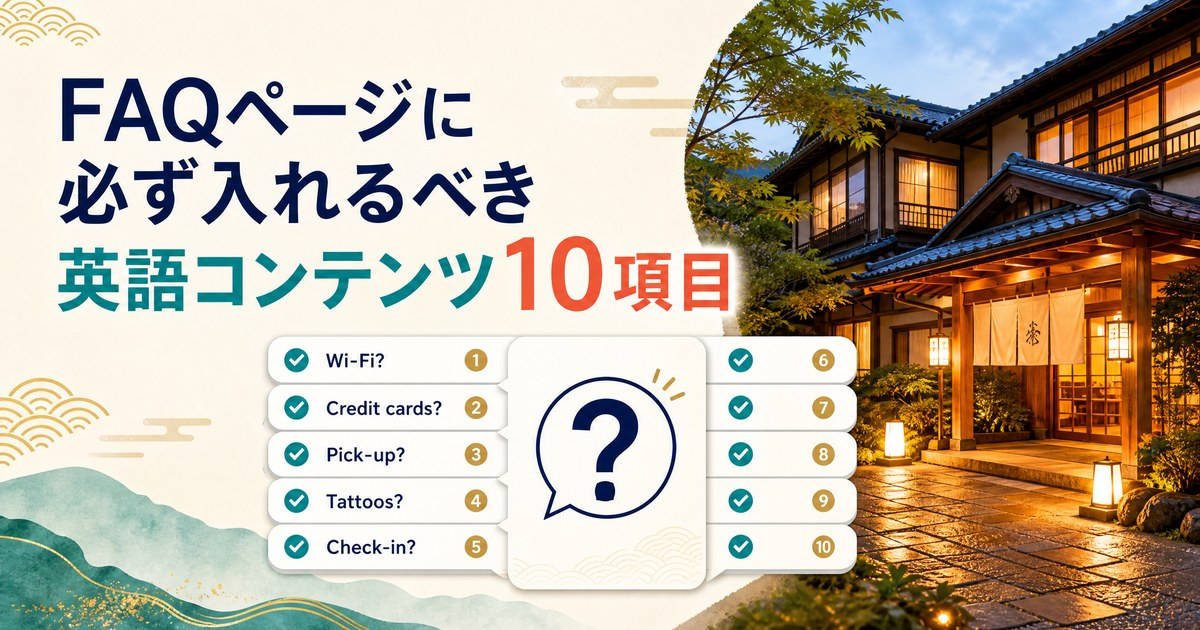
10 Essential English Content Items for Your FAQ Page
An FAQ page that anticipates the questions and concerns of international guests before they make a reservation is effective for building trust and managing inquiries. Here are 10 essential English content items to include, along with specific examples.
Read more →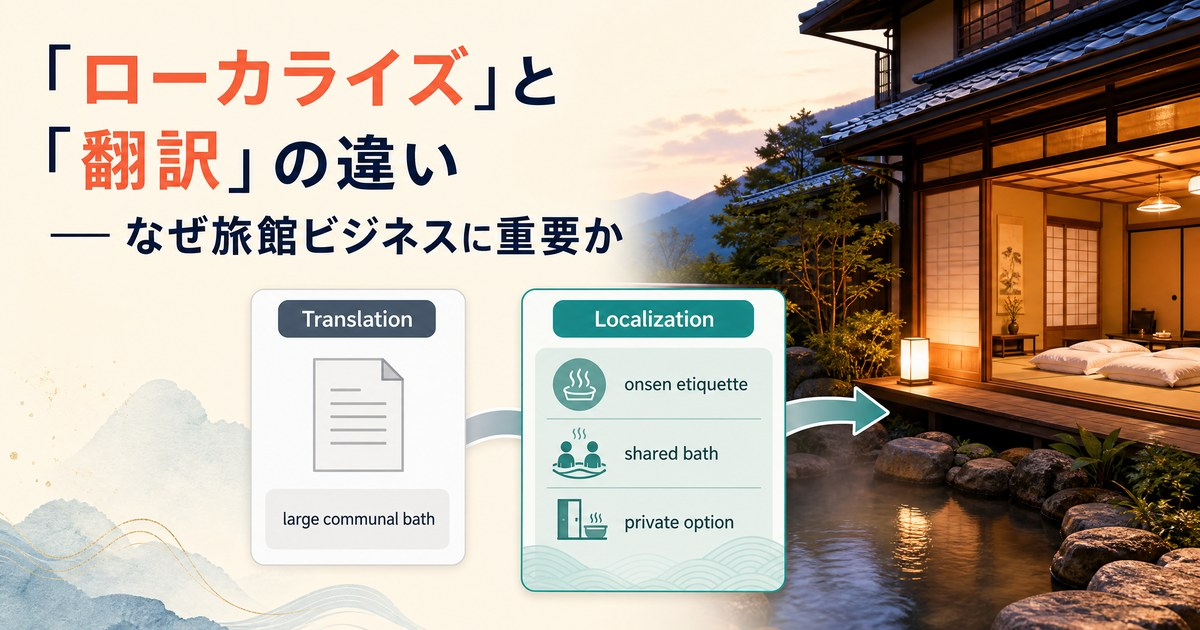
The Difference Between Localization and Translation — Why It Matters for Ryokan Business
While translation and localization may seem similar, they serve different purposes. Understanding this distinction on your ryokan website can directly impact your booking rates and trust-building efforts. Here’s an explanation with concrete examples.
Read more →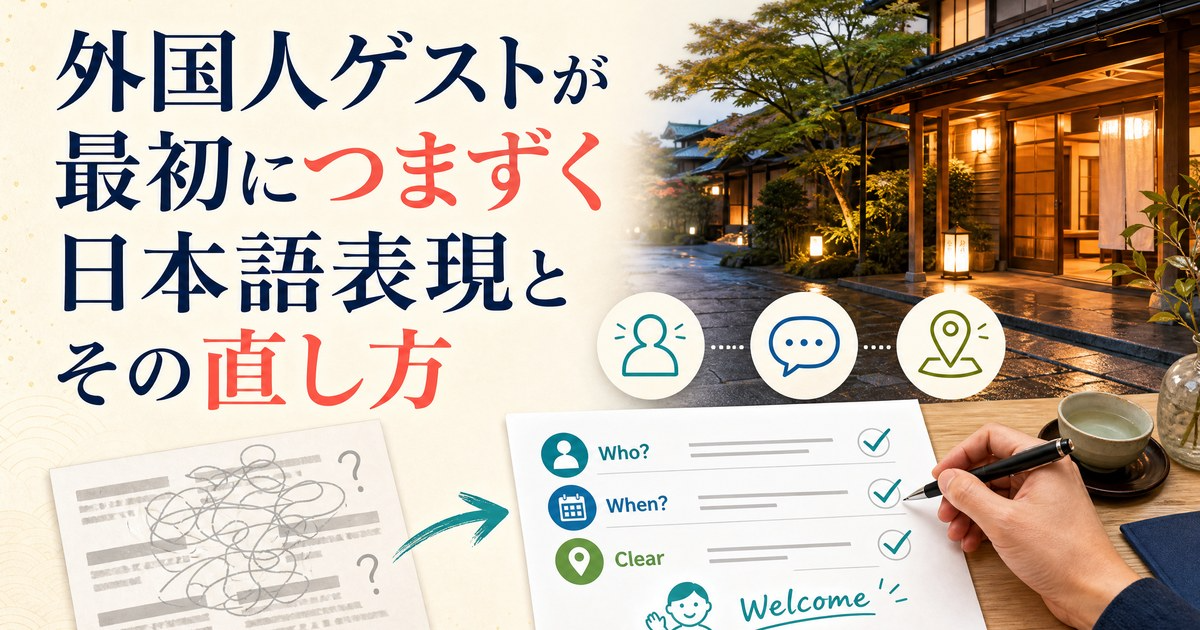
Common Japanese Expressions That Confuse Foreign Guests and How to Fix Them
Before translating to English, the original Japanese text may contain expressions that confuse foreign guests. This article discusses common stumbling blocks and how to revise Japanese for easier translation.
Read more →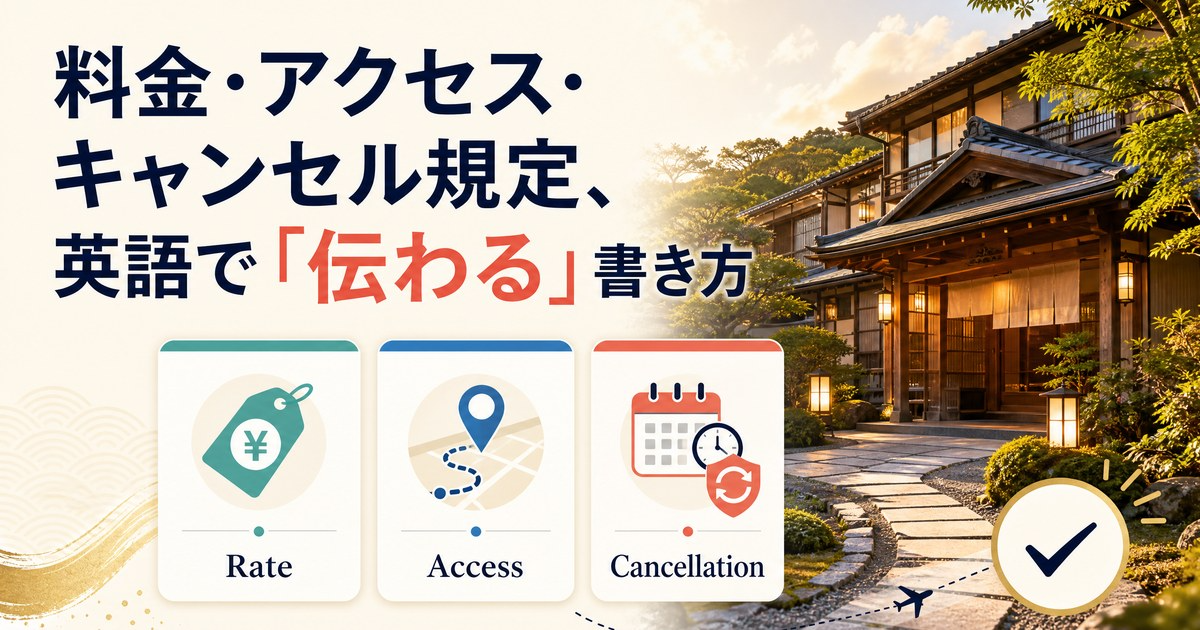
How to Clearly Communicate Rates, Access, and Cancellation Policies in English
Rates, access, and cancellation policies are essential information that international guests check before making a reservation. This article explains how to present these details in English to prevent misunderstandings and encourage bookings.
Read more →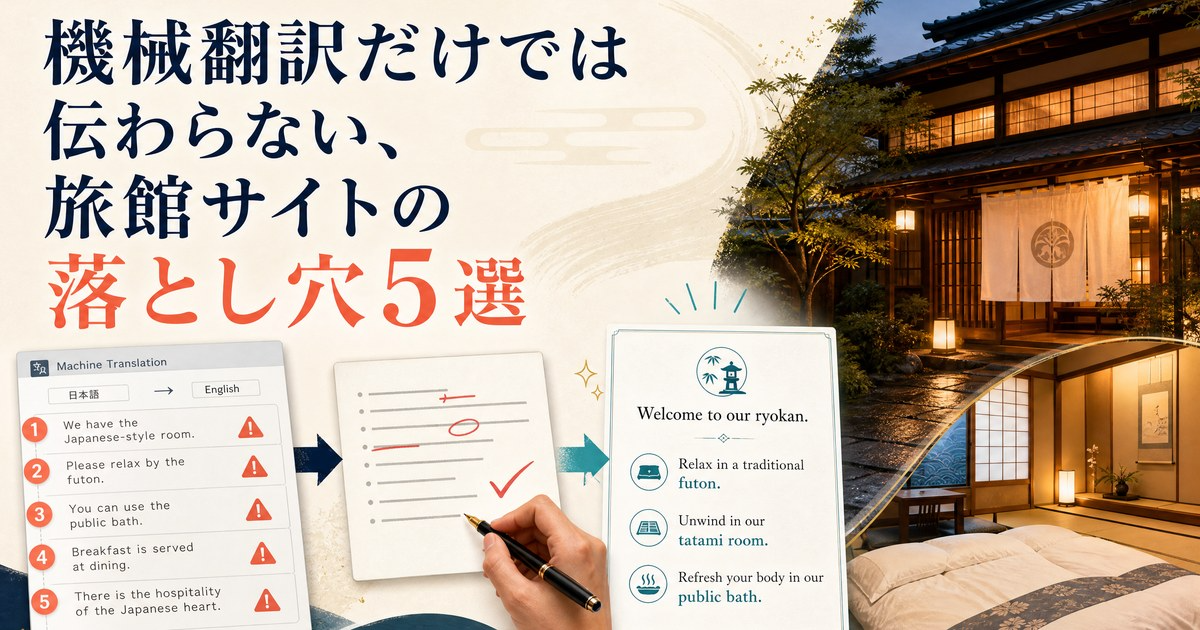
5 Pitfalls of Machine Translation That Can Mislead International Guests on Ryokan Websites
Simply relying on machine translation for ryokan websites can lead to misunderstandings and distrust among international guests. This article outlines five common pitfalls and offers insights on how to communicate effectively in English.
Read more →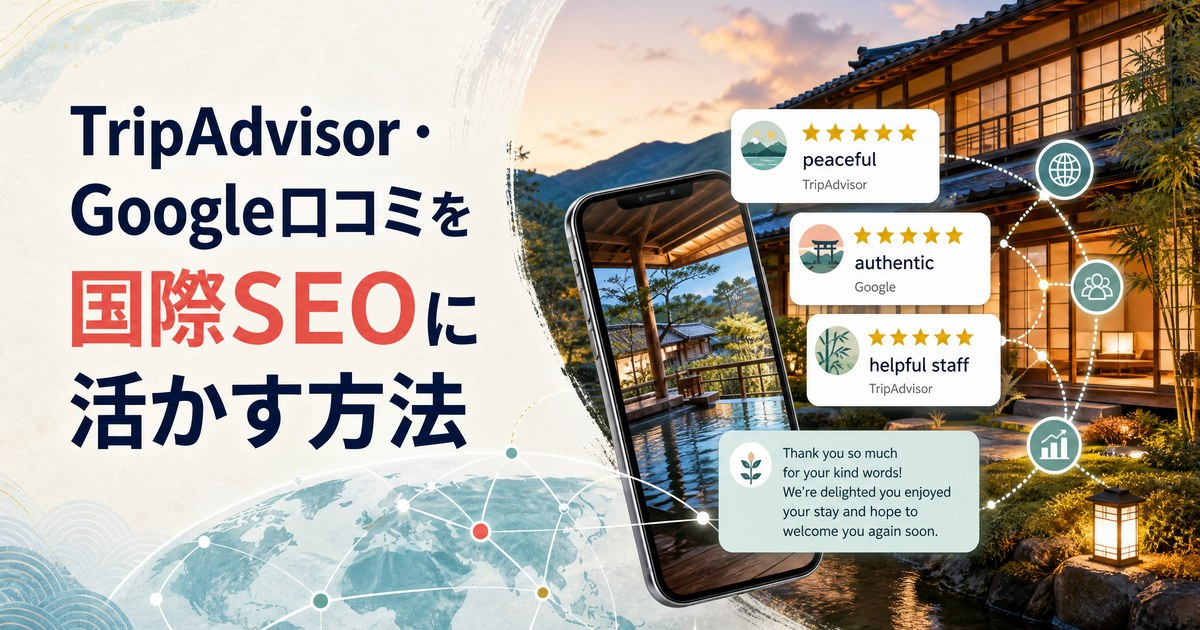
Leveraging TripAdvisor and Google Reviews for International SEO
TripAdvisor and Google reviews are not just tools for reputation management; they are vital assets for international SEO. This article explains how to utilize reviews from overseas guests to enhance search traffic and build trust.
Read more →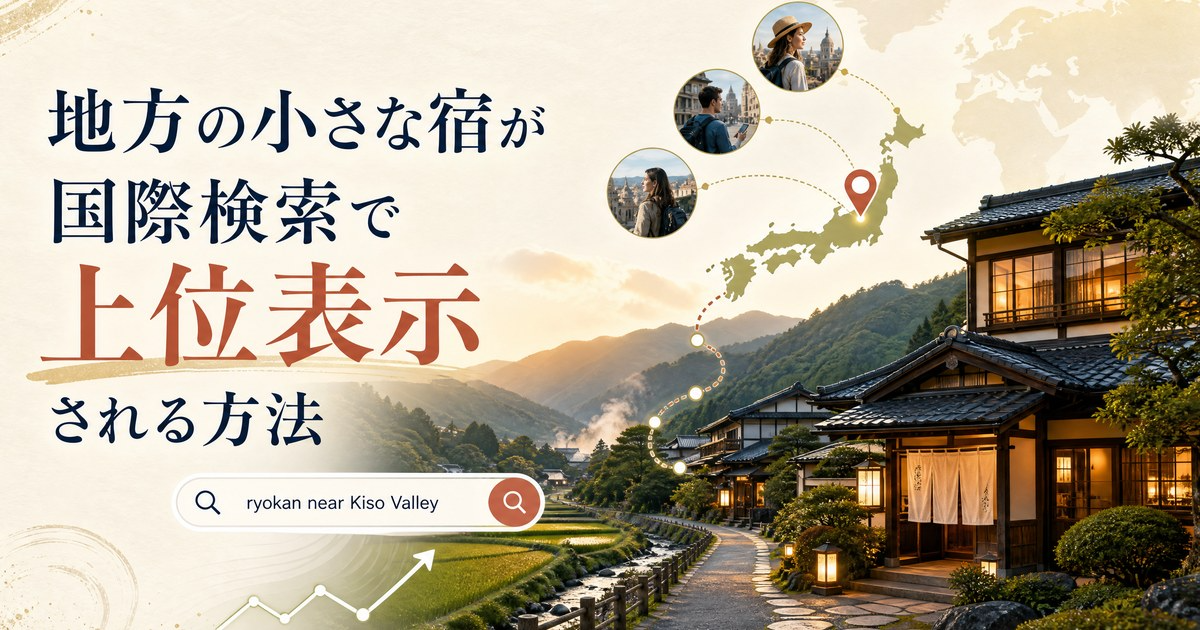
How Small Local Inns Can Rank High in International Searches
Discover practical strategies for small local inns to rank high in international searches without the budget of large hotel chains. This article combines local SEO with niche strategies for effective results.
Read more →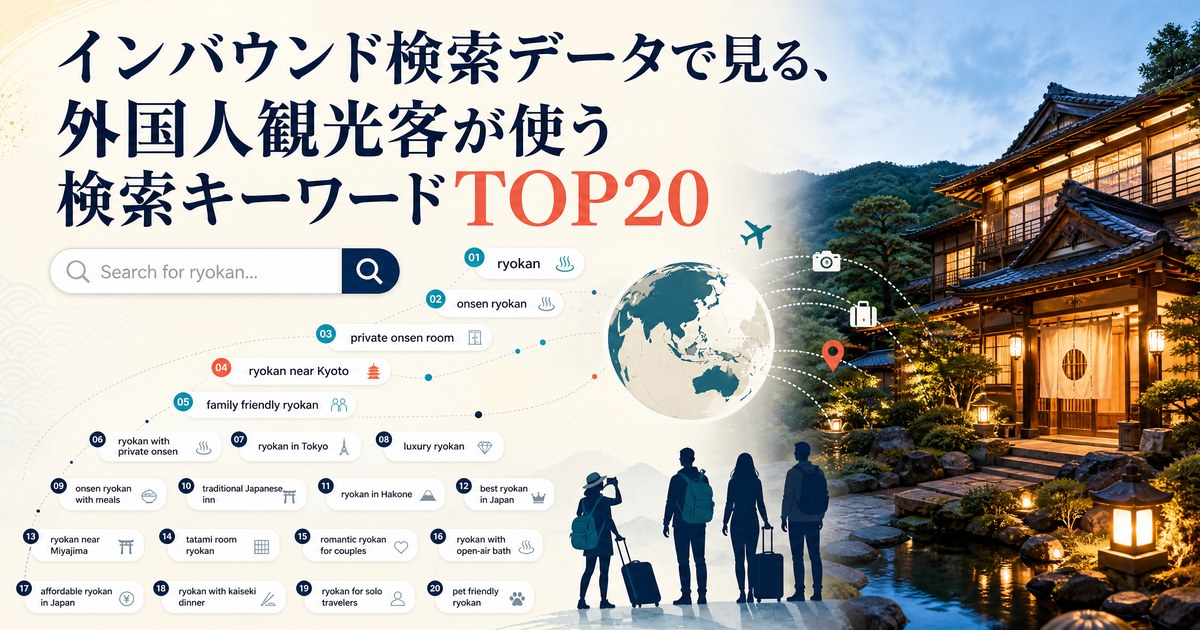
Top 20 Search Keywords Used by Foreign Tourists: Insights from Inbound Search Data
Explore 20 essential English search keywords that foreign travelers use when looking for accommodations, categorized for practical application in your website's keyword strategy.
Read more →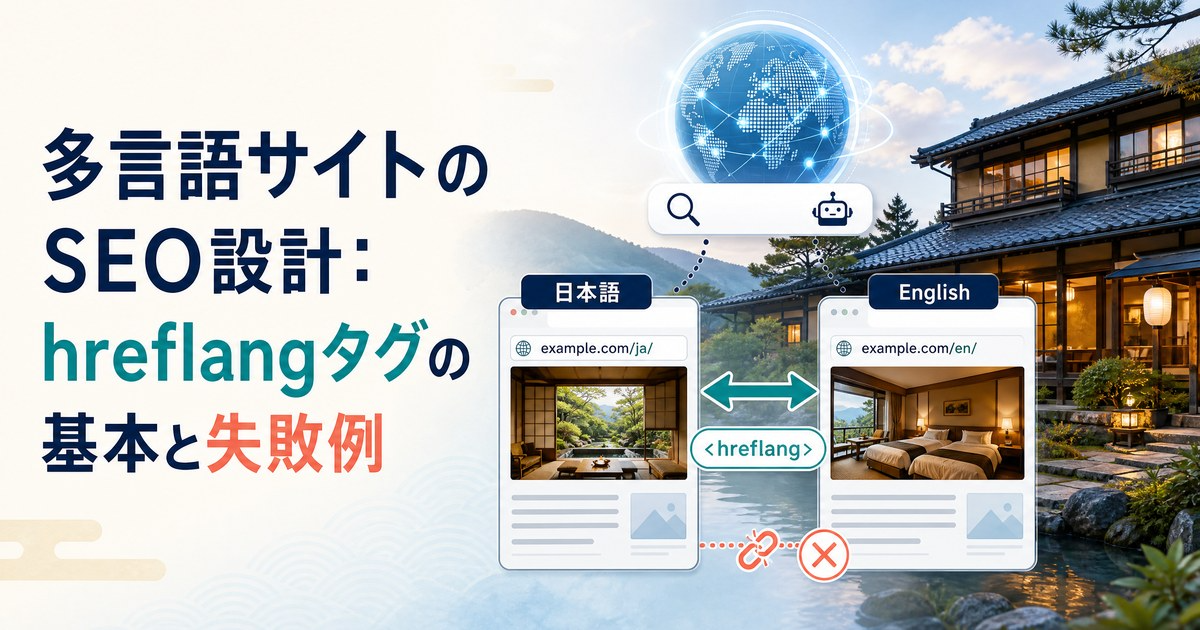
SEO Design for Multilingual Websites: Basics of hreflang Tags and Common Mistakes
Even after creating both Japanese and English pages, you might find unexpected results in search. The culprit could be a misconfiguration of hreflang tags. This article explains the essentials of hreflang for multilingual websites, particularly for ryokans and small accommodations, along with common pitfalls.
Read more →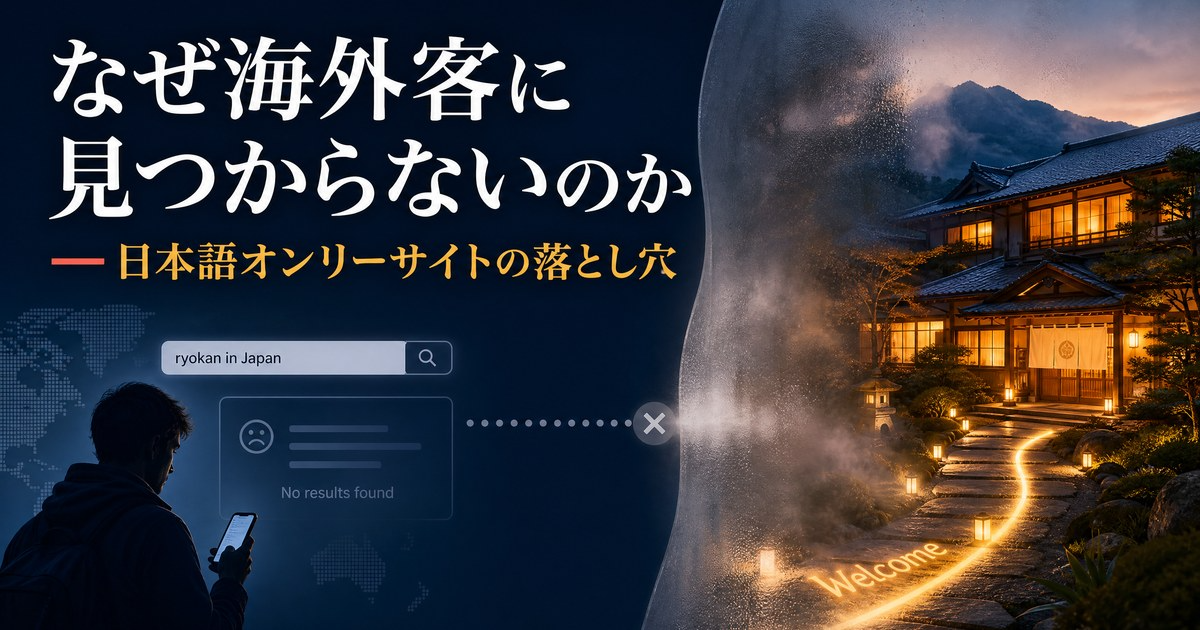
Why Are You Invisible to International Guests? The Pitfalls of Japanese-Only Websites
Even with a well-designed website featuring great photos and comprehensive information, many ryokan owners find they receive no inquiries from overseas. Often, the issue lies in the very structure of Japanese-only sites, making them invisible to search engines. This article explores the reasons behind this invisibility and offers solutions.
Read more →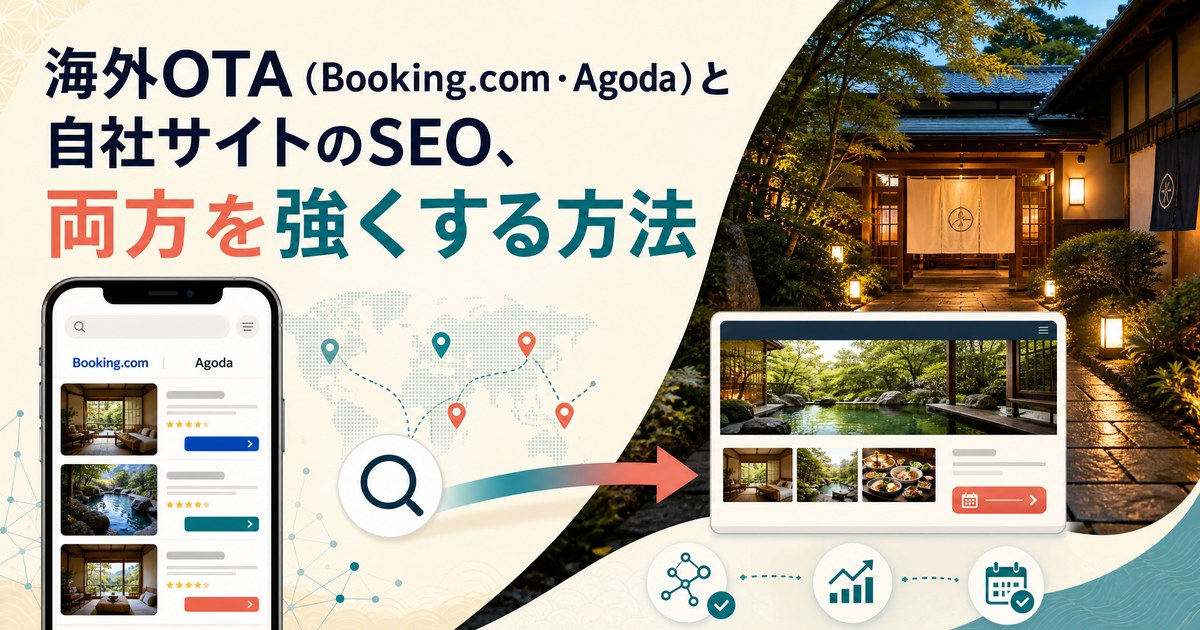
How to Strengthen Both Your OTA Presence (Booking.com/Agoda) and Your Own Website's SEO
This article addresses the common issue of increasing bookings through OTAs without a corresponding rise in traffic to your own website. We explore strategies to harmonize the roles of Booking.com, Agoda, and your own site's SEO.
Read more →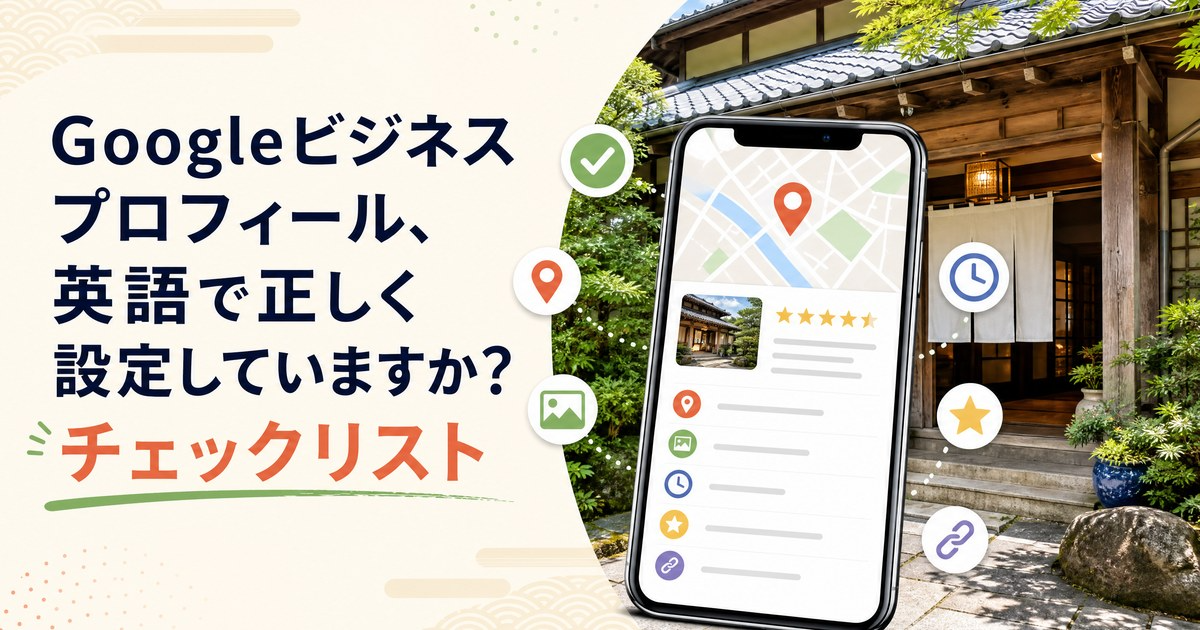
Is Your Google Business Profile Set Up Correctly in English? A Checklist
Many international guests discover accommodations through Google Maps. This checklist outlines essential points to ensure your Google Business Profile is properly set up in English.
Read more →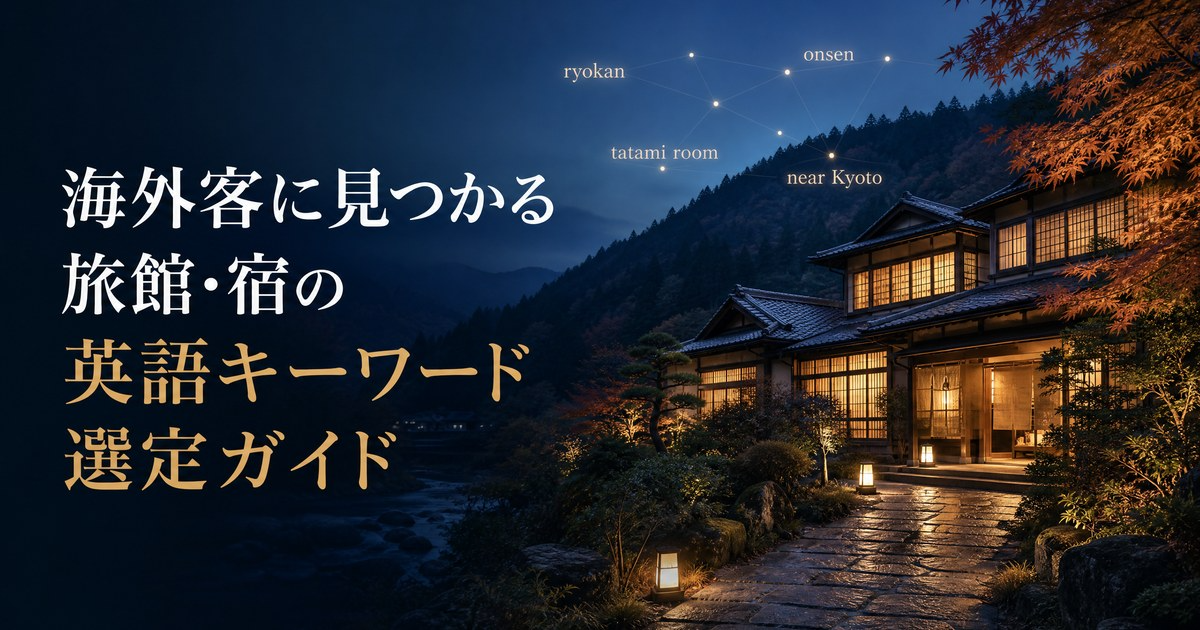
A Guide to Selecting English Keywords for Ryokan and Inns to Attract International Travelers
This guide helps you choose the right English keywords to be discovered by international travelers. Learn why 'ryokan' alone is insufficient, how to find the search terms travelers actually use, and how to incorporate them into your web pages.
Read more →
10 Essential Tips for Being Found with Your Ryokan's English Website
This article outlines ten key points that ryokans and small inns need to consider to be discovered and booked by international guests searching for 'ryokan English site.' From international SEO to localization and booking pathways, here's a checklist you can start reviewing today.
Read more →
English SEO Checklist for Ryokans to Be Found in Overseas Searches
An English-only page is not enough. We outline the SEO strategies necessary for international guests to discover, compare, and book your ryokan.
Read more →What is the International Readiness Score? A Method to Measure Your Ryokan's Global Preparedness
Discover the 10 categories of HAKO Scan and how to prioritize improvements to boost your score.
Read more →