
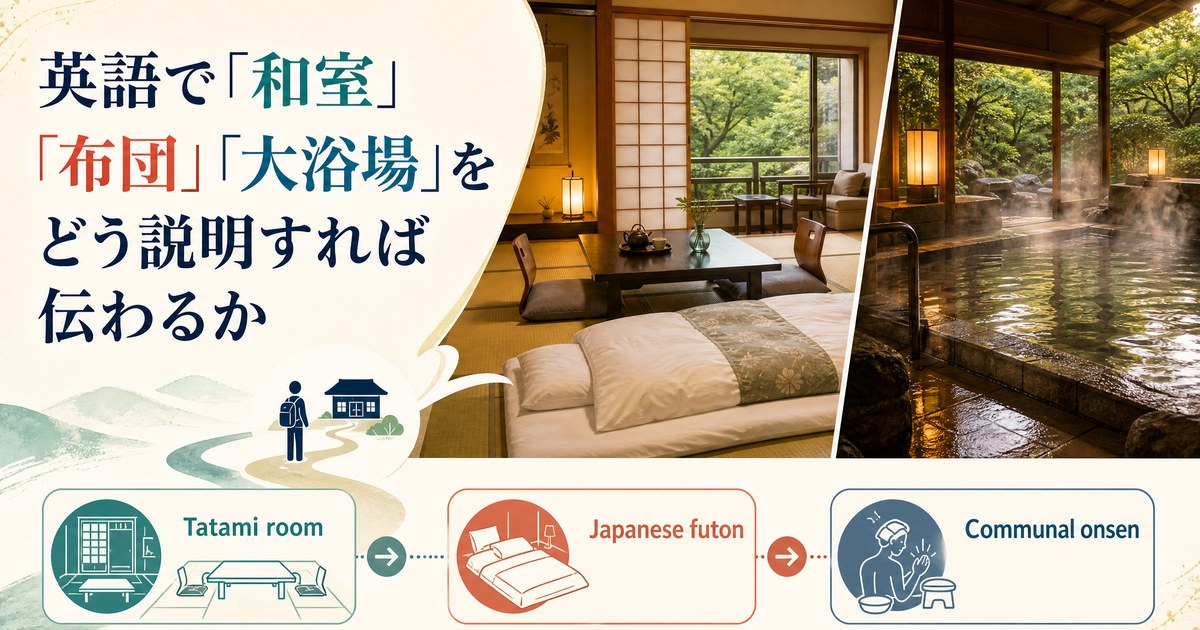
'Tatami room', 'futon', and 'communal bath'—these three terms frequently appear on ryokan websites, yet they often lead to misunderstandings among international guests. While translating them as 'tatami room', 'futon', and 'communal bath' seems straightforward, it doesn't adequately convey the actual experience, leaving potential guests feeling uncertain when making reservations.
In this article, we will explore how to explain these three terms in a way that resonates with international travelers, along with practical examples you can use directly.
Tatami Room: More Than Just a Room with Tatami
The term "tatami room" is becoming more familiar to many international travelers, but it often fails to communicate what the room is truly like and how it differs from Western-style rooms. Particularly, the fact that there is no bed until the futon is laid out can cause confusion if guests are not informed in advance.
Effective Explanation Example: "Our tatami rooms feature traditional straw-mat flooring. During the day, the room serves as a living space with a low table; in the evening, our staff will lay out a futon for sleeping. Please remove your shoes before entering."
The key is to include specific information that directly relates to guest behavior, such as how the room is used differently during the day and evening, and the requirement to remove shoes before entering.
Futon: Explain Not Just the Bedding Type but the Preparation Process
While the term "futon" is widely recognized overseas, many people often envision a thin, convertible sofa bed sold in Western markets. This differs significantly from the Japanese ryokan futon, which is laid out on tatami mats and prepared by staff after dinner.
Effective Explanation Example: "Unlike Western-style futons, a Japanese ryokan futon is a traditional bedding set laid directly on the tatami floor. Our staff will prepare your futon in the evening while you enjoy dinner, and put it away again each morning."
By specifying who prepares the futon and when, you can alleviate concerns about whether guests need to set it up themselves.
Communal Bath: Include Rules and Etiquette
Simply translating "communal bath" or "large public bath" does not convey the cultural experience of bathing alongside other guests. Important etiquette, such as no swimwear allowed, tattoo policies, and the necessity to wash before entering the bath, can lead to significant confusion if not clearly explained.
Effective Explanation Example: "Our communal bath (onsen) is a shared bathing area used without swimwear, following traditional Japanese bathing customs. Please wash your body thoroughly before entering the bath. Guests with tattoos should check our tattoo policy in advance. Private bath reservations are also available for those who prefer more privacy."
By not only stating the rules but also mentioning the option for private baths, you provide a more positive and reassuring message for guests who may feel apprehensive.
Common Approach to Crafting Clear Explanations
- Go beyond simple word translations by adding actionable information (who, when, how).
- Anticipate common misconceptions among international guests (such as the need for swimwear or how bedding is prepared).
- Don't just end with rules; include options (like private baths) if available.
Conclusion: Cultural Terms Are Worth the Extra Effort in Explanation
'Tatami room', 'futon', and 'communal bath' are not only terms that represent the charm of a ryokan but can also become sources of anxiety if inadequately explained. By providing descriptions that allow guests to visualize their actual experiences, these terms can transform from potential concerns into highlights of the ryokan experience.
At Studio HAKO, our HAKO Scan service can help assess how well your site addresses these cultural explanations and its overall international readiness. Start by checking your current status today.