
Creating an English page by hiring a translation company is not necessarily wrong, but it can often be insufficient. In the internationalization of ryokan websites, it is crucial to distinguish between two similar yet fundamentally different concepts: translation and localization.
In this article, we will clarify the differences between the two, providing examples, and explain why the perspective of localization is essential in the ryokan business.
What is Translation?
Translation is the process of converting text written in one language into corresponding text in another language. The primary goal is to accurately replace words and grammar, with a strong emphasis on fidelity to the original text.
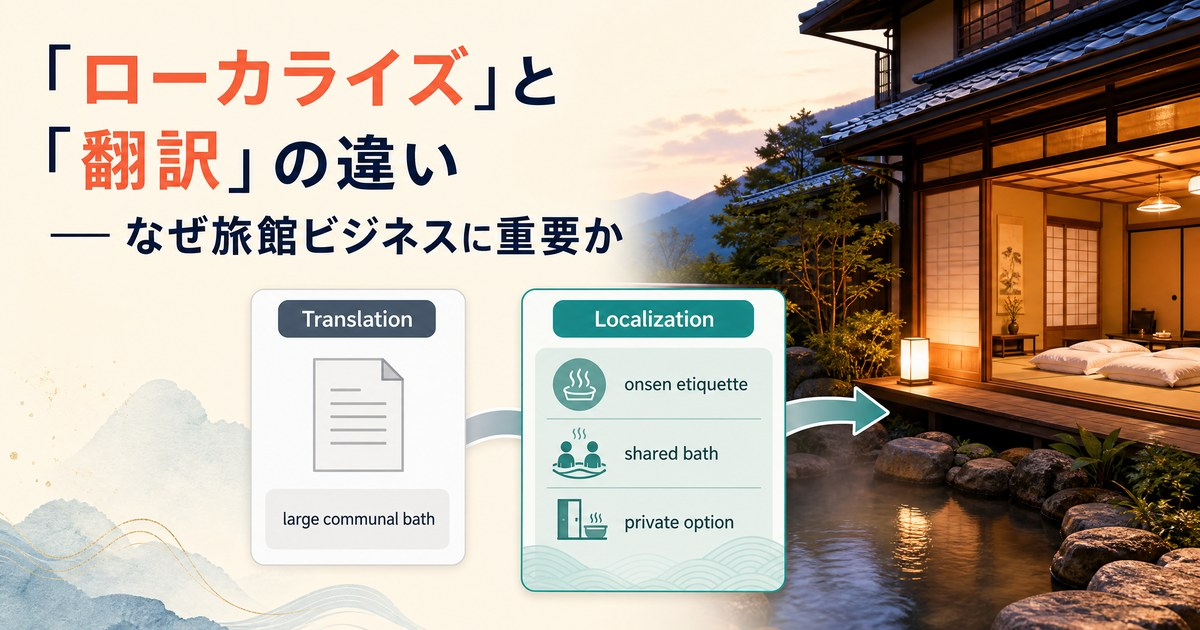
For example, translating "大浴場は21時までご利用いただけます" to "The large communal bath is available until 9:00 PM" is an accurate translation, both grammatically and semantically correct.
What is Localization?
Localization goes beyond translation by adjusting the content to fit the cultural background, knowledge, and expectations of the target audience. It involves not just word replacement but also considering whether the information is presented in a way that is genuinely useful for the reader.
In the previous example, while "large communal bath" is accurately translated, many international guests may not be familiar with the concept of a shared bathing facility or the cultural practice of bathing naked with other guests. From a localization perspective, additional context is necessary:
"The large communal bath is a shared bathing area, used without swimwear, following traditional Japanese onsen etiquette. Private bath options are also available for those who prefer more privacy."
Thus, while translation is about "replacing words," localization ensures that readers can act without misunderstanding and with confidence.
Examples of the Difference Between Translation and Localization
| Item | Translation Only | Localization |
|---|---|---|
| Large Bath | "large communal bath" | Adds an explanation of bathing culture, including swimwear restrictions and availability of private baths |
| Futon | "futon" | Explains the process of bed preparation (e.g., when staff will come to set it up) |
| Cancellation Fee | Direct English translation of Japanese terms | Adjusts for time zones and clarifies to avoid misunderstandings |
| "Please spend your time slowly" | "Please spend your time slowly" | Rephrases to a more natural English expression: "We hope you enjoy your stay" |
Why is Localization Particularly Important for Ryokan Business?
In many general business documents, accurate translation may suffice. However, the ryokan and hospitality industry places a higher importance on localization for several reasons:
- Cultural experiences are the product: Elements such as onsen, tatami rooms, and kaiseki cuisine are often unfamiliar to international guests, and accurate translation alone may not convey the experience effectively.
- Need to alleviate pre-booking anxiety: Concerns about unfamiliar cultures cannot be resolved by translation accuracy alone; background explanations are essential for building trust.
- Handling financial and scheduling information: Many details, such as cancellation policies and pricing, can lead to misunderstandings that escalate into issues.
Examples of Situations Where Translation Alone is Insufficient
- Food items like "郷土料理" and "会席料理" that require explanations to convey their value
- Titles like "仲居" and "女将" that come with cultural significance and roles
- Information about onsen water quality and effects that require specialized cultural knowledge
- Guidelines for behavior within the ryokan (e.g., handling of tattoos, rules regarding food and drink in rooms)
How to Prioritize Localization Efforts
It is not realistic to localize every page at once. We recommend starting with the following priorities:
- Pricing, cancellation policies, and access pages that are viewed just before booking
- Equipment introduction pages that require cultural explanations (e.g., large baths, guest rooms, dining)
- FAQ pages that proactively address common questions from international guests
- Other general information pages
Conclusion: Translation is a Means, Localization is the Goal
Translation is a method of "changing words," while localization is the ultimate goal of ensuring that international guests feel comfortable choosing your ryokan. When hiring a translation company, it’s worth confirming whether you are requesting not just "accurate translation" but also "translation with a localization perspective."
At Studio HAKO, HAKO Scan offers a free assessment of your website's international readiness, considering both translation accuracy and localization perspectives. Start by checking your current status today.