
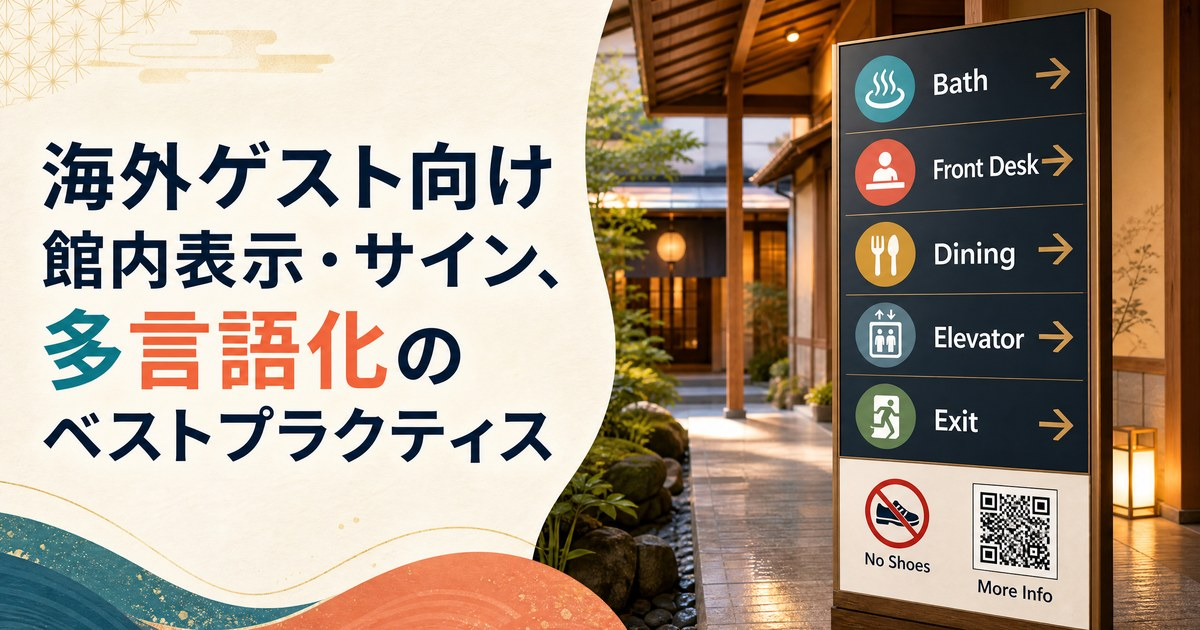
In previous articles, we primarily discussed English support on websites, but interactions with international guests extend beyond the online realm. After checking in, the first thing guests rely on while navigating the premises is signage and displays.
Even if your website is well-equipped with English support, if the signage is only in Japanese, guests may find themselves lost in the hallways or misinterpret rules regarding bathing times and facility usage. This article introduces best practices for multilingual signage in ryokans and inns.
Why Multilingual Signage is Important
International guests generally rely solely on the signs available on-site to navigate. While some guests may use translation apps on their smartphones, it is impractical to photograph and translate every sign. Particularly in the following situations, clear signage is crucial for both safety and guest satisfaction:
- Safety-related signs such as emergency exits and evacuation routes
- Rules and hours for large baths and onsen
- Locations and times for dining areas
- Instructions for room amenities (air conditioning, television, etc.)
Prioritized Areas for Multilingual Signage
Since translating all signs at once can be overwhelming, we recommend starting with the following priorities:
- Safety signs (emergency exits and evacuation routes) (highest priority)
- Signs at the entrance of large baths and onsen, including rules (misunderstandings can lead to issues)
- Signage for the front desk, elevators, and room numbers
- Dining area locations and hours
- Instructions for in-room equipment and amenities
Best Practices for Designing Multilingual Signage
1. Use Pictograms Alongside Text
For signs like "Emergency Exit," "No Smoking," and "No Shoes Allowed," incorporating pictograms makes the message intuitive, regardless of language. When standardized international pictograms are available, it is advisable to use them.
2. Determine Language Priorities
Including all languages on a single sign can make it difficult to read. Based on your data regarding the nationalities of your primary international guests (English-speaking countries, Chinese-speaking countries, etc.), decide on the priority languages (usually English plus one or two others) to enhance sign visibility.
3. Maintain Consistency with Website Terminology
If your on-site signage refers to the large bath as "Large Bath" while your website calls it "Communal Bath," it can create confusion about whether they refer to the same facility. Ensure consistency in terminology across your website, signage, and brochures.
4. Include Reasons Alongside Prohibitions
Instead of simply stating "No swimwear allowed," consider wording it as "Please bathe without swimwear, following traditional Japanese onsen customs." Providing context helps guests understand the cultural significance rather than viewing it as a mere prohibition.
5. Link to Detailed Information with QR Codes
Due to limited space on signs, consider adding QR codes that link to detailed English explanations on your website (such as FAQ pages). This allows interested guests to access more information easily.
6. Consider Font Size and Contrast
Some international guests may not read Japanese, leading them to check signs from a distance. Ensure that font sizes are sufficiently large and that there is a strong contrast between the text and background to enhance visibility.
Important Considerations When Requesting Translations
Just like with website translations, relying solely on machine translation for signage can be risky. This is particularly true for safety-related signs (evacuation routes, fire hazards, etc.), where mistranslations can lead to serious accidents. Always have a professional translator review these translations.
Conclusion: Consistency Builds Trust
Multilingual signage should not be viewed separately from your website's English support; it is part of the overall consistency of the international guest experience. Ensuring guests can confidently make reservations online and navigate comfortably during their stay is essential for maintaining a preferred status among travelers.
Studio HAKO's HAKO Scan offers a free assessment of your international readiness, focusing on your website. Alongside reviewing your signage, start by checking the current status of your site.