
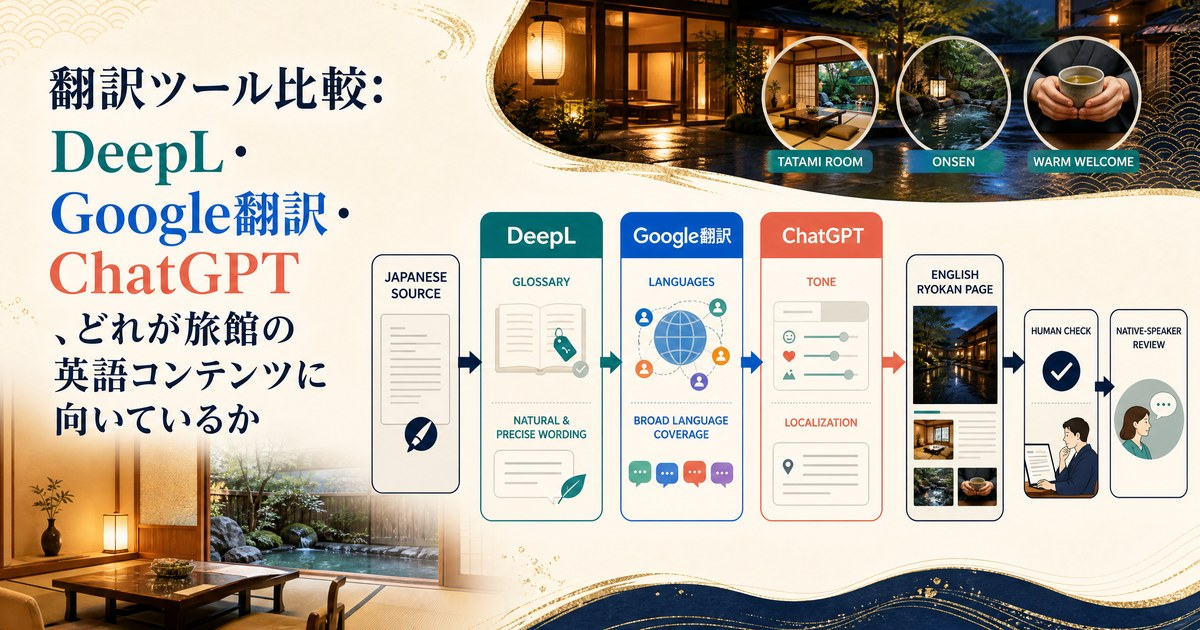
In our previous article, "The Pitfalls of Relying Solely on Machine Translation for Ryokan Websites," we discussed the risks associated with using machine translation without careful consideration. However, when used correctly, translation tools can serve as valuable aids for preliminary translations. In this article, we will compare three prominent translation tools—DeepL, Google Translate, and ChatGPT—and provide guidance on how to use them effectively for your ryokan's English content.
Basic Features of the Three Tools
DeepL: Naturalness and Strength in Specialized Documents
DeepL is highly regarded for its "naturalness of translation" in various comparative tests. It has repeatedly been favored in blind tests conducted by professional translators. One of its strengths is the glossary feature, which allows for consistent translations of industry-specific terms such as "large public bath" and "futon." However, it supports around 30 languages, which is fewer than some other tools.
Google Translate: Wide Language Support and Convenience
Google Translate supports over 100 languages, making its extensive coverage, including lesser-known languages, its greatest asset. While it is free and easy to use, many users find that it falls short of DeepL in terms of contextual understanding and natural expression. It is particularly suited for quick meaning checks and situations where a wide range of languages is needed.
ChatGPT (Generative AI): Flexibility in Tone Adjustment and Localization
Generative AI like ChatGPT allows users to adjust the tone of the text by issuing commands such as "make it more casual" or "use warmer expressions." Instead of simply replacing words or sentences, it offers paraphrasing that captures the intended meaning—similar to the concept of localization discussed in our article on "The Differences Between Localization and Translation." However, it may struggle with consistency in terminology for longer texts, as it lacks the strict unification features found in DeepL.
Examples of Effective Use for Ryokan's English Content
Information Where Accuracy is Paramount (e.g., Rates and Cancellation Policies)
As discussed in our article on "The Importance of Clearly Communicating Cancellation Policies in English," inaccuracies in financial or regulatory information can lead to significant issues. For this type of content, it is advisable to use DeepL as the primary tool, ensuring that a human review is conducted for final verification.
Content Conveying the Innkeeper's Sentiments and Narrative Experiences
For content that aims to convey warmth and emotion, such as in our guide on "How to Create English Content for Cultural Experiences (Tea Ceremony, Kimono, etc.)," ChatGPT is well-suited. You can refine drafts by instructing it to "make it more evocative of the senses."
Expanding into Languages Other Than English (Preliminary Translation Stage)
If you are considering expanding into languages like Chinese or Korean in the future, Google Translate is a convenient option for preliminary translations due to its wide language support. However, it is crucial to have a native speaker review the content before publication, regardless of the language.
Common Considerations Regardless of the Tool Used
While all these tools can be useful for preliminary translations, as highlighted in our article on "The Pitfalls of Relying Solely on Machine Translation for Ryokan Websites," there is always a risk of missing cultural nuances. This is especially true for financial and legal content, where it is essential to avoid publishing machine-generated outputs without human oversight.
Practical Workflow Example
- Preliminary Translation: Create a basic translation using DeepL (register specialized terms in the glossary beforehand).
- Tone Adjustment: Use ChatGPT to adjust the tone by issuing commands like "make it warmer."
- Final Review: For critical information (e.g., rates, cancellation policies), if possible, have a native speaker conduct a final check.
Conclusion: Use a Combination of Tools Based on Purpose
DeepL, Google Translate, and ChatGPT each have unique strengths. Instead of asking which tool is the best overall, consider which tool is most suitable for specific situations. This approach will help you create high-quality English content within limited resources.
At Studio HAKO, our HAKO Scan service offers a free assessment of your website's international readiness, including the quality of your English content. Start by checking your current status today.