
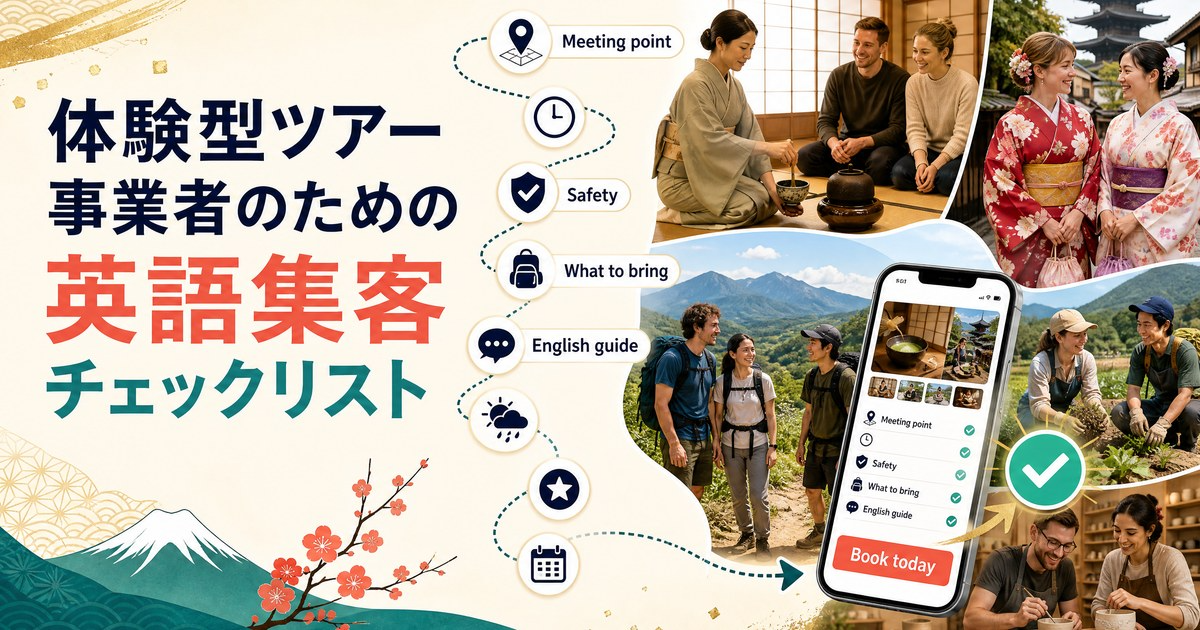
In previous articles, we primarily discussed international marketing strategies for ryokans and accommodation facilities. However, operators offering experience-based tours such as tea ceremonies, kimono rentals, agricultural experiences, and hiking tours have unique marketing considerations that differ from the lodging industry. This article presents an essential English marketing checklist for experience-based tour operators.
Three Key Differences Between Experience-Based Tours and Ryokans
1. Last-Minute Bookings Are Common
While accommodations are often booked weeks to months in advance, experience-based tours are frequently reserved after travelers arrive, depending on weather and mood. It's crucial to have a system in place that accommodates last-minute (same-day or next-day) bookings.
2. The Influence of Experience-Based OTAs
Just as Booking.com and Agoda dominate the accommodation sector, platforms like GetYourGuide, Viator, and Klook hold significant sway in the experience-based tour market. It's essential to focus not only on your website's SEO but also on visibility on these platforms.
3. Clear Communication of Safety and Physical Requirements
For physically demanding activities like hiking or water sports, it's vital to clearly communicate participants' fitness levels, age restrictions, and safety precautions, even more so than for lodging.
English Marketing Checklist
1. Can Participants Visualize the Experience Through Photos and Videos?
The atmosphere of an experience can be hard to convey through text alone. Including photos and short videos of actual participants can encourage bookings.
2. Is the Duration and Meeting Location Clearly Stated?
"Where do we meet, and how long does it take?" is fundamental information that travelers care about. Provide not just the address but also maps and landmarks to guide them.
3. Are Age and Fitness Level Guidelines Provided?
Being able to answer questions like "Is this suitable for children or elderly participants?" helps potential participants make informed decisions. Clearly state age requirements and necessary fitness levels.
4. Are There Guidelines on What to Bring and Wear?
Providing specific recommendations for necessary items (like comfortable clothing, towels, and changes of clothes) based on weather and activity can prevent issues on the day of the tour.
5. Is the Cancellation and Bad Weather Policy Clearly Outlined?
For outdoor experiences, it's crucial to have clear criteria for cancellations or postponements due to bad weather, as well as policies for refunds or rescheduling. Ambiguity can deter bookings when bad weather is anticipated.
6. Is the Guide's Language Proficiency Clearly Stated?
"Will the guide speak English?" is a key question that directly affects the quality of the experience. Be honest about whether the guide is fluent, speaks basic English, or uses translation apps.
7. Is It Clear Whether There Is a Pickup Service or Meeting on Site?
Whether there is a pickup from accommodations or if participants need to travel to the meeting point (like the entrance of a tourist site) is important information for planning their itinerary.
8. Are You Listed on Experience-Based OTAs (GetYourGuide, Viator, Klook, etc.)?
Don't rely solely on your website's SEO; listing your experiences on platforms frequently used by travelers can increase discoverability. Ensure the quality of content and photos matches that of your website.
9. Are Participant Reviews and Photos Featured?
For experience-based bookings, actual participant feedback and photos can be more persuasive than for accommodations. If possible, showcase reviews from TripAdvisor or experience-based OTAs on your website.
10. Is There a System for Handling Last-Minute Bookings?
To accommodate same-day or next-day bookings, establish a system for real-time availability checks and prompt responses to inquiries, which is crucial for experience-based tours.
Conclusion: Communicating the "Value" and "Safety" of Experiences
Marketing experience-based tours in English shares commonalities with ryokan marketing (building trust, providing clear information), but it’s essential to focus on aspects unique to experiences, such as accommodating last-minute bookings, leveraging OTAs, and explaining safety measures. Use the ten items above as a framework to tailor your checklist to your offerings.
Studio HAKO's HAKO Scan offers a free assessment of your site's international readiness, including for experience-based tour operators. Start by evaluating your current situation.