
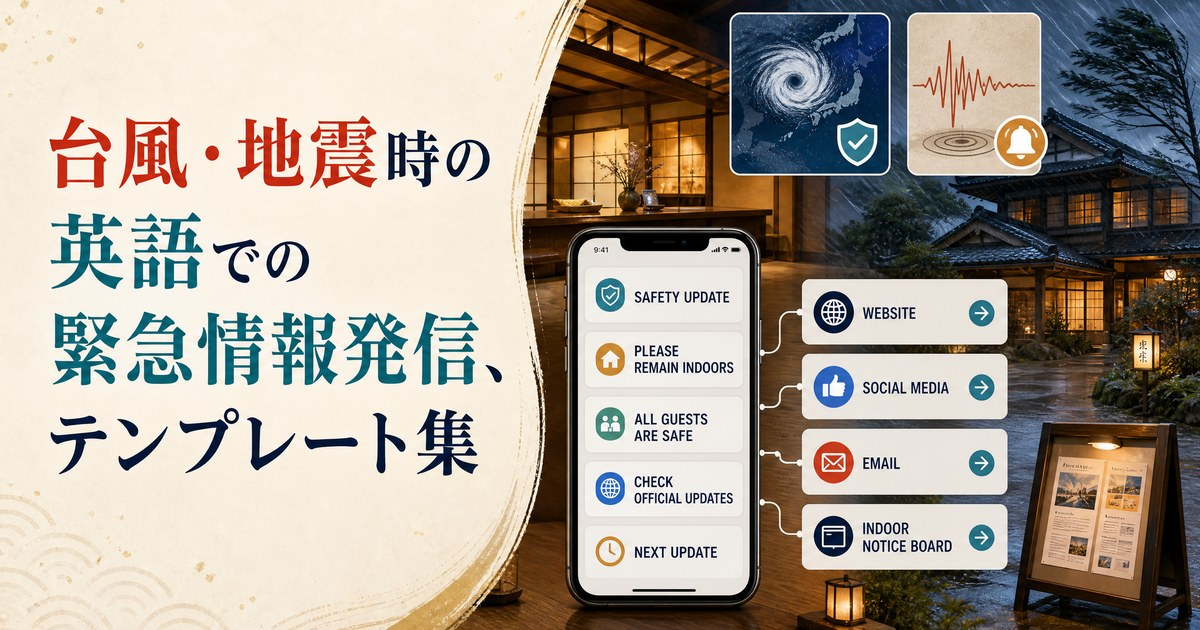
In emergencies such as typhoons and earthquakes, the response can be anxiety-inducing for Japanese guests, but for international visitors facing a language barrier, this anxiety can be even greater. The ability to deliver accurate and clear information in English promptly can greatly impact guests' sense of security and your establishment's reputation afterward. This article introduces English communication templates that can be used in emergencies.
It is important to note that the templates provided in this article are primarily focused on "how to communicate." For decisions regarding evacuation and specific response procedures, always follow the guidance from official sources such as the Japan Meteorological Agency, local governments, and your facility's disaster response manual.
Why is Emergency Communication in English Important?
During emergencies, international guests may not understand Japanese announcements or news, leaving them unaware of what is happening and how they should act, which can lead to significant anxiety. If accurate information is not provided, guests may rely on incorrect information or rumors on social media, potentially causing further confusion. Having pre-prepared English templates allows for calm and swift communication during emergencies.
Basic Principles of Emergency Communication
- Communicate concisely and factually: Avoid decorative expressions and convey necessary information succinctly.
- Include links to official sources: Direct guests to official information from the Japan Meteorological Agency or local authorities, clarifying that your facility's information is not primary.
- Specify update frequency: Inform guests when the next update will be provided to alleviate their anxiety during waiting periods.
- Encourage calm behavior: Maintain a tone that promotes calm actions without inciting excessive fear.
Situation-Specific Templates
Pre-Typhoon Notice
"A typhoon is currently forecast to approach the area around [date]. We are monitoring the situation closely and will update you with any changes to our services. Please check official updates from the Japan Meteorological Agency at jma.go.jp for the latest forecast."
Typhoon Notice on the Day of the Event
"Due to the approaching typhoon, [specific service, e.g., the outdoor bath] will be temporarily closed for your safety. Please follow the instructions of our staff and remain indoors until conditions improve. We will notify you as soon as it is safe to resume normal activities."
Post-Earthquake Safety Confirmation
"We would like to confirm that all guests and staff are safe following the recent earthquake. Our facility is currently operating as normal / has been temporarily affected [choose according to the situation]. We will keep you updated as more information becomes available."
Transportation Impact Notice
"Please be aware that train and bus services in the area may be affected due to [typhoon/earthquake]. We recommend checking with your transportation provider directly for the latest schedule information before your planned departure."
Notice of Resuming Normal Operations
"We are pleased to inform you that our facility has resumed normal operations. Thank you for your patience and understanding during this time."
Important Notes When Using Templates
- These templates are general drafts and should be adjusted based on the actual situation, local directives, and your facility's disaster response manual.
- Always refer to official information from local authorities or the Japan Meteorological Agency for specific evacuation instructions, prioritizing links to official sources in your templates.
- Verify the accuracy of the information before dissemination to avoid spreading incorrect information.
Utilizing Different Communication Channels
- Official Website/Top Page: Post the most authoritative information regarding the situation and response policies.
- Social Media: Use for real-time updates that require immediate attention.
- Email: Directly inform booked guests of any individual impacts (such as changes to plans).
- In-house Notices/Announcements: Provide immediate information to guests currently staying at your facility.
By varying the detail and frequency of updates across channels, ensure consistent messaging to avoid conflicting information.
Conclusion: Preparing in Advance Leads to Peace of Mind During Emergencies
Rushing to create English messages from scratch during an emergency can be a significant burden both mentally and temporally. By preparing these templates in advance and sharing them within your organization, you can ensure calm and swift communication when an actual emergency arises.
Studio HAKO's HAKO Scan offers a free assessment of your site's international readiness. Along with preparing for emergencies, consider reviewing your ongoing communication strategies.