
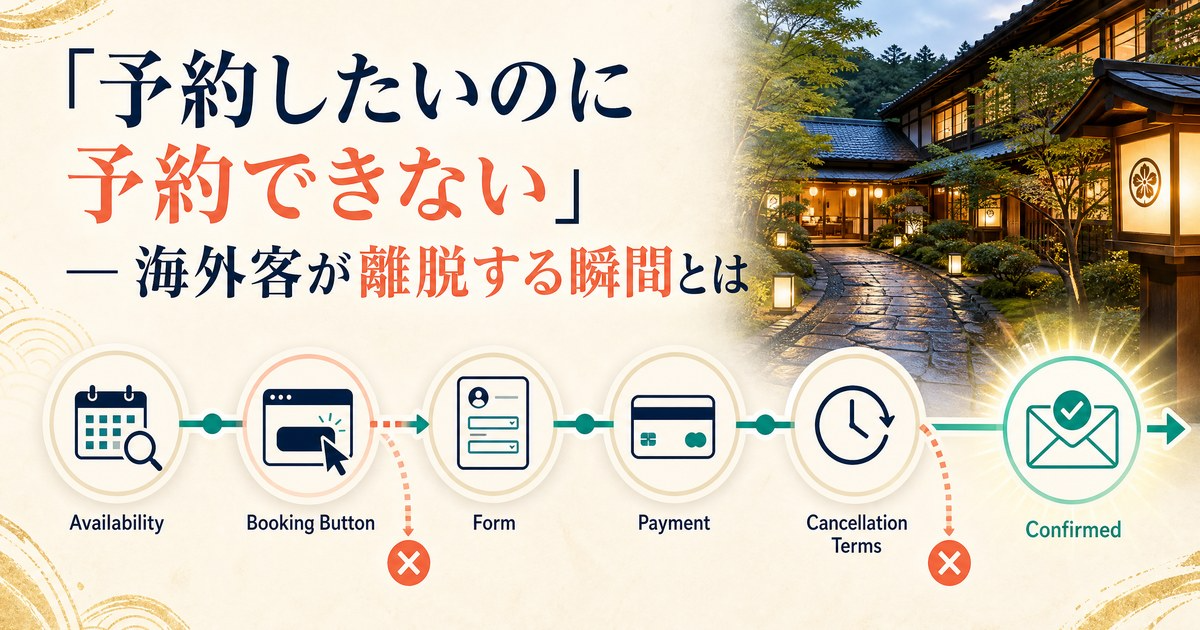
In previous articles, we've discussed various elements that make up the reservation process, such as cancellation policies, payment methods, and booking forms. In this article, we will take a step back and outline the typical moments when guests want to book but end up abandoning the process, organized chronologically. If any part of the process causes a hiccup, all the interest and excitement can be lost—use this as a reference to review your entire reservation process.
Moment 1: Inability to Check Availability and Pricing in Real-Time
When guests find something they like on your site but cannot see real-time availability or accurate pricing—only to find a message saying "Please inquire"—they may pause their search. This is particularly true for international guests who are comparing multiple accommodations at once; the inability to confirm availability and pricing immediately can lead them to switch to other properties that allow real-time bookings. Even if implementing an online reservation system is challenging, it is crucial to clearly guide guests on how to check approximate pricing and availability.
Moment 2: Confusing Reservation Buttons and Navigation
Guests may find it difficult to determine where to click to proceed with their reservation while navigating your site. A common issue is that the phone number is prominently displayed on Japanese sites, while alternative options (like online forms) are less visible, making it hard for international guests who prefer not to call. Ensure that the reservation button is placed in a prominent location (such as a fixed header) and clearly present alternatives to phone reservations.
Moment 3: Struggling with Form Inputs
Even if guests make it to the reservation form, they may encounter issues due to input fields based on Japanese customs or validation that does not accommodate international address and phone number formats. This topic is explored in detail in our article on the Top 5 Reasons for High Drop-off Rates on English Booking Forms.
Moment 4: Anxiety Over Payment Information
If guests are asked to proceed to the payment page without clear information on accepted card brands or whether payment is required in advance or on-site, they may feel anxious and abandon the process. Common pitfalls related to payment can be found in our article on Credit Card Payment and Payment Method Pitfalls in English.
Moment 5: Unclear Cancellation Conditions
When guests encounter cancellation policies for the first time during the input process or on the confirmation screen, and if these policies are vague or the time zones are unclear, they may hesitate and abandon the process. For more details, see our article on the Importance of Clear Cancellation Policies in English.
Moment 6: No Confirmation After Submission
After entering all the information and clicking the submit button, if guests do not receive a confirmation email promptly, or if the email is only in Japanese and not understandable, they may feel uncertain about whether their reservation was successful. This can lead to unnecessary inquiries via phone or other means, ruining what should have been a smooth booking experience. Set up a system to automatically send a confirmation email in English, clearly detailing the content (dates, pricing, cancellation conditions, etc.) as soon as possible after submission.
Why a Single Hiccup Can Lead to Abandonment
The reservation process is like a chain. Availability checks, reservation buttons, form inputs, payment information, cancellation conditions, and confirmation emails—all these elements must function smoothly. If any part causes anxiety or inconvenience, guests will likely abandon the process. Even if you enhance the quality of your content or translations, a weak link in this chain can become a bottleneck that limits overall success.
How to Review Your Site's Navigation
The most effective method is to actually experience the reservation process from the perspective of an international guest (preferably with the help of a native English speaker, if possible). Go through the entire flow from visiting the site to completing the reservation. Areas you think are fine may reveal oversights when tested in practice.
Conclusion: Improving the Reservation Process Requires More Than One Fix
The moments when guests want to book but cannot are not just isolated issues; they are embedded within the entire experience leading up to the reservation. We recommend applying the six moments discussed in this article to your own site, checking each one, and prioritizing improvements in the weaker areas.
Studio HAKO's HAKO Scan offers a free assessment of your international readiness throughout the reservation process. Start by evaluating your current situation.