
In our previous article, 5 Key Pieces of Information Overseas Guests Check Before Booking, we highlighted that the cancellation policy is one of the most critical pieces of information for international guests when deciding whether to book.
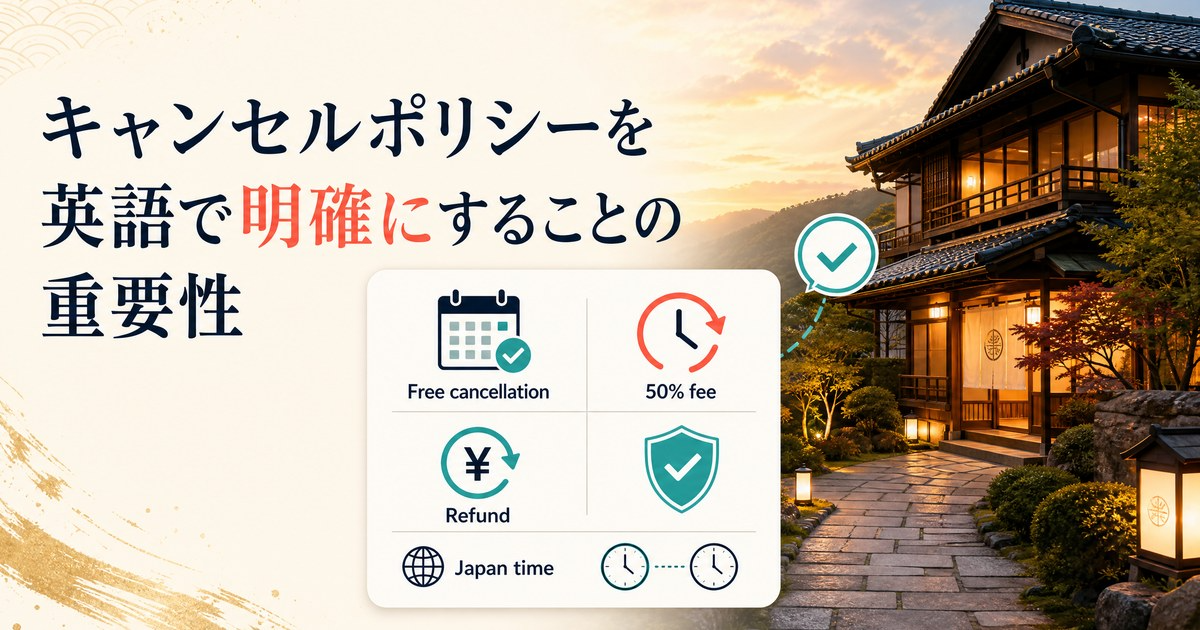
No matter how attractive your rates and photos are, if your cancellation policy is vague or hard to find, guests may hesitate to book due to concerns like, "What will I be charged if my plans change?" This article discusses why it is crucial to communicate your cancellation policy clearly in English and provides specific guidance on how to do so.
Why Clarity in Your Cancellation Policy is Especially Important
1. Misunderstandings Can Lead to Financial Disputes
While misunderstandings about room descriptions or facility information may result in disappointment, confusion regarding the cancellation policy can lead to direct financial issues, such as unexpected charges. This can easily result in negative reviews, which may deter other potential guests from booking.
2. International Guests Are Unfamiliar with Japanese Business Customs
Common practices in Japan, such as a "50% charge for cancellations made the day before," may be unfamiliar to international guests. Many guests base their expectations on cancellation policies from accommodations in their home countries (which might offer longer free cancellation periods or guarantees), making it easy for misunderstandings to arise if explanations are based on Japanese customs alone.
3. Time Zone Differences Can Cause Confusion
A policy like "Free cancellation until 3:00 PM three days before your check-in date" can lead to issues if it is not clear whether this refers to Japan time or the guest's local time. Without this information, a guest might think they canceled in time but still incur a cancellation fee.
Five Key Elements to Clarify
- Timing of Cancellation Fees (specific days and times)
- Reference Time Zone (clearly state "Japan time")
- Cancellation Fee Percentage or Amount (list all applicable rates if they vary)
- Refund Method and Estimated Processing Time
- Policy for Force Majeure Events (like natural disasters or severe weather)
Examples of Vague vs. Clear Policies
Vague Example: "Cancellation fees may apply depending on the timing of your cancellation. Please contact us for details."
This statement leaves guests uncertain about when cancellation fees apply and how much they might be, leading them to either reach out with anxiety or abandon their booking altogether.
Clear Example: "Free cancellation until 3:00 PM (Japan time), three days before your check-in date. Cancellations made after this time will incur a fee of 50% of the total stay cost. No-shows and same-day cancellations will be charged 100%. Refunds will be processed within 7 business days to your original payment method."
By summarizing the reference time, time zone, tiered rates, and refund methods in one clear statement, guests can assess their own risk and feel more confident in proceeding with their reservation.
Important Considerations When Establishing Your Cancellation Policy
- Always compare the content of your Japanese and English pages to ensure consistency.
- Check that the cancellation policy on your website matches that on OTA platforms (like Booking.com and Agoda).
- If special plans (like last-minute discounts) have different cancellation conditions, make sure to specify these on those plan pages as well.
- For policies regarding force majeure (like typhoons), consider adding a brief explanation of the unique circumstances in Japan to assist guests who may be unfamiliar with them.
Conclusion: Clarity in Your Cancellation Policy Equals Trust
Clearly articulating your cancellation policy is not just about displaying terms and conditions; it is a vital element in creating the impression that your establishment is trustworthy for bookings. If your policy is currently vague, we recommend prioritizing a review of this section.
The basics of writing about rates, access, and cancellation policies in a way that resonates can also be found in our article on Pricing, Access, and Cancellation Policies: How to Communicate Effectively in English. We encourage you to check it out.
At Studio HAKO, our HAKO Scan service can provide a free assessment of your site's international readiness, including the clarity of your cancellation policy. Start by evaluating your current situation today.