
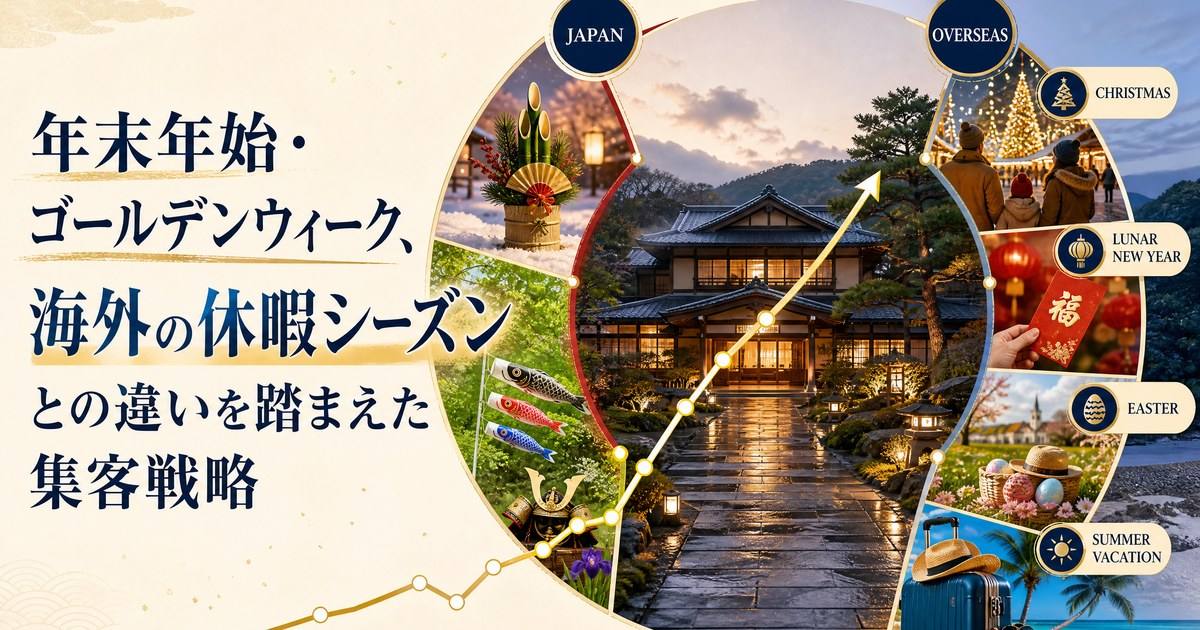
The New Year and Golden Week are peak seasons for domestic travel in Japan, but this perspective is rooted in the habits of Japanese guests. International travelers operate on a completely different holiday calendar. In this article, we will explore the discrepancies between Japan's holidays and global vacation seasons, and how to adapt international marketing strategies accordingly.
Japan's Holidays Are Not Universal
Golden Week (late April to early May) and the New Year holiday (late December to early January) are significant holiday periods for Japanese people, but they may not be special vacation seasons for travelers from abroad. When considering demand from international visitors, it is essential to base your strategy on the holiday calendars of major source countries rather than Japan's calendar.
Examples of Major International Holiday Seasons
While specific dates can vary by country and year, the following general holiday seasons are observed:
- Christmas to New Year’s Holidays (mid-December to early January): A time when family travel increases, overlapping partially with Japan's New Year holiday.
- Lunar New Year (late January to mid-February, varying by year): A peak travel season for East Asian countries like China, Taiwan, and South Korea.
- Easter Holidays (late March to April, varying by year): A period when family travel increases, particularly in Europe.
- Summer Vacation (July to August in Europe and North America): The peak season for family travel coinciding with school holidays.
- Thanksgiving (late November in the U.S.): A major holiday period that drives travel demand.
Opportunities Arising from the Discrepancies Between Japan's Holidays and International Vacations
Golden Week is a Regular Period for Western Travelers
For Japanese people, Golden Week is a significant holiday, but for Western travelers, it is not a special vacation season. During this time, domestic travel demand among Japanese guests can make it challenging to secure accommodations for inbound travelers.
Lunar New Year Season Sees High Demand from East Asia
While January to early February may seem like just another weekday period for Japanese people, it is one of the busiest travel seasons for visitors from China, Taiwan, and South Korea. Treating this time as a low season could result in missing out on a strong market demand.
New Year’s Holiday Overlaps Domestic and International Demand
The New Year’s holiday is a time for Japanese people to return home and travel domestically, but it also coincides with the Christmas to New Year’s holiday period in Western countries, leading to increased inbound demand.
Marketing Strategies Based on These Differences
Reassess Peak Seasons According to Your Main Markets
As discussed in our article on emerging inbound markets, the holiday seasons that matter most will vary based on the nationalities of your primary inbound guests. If your ryokan attracts many visitors from Taiwan, South Korea, or China, consider focusing on the Lunar New Year season. For accommodations popular with Western guests, prioritize summer vacation or Easter as key marketing periods.
Utilize Low Seasons for International Marketing
Even if a period is considered a low season for Japanese guests, it may coincide with international holiday seasons. By strengthening your inbound marketing during these times, you can help stabilize occupancy rates throughout the year.
Prepare English Content and Plans for Each Holiday Season
By creating special plans for the Lunar New Year or family-oriented packages for Christmas and New Year’s, you can effectively capture demand from these markets by having relevant content ready in advance.
Important Note: Holiday Dates Vary by Year
Holidays like Lunar New Year and Easter can have dates that change significantly each year. When developing your marketing strategy, it is crucial to verify the exact dates for the relevant year and adjust your content and planning accordingly.
Conclusion: Reassess Your True Peak Seasons
If you base your marketing strategy solely on Japan's holiday calendar, you risk overlooking the international holiday seasons that could bring significant demand. Incorporate a review of peak seasons based on global holiday calendars into your monthly improvement cycle as discussed in our article on monthly improvement cycles in international marketing.
Studio HAKO's HAKO Scan offers a free assessment of your site's international readiness, including seasonal considerations. Start by checking your current status today.