
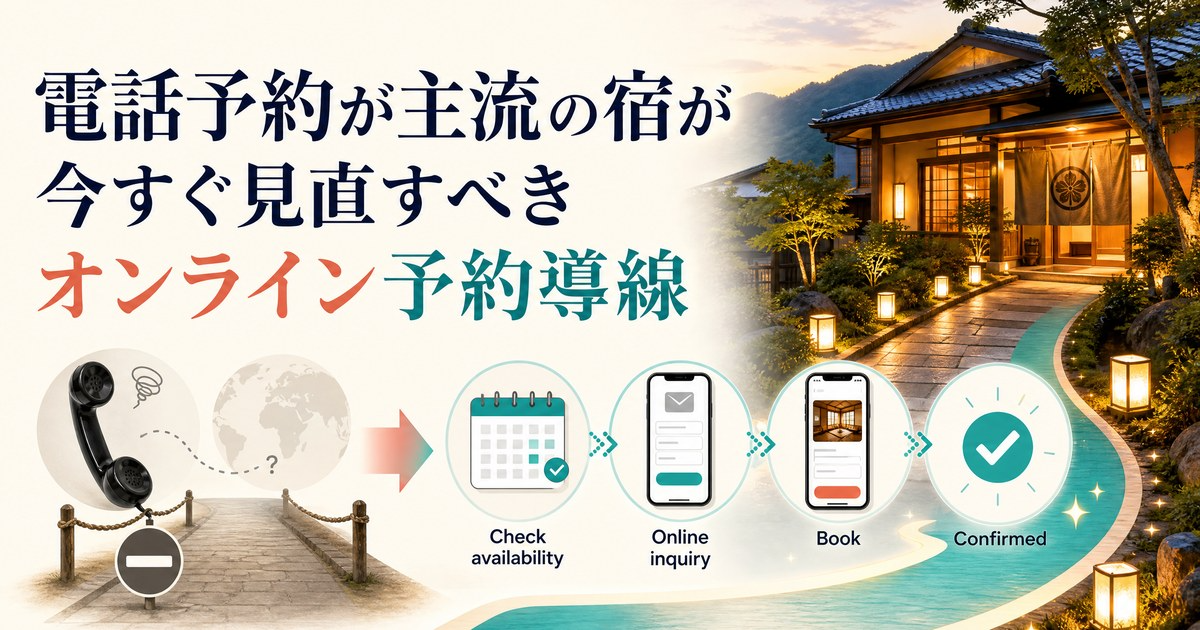
For ryokans that have traditionally operated with phone reservations, the idea of enhancing online booking systems often takes a back seat. Many believe that existing customers prefer phone reservations and that implementing a new system incurs costs.
However, for international guests, the hurdles associated with phone reservations are often much higher than for Japanese guests. This article explores why relying solely on phone reservations can lead to lost opportunities for overseas visitors and offers insights on how to gradually improve online booking pathways.
Why Phone Reservations Are Particularly Challenging for International Guests
Language Barrier
When there are limited staff members who can handle phone calls in English, international guests may hesitate to call, fearing they might not be understood. An online inquiry form allows guests to take their time to compose messages using translation tools, which is not possible in real-time conversations.
Time Zone Issues
For international guests, making a phone call during Japanese business hours may fall during late night or early morning hours due to time zone differences. Having an online booking option allows guests to make reservations at their convenience without being restricted by time differences.
Costs and Psychological Barriers of International Calls
Many guests feel a psychological and financial resistance to making international calls. For travelers who have never visited Japan, the very act of calling can lead them to choose other accommodations that offer online booking instead.
Consequences of Continuing with Phone Reservations
- Inability to respond to inquiries from overseas received during late night or early morning, leading guests to other accommodations.
- Staff lacking confidence in handling calls in English may delay responses.
- Miscommunication during phone interactions (regarding dates, number of guests, requests, etc.) is more likely to occur.
- The option to call may discourage potential inquiries altogether.
These issues represent lost opportunities arising from poor design of booking pathways, unrelated to the attractiveness of the website or quality of content.
Three Steps to Gradually Transition Online
There is no need to overhaul the entire system at once. You can take gradual steps to improve your online booking process:
Step 1: Allow Online Access to Room Availability
Even if full reservations cannot be made online, providing a calendar format to check general room availability can alleviate the anxiety of needing to call for information.
Step 2: Implement a Reservation Inquiry Form
Create an online form for guests to submit their desired dates, number of guests, and preferred plans, with confirmation communicated via phone or email. This hybrid approach allows at least the initial step to be completed online.
Step 3: Introduce an Online Booking System that Completes Payments
In the future, consider implementing a booking system that allows guests to complete everything from checking availability to making payments online. While there are initial costs and operational considerations, this will ultimately reduce lost opportunities and improve operational efficiency.
Utilizing Existing OTAs Effectively
If implementing a full-fledged booking system on your website is challenging, utilizing OTAs like Booking.com or Agoda as a platform for online reservations is a practical option. By placing an "Online Booking" button on your website that directs guests to the OTA reservation page, you can create a pathway for reservations without requiring phone calls. While there are fees involved, the value of preventing lost opportunities makes it worth considering.
No Need to Eliminate Phone Support
It’s important to clarify that this is not about eliminating phone reservations altogether. For Japanese guests and some international guests who prefer phone interactions, this option remains vital. The key is to eliminate the scenario where phone reservations are the only option, allowing guests to choose the method that suits them best.
Points to Consider During Implementation
- If both online reservations and phone reservations are available, establish a system for inventory management to prevent double bookings.
- Ensure that confirmation emails after online reservations are automatically sent in English.
- Organize how the new reservation methods will integrate with existing front desk workflows beforehand.
Conclusion: Expanding Options is the First Step to Preventing Lost Opportunities
Relying solely on phone reservations is not inherently bad, but having no other options can present a significant barrier for international guests. There’s no need to change everything at once; starting with online room availability checks or reservation inquiry forms is a manageable way to begin the transition.
Studio HAKO's HAKO Scan offers a free assessment of your entire booking pathway's international readiness. Start by evaluating your current situation today.